School of Medicine, Dentistry and Biomedical Sciences, Centre for Public Health, Queen's University Belfast, Belfast, Northern Ireland, United Kingdom.
Department of Epidemiology, College of Public Health, University of Iowa, Iowa City, Iowa, United States of America.
PLoS One. 2020 Mar 17;15(3):e0230454. doi: 10.1371/journal.pone.0230454. eCollection 2020.
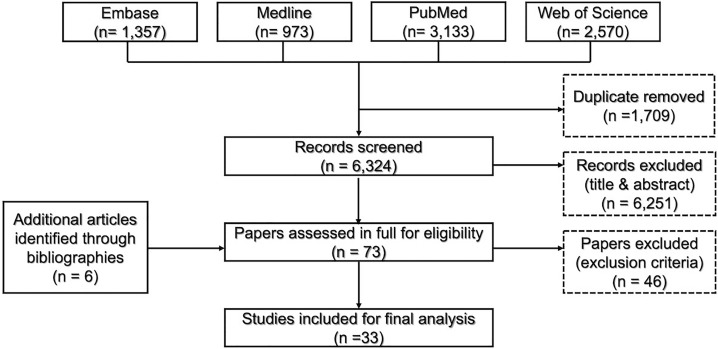
Insufficient physical activity (PA) is the fourth major risk factor for many non-communicable diseases and premature mortality worldwide. Features of the built environment (BE) play a considerable role in determining population PA behaviors. The majority of evidence for PA-BE relationships comes from high-income countries and may not be generalizable to low- and middle-income countries (LMICs). We aim to systematically review the literature and assess the associations between perceived and/or objective BE characteristics and PA domains in LMICs. This review adopted a systematic search strategy for English language articles published between January 2000 and June 2019 from four electronic databases-Medline, Embase, Web of Science and PubMed-adhering to the PRISMA guidelines. Studies addressing the associations between self-reported and/or objective BE and PA were only included if they were conducted in LMICs, according to the World Bank classification list. Articles investigating PA-BE relationships across any age groups were included, and all study designs were eligible, except for qualitative studies and reviews. Thirty-three studies were included for evidence synthesis. Cross-sectional studies were the most prevailing study design (97%), revealing a notable gap in longitudinal PA-BE research in LMICs. A majority of the BE factors were not associated with different PA domains while others (e.g., density, proximity to services, aesthetics) exhibited an inconsistent association. Land-use mix diversity was positively associated with transport PA and the presence of recreation facilities resulted in an increase in PA during leisure-time. Increased safety from crime at night consistently increased total PA and walking levels. Research exploring the associations between BE attributes and PA behaviors in LMICs appears to be limited and is primarily cross-sectional. Longitudinal research studies with objective measures are needed for inferring well-grounded PA-BE causal relationships and informing the design of evidence-based environmental interventions for increasing PA levels in LMICs.
身体活动不足(PA)是全球许多非传染性疾病和过早死亡的第四个主要风险因素。建成环境(BE)的特点在决定人口 PA 行为方面起着相当大的作用。PA-BE 关系的大多数证据来自高收入国家,可能不适用于低收入和中等收入国家(LMICs)。我们旨在系统地审查文献,并评估 LMIC 中感知和/或客观 BE 特征与 PA 领域之间的关联。本综述采用系统搜索策略,从四个电子数据库(Medline、Embase、Web of Science 和 PubMed)中检索 2000 年 1 月至 2019 年 6 月期间以英文发表的文章,遵循 PRISMA 指南。只有根据世界银行分类列表在 LMIC 中进行的研究,才能纳入评估自我报告和/或客观 BE 与 PA 之间关联的文章。纳入研究 PA-BE 关系的文章涵盖了任何年龄组,所有研究设计均符合条件,但不包括定性研究和综述。有 33 项研究进行了证据综合。横断面研究是最流行的研究设计(97%),表明 LMIC 中纵向 PA-BE 研究存在明显差距。大多数 BE 因素与不同的 PA 领域无关,而其他因素(例如,密度、接近服务、美观)则表现出不一致的关联。土地利用混合多样性与交通 PA 呈正相关,休闲时间有娱乐设施会增加 PA。夜间犯罪风险的增加始终会增加总 PA 和步行水平。探索 LMIC 中 BE 属性与 PA 行为之间关联的研究似乎有限,主要是横断面研究。需要进行具有客观测量的纵向研究,以推断基于证据的 PA-BE 因果关系,并为在 LMIC 中增加 PA 水平提供基于证据的环境干预设计。