Wang Mengyao, Qazi Izhar Hyder, Wang Linli, Zhou Guangbin, Han Hongbing
Beijing Key Laboratory for Animal Genetic Improvement, College of Animal Science and Technology, China Agricultural University, Beijing 100193, China.
Key Laboratory of Animal Genetics and Breeding of the Ministry of Agriculture, College of Animal Science and Technology, China Agricultural University, Beijing 100193, China.
Microorganisms. 2020 Mar 13;8(3):407. doi: 10.3390/microorganisms8030407.
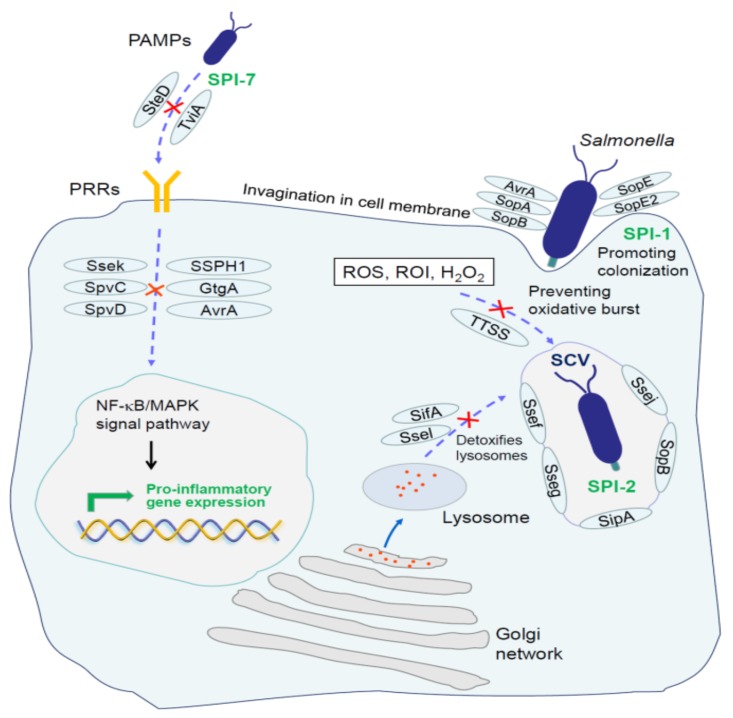
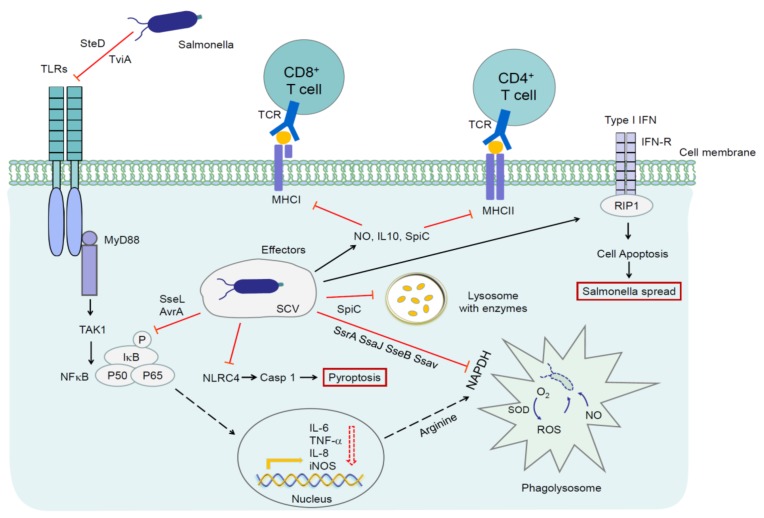
genus represents the most common foodborne pathogens causing morbidity, mortality, and burden of disease in all regions of the world. The introduction of antimicrobial agents and Salmonella-specific phages has been considered as an effective intervention strategy to reduce Salmonella contamination. However, data from the United States, European countries, and low- and middle-income countries indicate that Salmonella cases are still a commonly encountered cause of bacterial foodborne diseases globally. The control programs have not been successful and even led to the emergence of some multidrug-resistant Salmonella strains. It is known that the host immune system is able to effectively prevent microbial invasion and eliminate microorganisms. However, has evolved mechanisms of resisting host physical barriers and inhibiting subsequent activation of immune response through their virulence factors. There has been a high interest in understanding how interacts with the host. Therefore, in the present review, we characterize the functions of virulence genes and particularly focus on the mechanisms of immune escape in light of evidence from the emerging mainstream literature.
沙门氏菌属是全球所有地区引起发病、死亡和疾病负担的最常见食源性病原体。抗菌剂和沙门氏菌特异性噬菌体的引入被认为是减少沙门氏菌污染的有效干预策略。然而,来自美国、欧洲国家以及低收入和中等收入国家的数据表明,沙门氏菌病例仍是全球细菌性食源性疾病常见的病因。控制计划并未成功,甚至导致了一些多重耐药沙门氏菌菌株的出现。众所周知,宿主免疫系统能够有效预防微生物入侵并清除微生物。然而,沙门氏菌已通过其毒力因子进化出抵抗宿主物理屏障和抑制后续免疫反应激活的机制。人们对了解沙门氏菌如何与宿主相互作用非常感兴趣。因此,在本综述中,我们描述了沙门氏菌毒力基因的功能,并根据新兴主流文献的证据特别关注其免疫逃逸机制。