• 文献检索
  • 文档翻译
  • 深度研究
  • 学术资讯
  • Suppr Zotero 插件Zotero 插件
  • 邀请有礼
  • 套餐&价格
  • 历史记录
应用&插件
Suppr Zotero 插件Zotero 插件浏览器插件Mac 客户端Windows 客户端微信小程序
定价
高级版会员购买积分包购买API积分包
服务
文献检索文档翻译深度研究API 文档MCP 服务
关于我们
关于 Suppr公司介绍联系我们用户协议隐私条款
关注我们

Suppr 超能文献

核心技术专利:CN118964589B侵权必究
粤ICP备2023148730 号-1Suppr @ 2026

文献检索

告别复杂PubMed语法,用中文像聊天一样搜索,搜遍4000万医学文献。AI智能推荐,让科研检索更轻松。

立即免费搜索

文件翻译

保留排版,准确专业,支持PDF/Word/PPT等文件格式,支持 12+语言互译。

免费翻译文档

深度研究

AI帮你快速写综述,25分钟生成高质量综述,智能提取关键信息,辅助科研写作。

立即免费体验

基于惯性传感器的机器学习评估肘部痉挛分析。

Analysis of Machine Learning-Based Assessment for Elbow Spasticity Using Inertial Sensors.

机构信息

ICT Convergence Rehabilitation Engineering Research Center, Soonchunhyang University, Asan 31538, Korea.

Department of ICT Convergence Rehabilitation Engineering, Soonchunhyang University, Asan 31538, Korea.

出版信息

Sensors (Basel). 2020 Mar 14;20(6):1622. doi: 10.3390/s20061622.

DOI:10.3390/s20061622
PMID:32183281
原文链接:https://pmc.ncbi.nlm.nih.gov/articles/PMC7146614/
Abstract

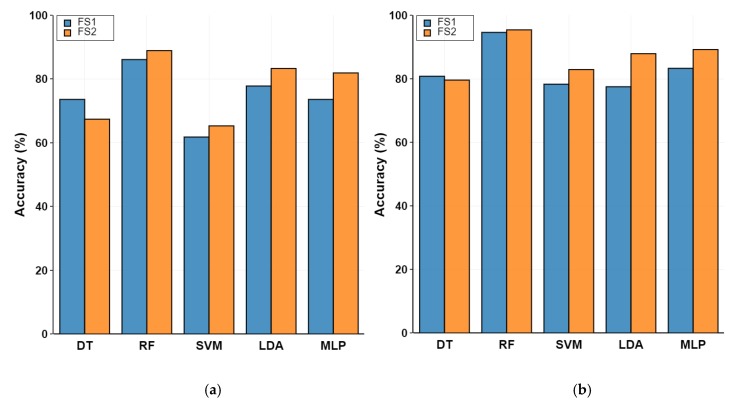
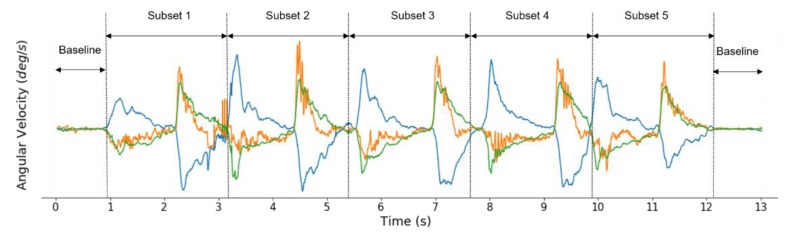
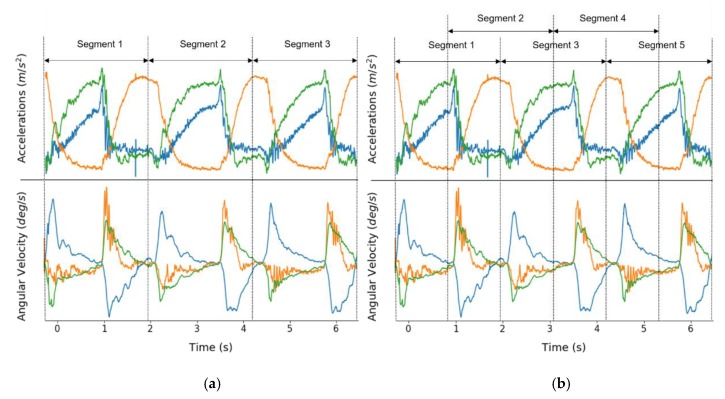
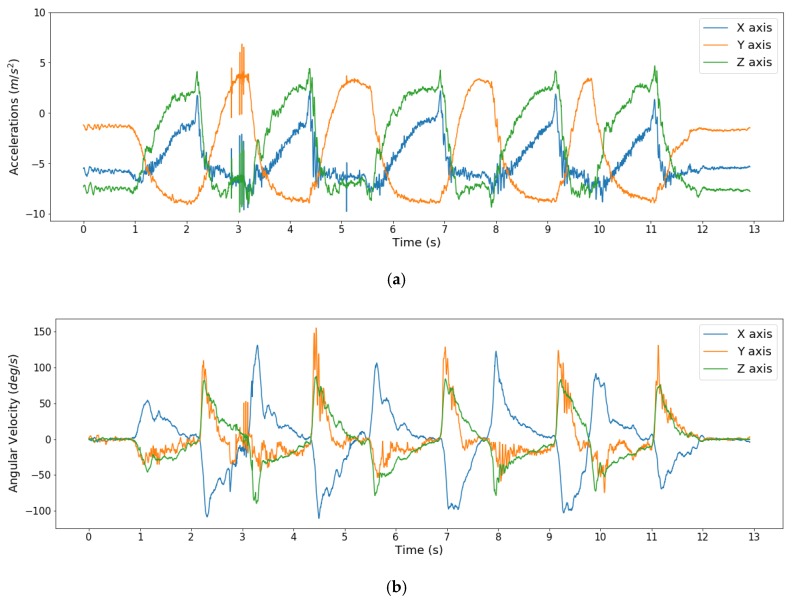
Spasticity is a frequently observed symptom in patients with neurological impairments. Spastic movements of their upper and lower limbs are periodically measured to evaluate functional outcomes of physical rehabilitation, and they are quantified by clinical outcome measures such as the modified Ashworth scale (MAS). This study proposes a method to determine the severity of elbow spasticity, by analyzing the acceleration and rotation attributes collected from the elbow of the affected side of patients and machine-learning algorithms to classify the degree of spastic movement; this approach is comparable to assigning an MAS score. We collected inertial data from participants using a wearable device incorporating inertial measurement units during a passive stretch test. Machine-learning algorithms-including decision tree, random forests (RFs), support vector machine, linear discriminant analysis, and multilayer perceptrons-were evaluated in combinations of two segmentation techniques and feature sets. A RF performed well, achieving up to 95.4% accuracy. This work not only successfully demonstrates how wearable technology and machine learning can be used to generate a clinically meaningful index but also offers rehabilitation patients an opportunity to monitor the degree of spasticity, even in nonhealthcare institutions where the help of clinical professionals is unavailable.

摘要

痉挛是神经功能障碍患者中经常观察到的症状。周期性地测量其上下肢的痉挛运动,以评估物理康复的功能结果,并通过临床结果测量来量化,例如改良 Ashworth 量表 (MAS)。本研究提出了一种通过分析从患者患侧肘部采集的加速度和旋转属性,以及机器学习算法来确定肘部痉挛严重程度的方法,从而对痉挛运动的程度进行分类;这种方法可与 MAS 评分相媲美。我们使用装有惯性测量单元的可穿戴设备在被动伸展测试中从参与者身上收集惯性数据。机器学习算法——包括决策树、随机森林 (RF)、支持向量机、线性判别分析和多层感知机——在两种分段技术和特征集的组合中进行了评估。RF 的表现非常出色,最高可达到 95.4%的准确率。这项工作不仅成功地展示了可穿戴技术和机器学习如何用于生成具有临床意义的指标,而且还为康复患者提供了一个机会,可以监测痉挛的程度,即使在没有临床专业人员帮助的非医疗机构也是如此。
https://cdn.ncbi.nlm.nih.gov/pmc/blobs/ceee/7146614/79742d1019d9/sensors-20-01622-g004.jpg
https://cdn.ncbi.nlm.nih.gov/pmc/blobs/ceee/7146614/5aa2d2a67661/sensors-20-01622-g001.jpg
https://cdn.ncbi.nlm.nih.gov/pmc/blobs/ceee/7146614/aae6f1d94700/sensors-20-01622-g002.jpg
https://cdn.ncbi.nlm.nih.gov/pmc/blobs/ceee/7146614/b59bf8da8978/sensors-20-01622-g003.jpg
https://cdn.ncbi.nlm.nih.gov/pmc/blobs/ceee/7146614/79742d1019d9/sensors-20-01622-g004.jpg
https://cdn.ncbi.nlm.nih.gov/pmc/blobs/ceee/7146614/5aa2d2a67661/sensors-20-01622-g001.jpg
https://cdn.ncbi.nlm.nih.gov/pmc/blobs/ceee/7146614/aae6f1d94700/sensors-20-01622-g002.jpg
https://cdn.ncbi.nlm.nih.gov/pmc/blobs/ceee/7146614/b59bf8da8978/sensors-20-01622-g003.jpg
https://cdn.ncbi.nlm.nih.gov/pmc/blobs/ceee/7146614/79742d1019d9/sensors-20-01622-g004.jpg

相似文献

1
Analysis of Machine Learning-Based Assessment for Elbow Spasticity Using Inertial Sensors.基于惯性传感器的机器学习评估肘部痉挛分析。
Sensors (Basel). 2020 Mar 14;20(6):1622. doi: 10.3390/s20061622.
2
Development of elbow spasticity model for objective training of spasticity assessment of patients post stroke.用于中风后患者痉挛评估客观训练的肘部痉挛模型的开发。
IEEE Int Conf Rehabil Robot. 2017 Jul;2017:146-151. doi: 10.1109/ICORR.2017.8009237.
3
Biomechanical examination of a commonly used measure of spasticity.对一种常用的痉挛测量方法的生物力学检查。
Clin Biomech (Bristol). 2001 Dec;16(10):859-65. doi: 10.1016/s0268-0033(01)00084-5.
4
Elbow spasticity during passive stretch-reflex: clinical evaluation using a wearable sensor system.被动拉伸反射时肘部痉挛:使用可穿戴传感器系统进行临床评估。
J Neuroeng Rehabil. 2013 Jun 19;10(1):61. doi: 10.1186/1743-0003-10-61.
5
Time course analysis of the effects of botulinum toxin type a on elbow spasticity based on biomechanic and electromyographic parameters.基于生物力学和肌电图参数的A型肉毒杆菌毒素对肘部痉挛影响的时间进程分析
Arch Phys Med Rehabil. 2008 Apr;89(4):692-9. doi: 10.1016/j.apmr.2007.08.166.
6
Quantitative Ultrasound Imaging to Assess the Biceps Brachii Muscle in Chronic Post-Stroke Spasticity: Preliminary Observation.定量超声成像评估慢性脑卒中后痉挛状态下的肱二头肌:初步观察
Ultrasound Med Biol. 2018 Sep;44(9):1931-1940. doi: 10.1016/j.ultrasmedbio.2017.12.012. Epub 2018 Feb 2.
7
Ultrasound guided alcohol neurolysis of musculocutaneous nerve to relieve elbow spasticity in hemiparetic stroke patients.超声引导下肌皮神经酒精松解术治疗偏瘫脑卒中患者肘部痉挛。
NeuroRehabilitation. 2012;31(4):373-7. doi: 10.3233/NRE-2012-00806.
8
Technologically-advanced assessment of upper-limb spasticity: a pilot study.上肢痉挛的先进技术评估:一项初步研究。
Eur J Phys Rehabil Med. 2018 Aug;54(4):536-544. doi: 10.23736/S1973-9087.17.04815-8. Epub 2017 Sep 4.
9
Artificial Neural Network Learns Clinical Assessment of Spasticity in Modified Ashworth Scale.人工神经网络学习改良 Ashworth 量表中痉挛的临床评估。
Arch Phys Med Rehabil. 2019 Oct;100(10):1907-1915. doi: 10.1016/j.apmr.2019.03.016. Epub 2019 Apr 19.
10
Inter-rater reliability of the Modified Ashworth Scale and modified Modified Ashworth Scale in assessing poststroke elbow flexor spasticity.改良Ashworth量表和改良改良Ashworth量表在评估中风后肘屈肌痉挛方面的评分者间信度。
Int J Rehabil Res. 2011 Mar;34(1):59-64. doi: 10.1097/MRR.0b013e32833d6cdf.

引用本文的文献

1
Development of an upper limb muscle strength rehabilitation assessment system using particle swarm optimisation.基于粒子群优化算法的上肢肌肉力量康复评估系统的开发。
Front Bioeng Biotechnol. 2025 Jul 9;13:1619411. doi: 10.3389/fbioe.2025.1619411. eCollection 2025.
2
The Use of Artificial Intelligence and Wearable Inertial Measurement Units in Medicine: Systematic Review.人工智能与可穿戴惯性测量单元在医学中的应用:系统评价
JMIR Mhealth Uhealth. 2025 Jan 29;13:e60521. doi: 10.2196/60521.
3
Design of upper limb muscle strength assessment system based on surface electromyography signals and joint motion.

本文引用的文献

1
A Regression-Based Framework for Quantitative Assessment of Muscle Spasticity Using Combined EMG and Inertial Data From Wearable Sensors.一种基于回归的框架,用于使用来自可穿戴传感器的肌电图和惯性数据联合定量评估肌肉痉挛。
Front Neurosci. 2019 May 3;13:398. doi: 10.3389/fnins.2019.00398. eCollection 2019.
2
Artificial Neural Network Learns Clinical Assessment of Spasticity in Modified Ashworth Scale.人工神经网络学习改良 Ashworth 量表中痉挛的临床评估。
Arch Phys Med Rehabil. 2019 Oct;100(10):1907-1915. doi: 10.1016/j.apmr.2019.03.016. Epub 2019 Apr 19.
3
Novelty Detection using Deep Normative Modeling for IMU-Based Abnormal Movement Monitoring in Parkinson's Disease and Autism Spectrum Disorders.
基于表面肌电信号和关节运动的上肢肌肉力量评估系统设计
Front Neurol. 2024 Dec 13;15:1470759. doi: 10.3389/fneur.2024.1470759. eCollection 2024.
4
Artificial Intelligence and Its Revolutionary Role in Physical and Mental Rehabilitation: A Review of Recent Advancements.人工智能及其在身心康复中的变革性作用:近期进展综述
Biomed Res Int. 2024 Dec 17;2024:9554590. doi: 10.1155/bmri/9554590. eCollection 2024.
5
Automatic rehabilitation assessment method of upper limb motor function based on posture and distribution force.基于姿势和分布力的上肢运动功能自动康复评估方法
Front Neurosci. 2024 Feb 19;18:1362495. doi: 10.3389/fnins.2024.1362495. eCollection 2024.
6
The Use of Wearable Devices to Measure Sedentary Behavior during COVID-19: Systematic Review and Future Recommendations.在 COVID-19 期间使用可穿戴设备测量久坐行为:系统评价和未来建议。
Sensors (Basel). 2023 Nov 27;23(23):9449. doi: 10.3390/s23239449.
7
Prediction of Spasticity through Upper Limb Active Range of Motion in Stroke Survivors: A Generalized Estimating Equation Model.通过中风幸存者上肢主动活动范围预测痉挛:广义估计方程模型
Bioengineering (Basel). 2023 Nov 1;10(11):1273. doi: 10.3390/bioengineering10111273.
8
An Integrated Approach for Real-Time Monitoring of Knee Dynamics with IMUs and Multichannel EMG.基于惯性测量单元和多通道肌电图的膝关节动力学实时监测的集成方法。
Sensors (Basel). 2023 Nov 3;23(21):8955. doi: 10.3390/s23218955.
9
The Application of Wearable Sensors and Machine Learning Algorithms in Rehabilitation Training: A Systematic Review.可穿戴传感器和机器学习算法在康复训练中的应用:系统评价。
Sensors (Basel). 2023 Sep 5;23(18):7667. doi: 10.3390/s23187667.
10
Quantitative assessment of spasticity: a narrative review of novel approaches and technologies.痉挛的定量评估:新方法与技术的叙述性综述
Front Neurol. 2023 Jul 5;14:1121323. doi: 10.3389/fneur.2023.1121323. eCollection 2023.
基于深度学习规范建模的新颖性检测在帕金森病和自闭症谱系障碍的基于 IMU 的异常运动监测中的应用。
Sensors (Basel). 2018 Oct 19;18(10):3533. doi: 10.3390/s18103533.
4
Wearable Sensors to Monitor, Enable Feedback, and Measure Outcomes of Activity and Practice.可穿戴传感器可用于监测、提供反馈以及衡量活动和实践的结果。
Curr Neurol Neurosci Rep. 2018 Oct 6;18(12):87. doi: 10.1007/s11910-018-0896-5.
5
A novel sensor-based assessment of lower limb spasticity in children with cerebral palsy.一种基于新型传感器的脑瘫儿童下肢痉挛评估方法。
J Neuroeng Rehabil. 2018 Jun 4;15(1):45. doi: 10.1186/s12984-018-0388-5.
6
An IoT-Enabled Stroke Rehabilitation System Based on Smart Wearable Armband and Machine Learning.一种基于智能可穿戴臂带和机器学习的物联网中风康复系统。
IEEE J Transl Eng Health Med. 2018 May 8;6:2100510. doi: 10.1109/JTEHM.2018.2822681. eCollection 2018.
7
Development of elbow spasticity model for objective training of spasticity assessment of patients post stroke.用于中风后患者痉挛评估客观训练的肘部痉挛模型的开发。
IEEE Int Conf Rehabil Robot. 2017 Jul;2017:146-151. doi: 10.1109/ICORR.2017.8009237.
8
Evaluating physical function and activity in the elderly patient using wearable motion sensors.使用可穿戴运动传感器评估老年患者的身体功能和活动情况。
EFORT Open Rev. 2017 Mar 13;1(5):112-120. doi: 10.1302/2058-5241.1.160022. eCollection 2016 May.
9
Recent machine learning advancements in sensor-based mobility analysis: Deep learning for Parkinson's disease assessment.基于传感器的移动性分析中机器学习的最新进展:用于帕金森病评估的深度学习
Annu Int Conf IEEE Eng Med Biol Soc. 2016 Aug;2016:655-658. doi: 10.1109/EMBC.2016.7590787.
10
Prevalence and Effect of Problematic Spasticity After Traumatic Spinal Cord Injury.创伤性脊髓损伤后痉挛问题的患病率及影响
Arch Phys Med Rehabil. 2017 Jun;98(6):1132-1138. doi: 10.1016/j.apmr.2016.09.124. Epub 2016 Oct 22.