Carvalho Alexandre, Lu Jacky, Francis Jamisha D, Moore Rebecca E, Haley Kathryn P, Doster Ryan S, Townsend Steven D, Johnson Jeremiah G, Damo Steven M, Gaddy Jennifer A
Internal Medicine Program, St. Joseph Mercy Hospital, Ann Arbor, Michigan, USA.
Department of Pathology, Microbiology, And Immunology, Vanderbilt University School of Medicine, Nashville, Tennessee, USA.
Gastroenterol Res Pract. 2020 Feb 26;2020:2868373. doi: 10.1155/2020/2868373. eCollection 2020.
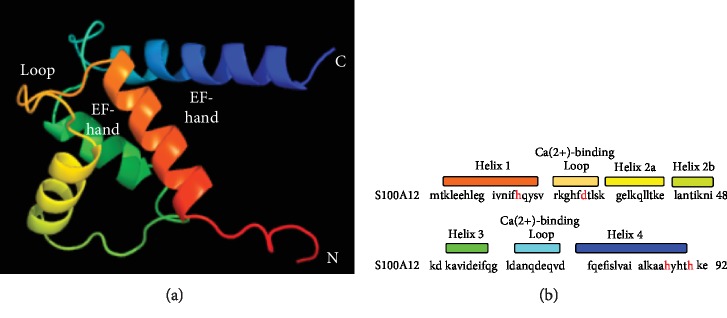
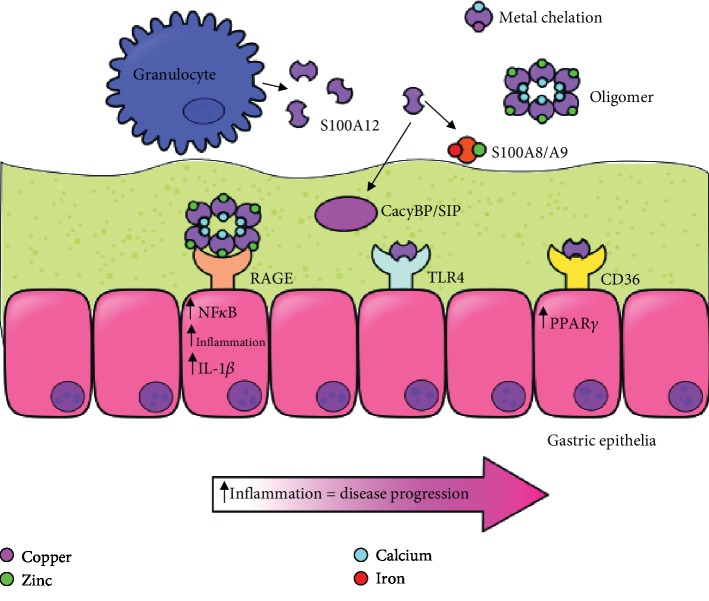
Calgranulin proteins are an important class of molecules involved in innate immunity. These members of the S100 class of the EF-hand family of calcium-binding proteins have numerous cellular and antimicrobial functions. One protein in particular, S100A12 (also called EN-RAGE or calgranulin C), is highly abundant in neutrophils during acute inflammation and has been implicated in immune regulation. Structure-function analyses reveal that S100A12 has the capacity to bind calcium, zinc, and copper, processes that contribute to nutritional immunity against invading microbial pathogens. S100A12 is a ligand for the receptor for advanced glycation end products (RAGE), toll-like receptor 4 (TLR4), and CD36, which promote cellular and immunological pathways to alter inflammation. We conducted a scoping review of the existing literature to define what is known about the association of S100A12 with digestive disease and health. Results suggest that S100A12 is implicated in gastroenteritis, necrotizing enterocolitis, gastritis, gastric cancer, Crohn's disease, irritable bowel syndrome, inflammatory bowel disease, and digestive tract cancers. Together, these results reveal S100A12 is an important molecule broadly associated with the pathogenesis of digestive diseases.
钙粒蛋白是参与天然免疫的一类重要分子。这些属于EF手型钙结合蛋白S100家族的成员具有多种细胞和抗菌功能。其中一种蛋白,即S100A12(也称为EN-RAGE或钙粒蛋白C),在急性炎症期间的中性粒细胞中含量很高,并与免疫调节有关。结构-功能分析表明,S100A12能够结合钙、锌和铜,这些过程有助于抵抗入侵微生物病原体的营养免疫。S100A12是晚期糖基化终产物受体(RAGE)、Toll样受体4(TLR4)和CD36的配体,它们促进细胞和免疫途径以改变炎症。我们对现有文献进行了范围综述,以确定关于S100A12与消化系统疾病和健康之间关联的已知情况。结果表明,S100A12与肠胃炎、坏死性小肠结肠炎、胃炎、胃癌、克罗恩病、肠易激综合征、炎症性肠病及消化道癌症有关。总之,这些结果表明S100A12是一种与消化系统疾病发病机制广泛相关的重要分子。