Beykent University Vocational School Dental Services, Oral Health Program, Istanbul, Turkey.
Istanbul University Faculty of Dentistry Department of Oral and Maxillofacial Surgery, Istanbul, Turkey.
Biomed Res Int. 2020 Feb 21;2020:2810763. doi: 10.1155/2020/2810763. eCollection 2020.
Bilateral sagittal split osteotomy (BSSO) is a common surgical procedure to correct dentofacial deformities that involve the mandible. Usually bicortical bone fixation screw or miniplates with monocortical bone fixation screw were used to gain stability after BSSO. On the other hand, the use of resorbable screw materials had been reported. In this study, our aim is to determine first stress distribution values at the temporomandibular joint (TMJ) and second displacement amounts of each mandibular bone segment.
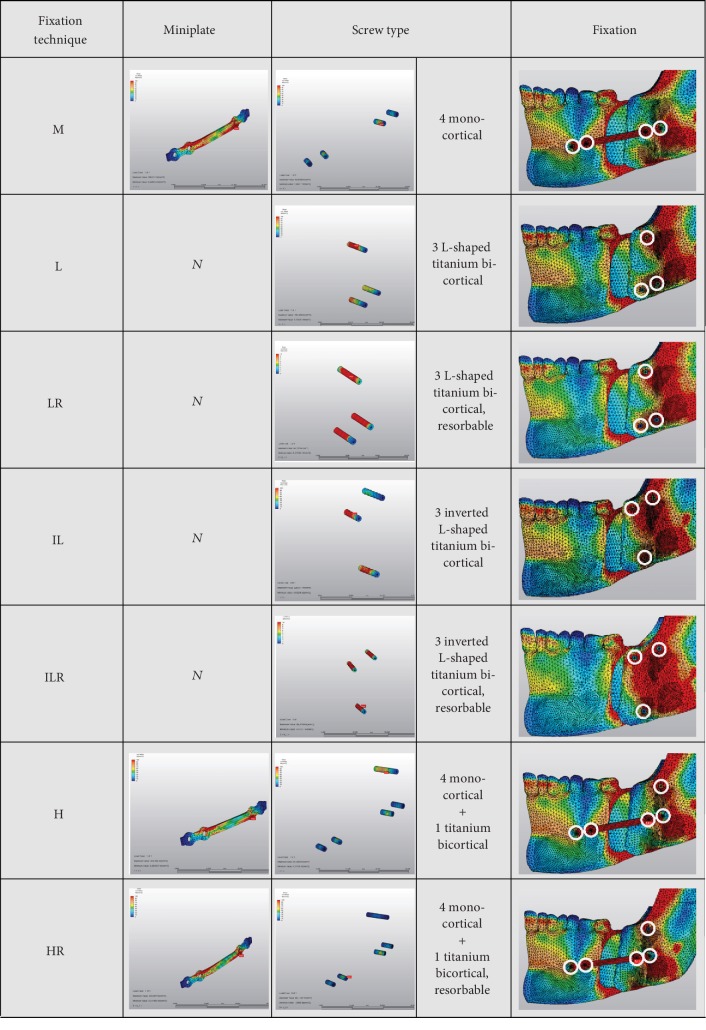
A three-dimensional virtual mesh model of the mandible was constructed. Then, BSSO with 9 mm advancement was simulated using the finite element model (FEM). Fixation between each mandibular segment was also virtually performed using seven different combinations of fixation materials, as follows: miniplate only (M), miniplate and a titanium bicortical bone fixation screw (H), miniplate and a resorbable bicortical bone fixation screw (HR), 3 L-shaped titanium bicortical bone fixation screws (L), 3 L-shaped resorbable bicortical bone fixation screws (LR), 3 inverted L-shaped titanium bicortical bone fixation screws (IL), and 3 inverted L-shaped resorbable bicortical bone fixation screws (ILR).
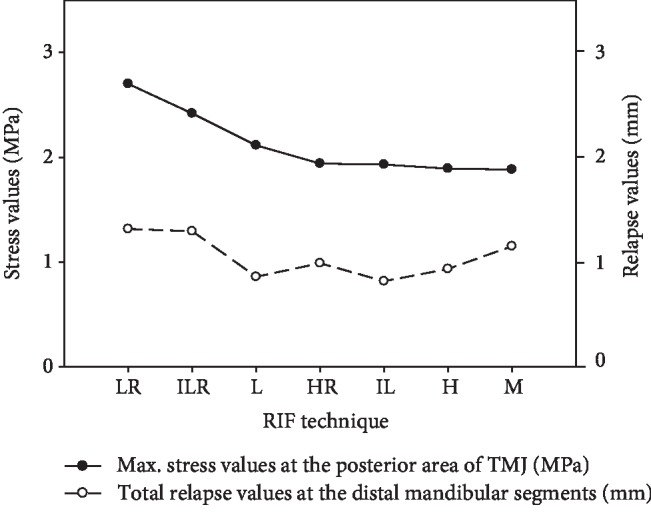
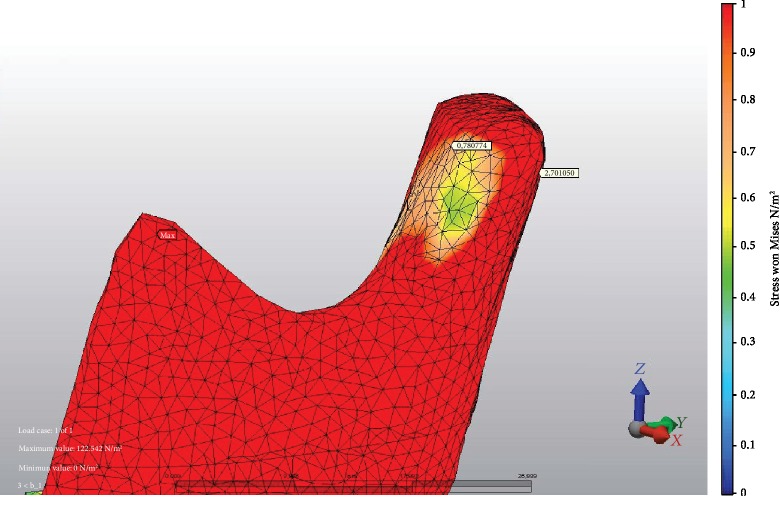
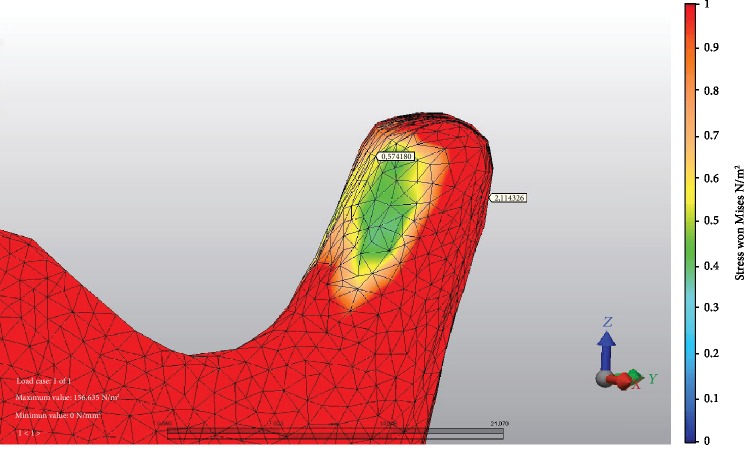
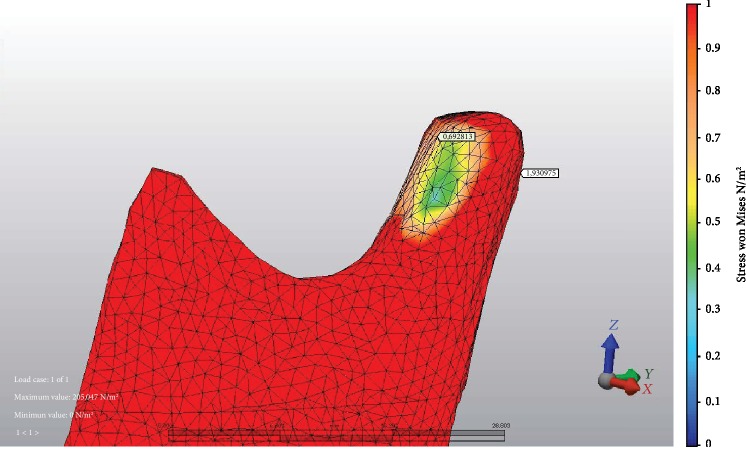
At 9 mm advancement, the biggest stress values at the anterior area TMJ was seen at M fixation and LR fixation at posterior TMJ. The minimum stress values on anterior TMJ were seen at L fixation and M fixation at posterior TMJ. Minimum displacement was seen in IL method. It was followed by L, H, HR, M, ILR, and LR, respectively.
According to our results, bicortical screw fixation was associated with more stress on the condyle. In terms of total stress value, especially LR and ILR lead to higher amounts.
双侧矢状劈开截骨术(BSSO)是一种常见的矫正下颌骨畸形的手术方法。通常使用双皮质骨固定螺钉或带有单皮质骨固定螺钉的微型板在 BSSO 后获得稳定性。另一方面,已经报道了可吸收螺钉材料的使用。在这项研究中,我们的目的是确定第一颞下颌关节(TMJ)的应力分布值和第二下颌骨各段的位移量。
构建了下颌骨的三维虚拟网格模型。然后,使用有限元模型(FEM)模拟了 9mm 的 BSSO 推进。还通过七种不同的固定材料组合虚拟地进行了每个下颌骨段之间的固定,如下所示:仅微型板(M)、微型板和钛双皮质骨固定螺钉(H)、微型板和可吸收双皮质骨固定螺钉(HR)、3 个 L 形钛双皮质骨固定螺钉(L)、3 个 L 形可吸收双皮质骨固定螺钉(LR)、3 个倒置 L 形钛双皮质骨固定螺钉(IL)和 3 个倒置 L 形可吸收双皮质骨固定螺钉(ILR)。
在 9mm 的推进中,在前 TMJ 区域,M 固定和 LR 固定时的最大应力值最大,在后 TMJ 区域,L 固定和 M 固定时的最小应力值最大。在前 TMJ 处的最小位移在 IL 方法中可见。其次是 L、H、HR、M、ILR 和 LR。
根据我们的结果,双皮质螺钉固定与髁突上的更大的应力有关。就总应力值而言,特别是 LR 和 ILR 导致更高的量。