Department of Biological Anthropology, University of Szeged, Szeged, Hungary.
Department of Anthropology, National Museum of Natural History, Smithsonian Institution, Washington, District of Columbia, United States of America.
PLoS One. 2020 Mar 18;15(3):e0230418. doi: 10.1371/journal.pone.0230418. eCollection 2020.
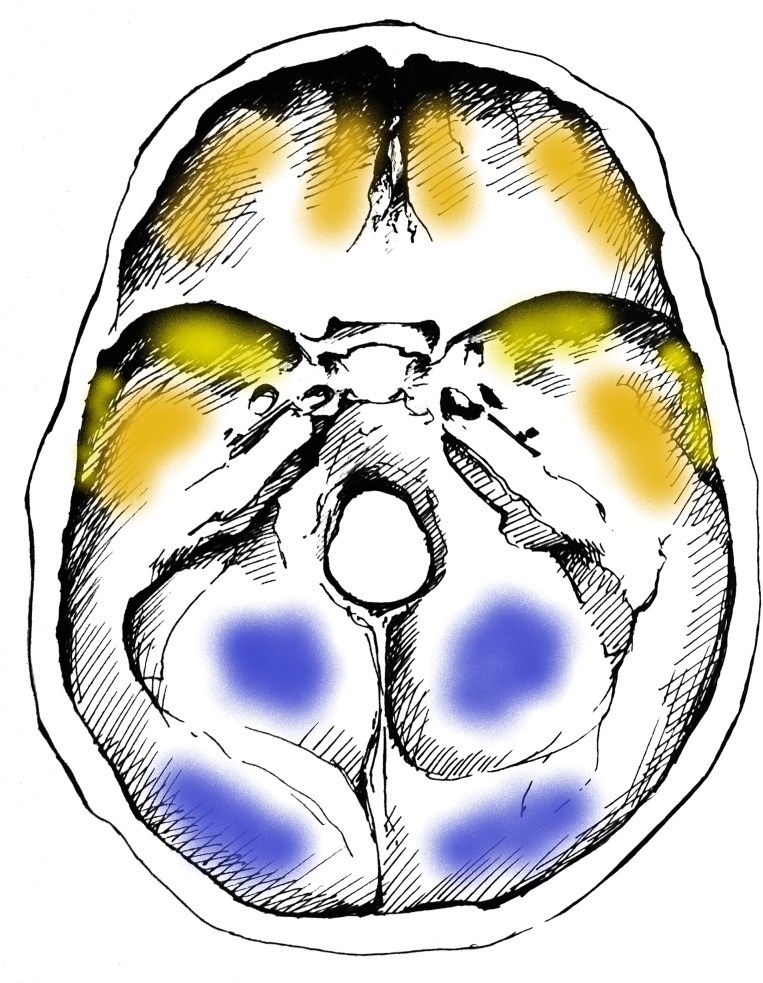
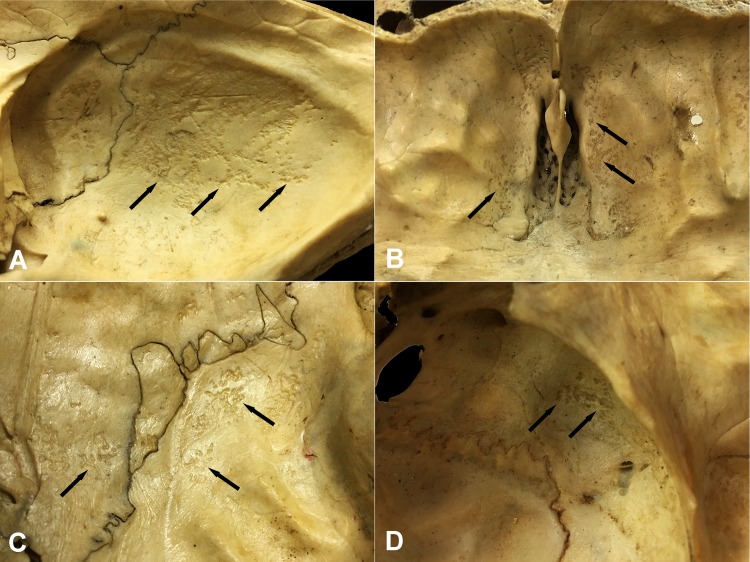
Paleopathological diagnosis of tuberculosis (TB) essentially relies on the identification of macroscopic lesions in the skeleton that can be related to different manifestations of TB. Among these alterations, granular impressions (GIs) on the inner skull surface have been considered as pathognomonic features of tuberculous meningitis (TBM). GIs may be established by pressure atrophy of the tubercles formed on the outermost meningeal layer during later stages of TBM. Although GIs were used as diagnostic criteria for TBM in the paleopathological practice since the late 20th century, their diagnostic value has been questioned. To contribute to strengthening the diagnostic value of GIs, a macroscopic investigation-focusing on the macromorphological characteristics and frequency of GIs-was performed on skeletons of known cause of death from the Terry Collection. The χ2 analysis of our data revealed that GIs were significantly more common in individuals who died of TB than in individuals who died of non-TB causes. Furthermore, GIs were localized on the inner surface of the skull base and of the lower lateral skull vault. The localization pattern and distribution of GIs on the endocranial surface resemble that of the tubercles observed in the affected meninges during the pathogenesis of TBM. Our results strengthen the tuberculous origin of GIs and imply that they can be considered as specific signs of TBM. Therefore, GIs can be used as diagnostic criteria for TBM in the paleopathological practice, and the diagnosis of TBM can be established with a high certainty when GIs are present in ancient human bone remains.
古病理学诊断结核病 (TB) 主要依赖于骨骼中宏观病变的识别,这些病变与 TB 的不同表现有关。在这些改变中,颅骨内表面的颗粒压痕 (GIs) 被认为是结核性脑膜炎 (TBM) 的特征性特征。GIs 可能是由 TBM 后期最外层脑膜层上形成的结核结节的压迫性萎缩引起的。尽管 GIs 自 20 世纪末以来一直被用作 TBM 的诊断标准,但它们的诊断价值一直受到质疑。为了增强 GIs 的诊断价值,对已知死因的 Terry 收藏骨骼进行了一项宏观调查——重点关注 GIs 的宏观形态特征和频率。我们的数据 χ2 分析表明,死于 TB 的个体中 GIs 明显更为常见,而死于非 TB 原因的个体中则较少。此外,GIs 位于颅底内表面和颅盖的下外侧。GIs 在颅内表面的定位模式和分布与 TBM 发病过程中观察到的脑膜受累的结核结节相似。我们的结果加强了 GIs 的结核起源,并暗示它们可以被视为 TBM 的特异性标志。因此,GIs 可在古病理学实践中用作 TBM 的诊断标准,当 GIs 存在于古代人类骨骼遗骸中时,可以高度确定地诊断 TBM。