Lin Ya-Chi, Yu Ya-Shan, Lin Hui-Hsuan, Hsiao Kuei-Yang
Department of Plant Pathology, College of Agriculture and Natural Resources, National Chung Hsing University, Taichung 40227, Taiwan.
Department of Biotechnology, Asia University, Taichung 41354, Taiwan.
Cancers (Basel). 2020 Mar 16;12(3):697. doi: 10.3390/cancers12030697.
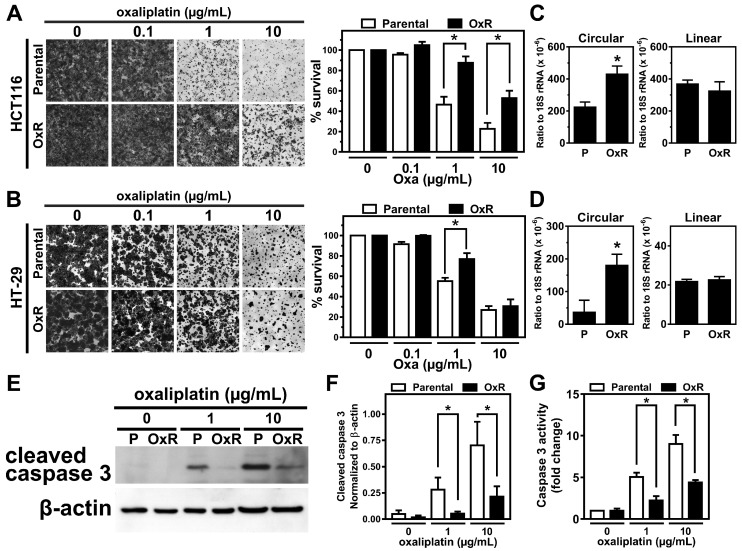
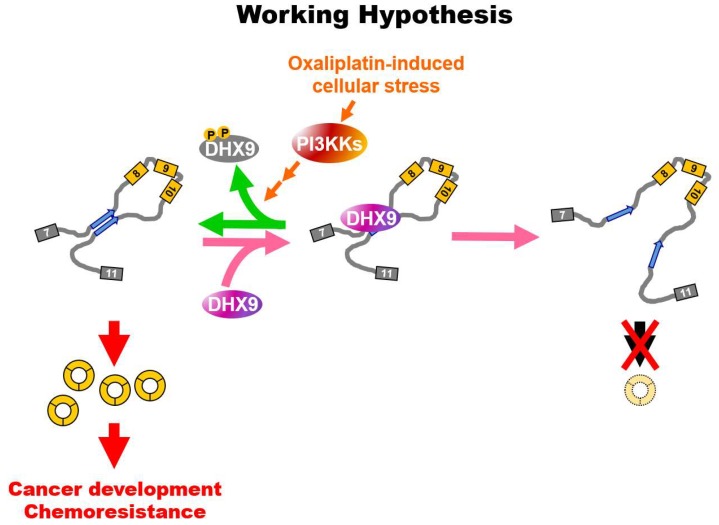
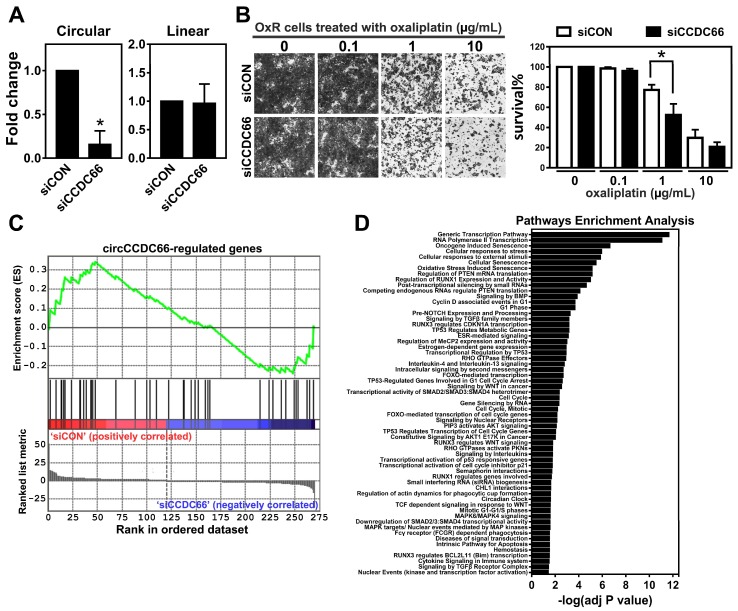
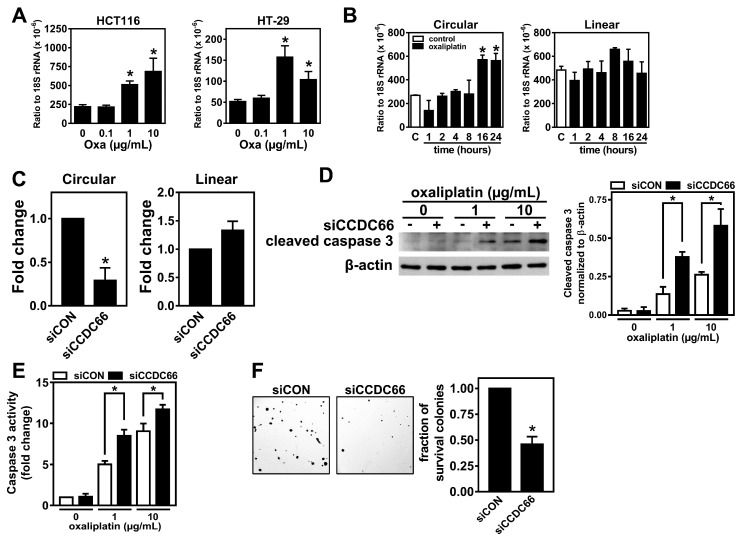
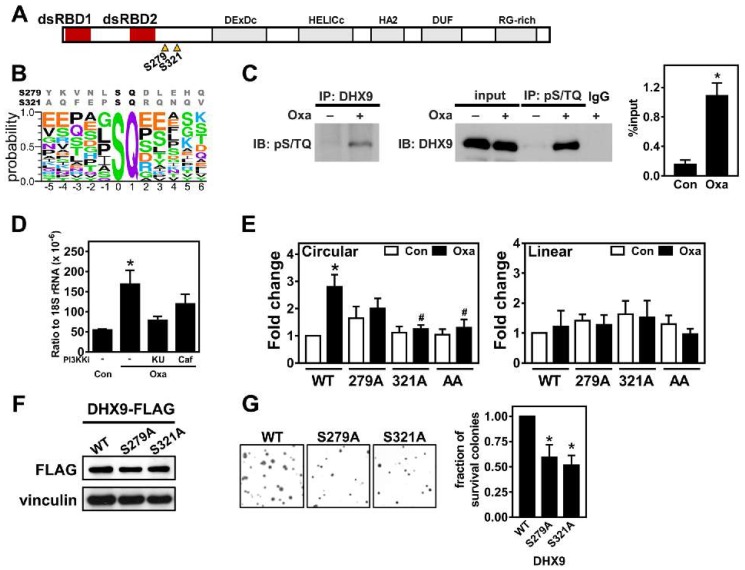
Circular RNA (circRNA), generated through backsplicing in which the downstream splice donor joins the upstream splice acceptor, is a novel class of RNA molecules. Our previous study found that a novel oncogenic circRNA-consisting exon 8-10 of -is aberrantly expressed in colorectal cancer (CRC) tissues and cells. The failure of treatment for colorectal cancer is typically associated with recurrent and chemoresistant cancerous tissues. In this study, we aimed to investigate the role(s) of circCCDC66 during the development of chemoresistance. We discovered that the expression level of circCCDC66 is elevated in colorectal cancer cells with resistance to oxaliplatin. Knockdown of circCCDC66 caused the downregulation of a subset of genes which are regulated by circCCDC66-associated miRNAs and related to the modulation of apoptosis and the cell cycle, suppressing cell survival, promoting oxaliplatin-induced apoptosis and, thus, hindering the development of oxaliplatin-resistance (OxR). The induction of circCCDC66 was dependent on the time-course and dose of oxaliplatin treatment. Our analyses revealed that DHX9 harbors two phosphorylation sites of phosphatidylinositol 3-kinase-related kinases (PI3KKs) close to substrate-binding domains. Blockage of phosphorylation by either PI3KK inhibitors or nonphosphorable mutants of DHX9 decreased the oxaliplatin-induced circCCDC66 expression and the ability to develop chemoresistant cells. Taken together, we demonstrated and linked the functional role of DHX9 phosphorylation to oncogenic circCCDC66 expression during the development of resistance to oxaliplatin, providing a mechanistic insight for the development of therapeutic strategies to recurring/chemoresistant colorectal cancer.
环状RNA(circRNA)是一类新型RNA分子,通过反向剪接产生,即下游剪接供体与上游剪接受体连接。我们之前的研究发现,一种由第8至10外显子组成的新型致癌circRNA在结直肠癌(CRC)组织和细胞中异常表达。结直肠癌治疗失败通常与癌症组织复发和化疗耐药有关。在本研究中,我们旨在探讨circCCDC66在化疗耐药发生过程中的作用。我们发现,circCCDC66在对奥沙利铂耐药的结直肠癌细胞中表达水平升高。敲低circCCDC66导致一组由circCCDC66相关miRNA调控且与细胞凋亡和细胞周期调节相关的基因下调,抑制细胞存活,促进奥沙利铂诱导的细胞凋亡,从而阻碍奥沙利铂耐药(OxR)的发生。circCCDC66的诱导依赖于奥沙利铂治疗的时间进程和剂量。我们的分析表明,DHX9在靠近底物结合域的位置含有两个磷脂酰肌醇3激酶相关激酶(PI3KKs)的磷酸化位点。PI3KK抑制剂或DHX9的非磷酸化突变体阻断磷酸化均降低了奥沙利铂诱导的circCCDC66表达以及产生化疗耐药细胞的能力。综上所述,我们证明并将DHX9磷酸化的功能作用与奥沙利铂耐药发生过程中致癌circCCDC66的表达联系起来,为复发性/化疗耐药性结直肠癌治疗策略的开发提供了机制性见解。