Department of Chronic Non-Communicable Diseases and Injury, Shanghai Municipal Center for Disease Control & Prevention, 1380 West Zhongshan Road, Shanghai, 200336, China.
National Clinical Research Center for Aging and Medicine, Huashan Hospital, Fudan University, 12 Middle Wulumuqi Road, Shanghai, 200031, China.
BMC Public Health. 2020 Mar 19;20(1):359. doi: 10.1186/s12889-020-8388-3.
Adults with chronic conditions such as heart disease, diabetes, or lung disease are more likely to develop complications from a number of vaccine-preventable diseases, including influenza and pneumonia. In this study, we use the data from a chronic disease management information system in Shanghai to estimate vaccination coverage and characterize predictors of seasonal influenza and 23-valent pneumococcal polysaccharide vaccine (PPSV23) vaccination among people with chronic disease in Shanghai.
The Shanghai Centers for Disease Control and Prevention have information systems related to chronic disease management, hospital records, and immunizations. Data from individuals with hypertension, diabetes and chronic obstructive pulmonary disease (COPD) were abstracted during July 2017. The main outcome was coverage of pneumococcal and influenza vaccination. Vaccination coverage was calculated across demographic groups. Significance in bivariate associations was assessed through Pearson's chi-square tests, and in multivariable models through logistic regression models with a forward stepwise method to select variables.
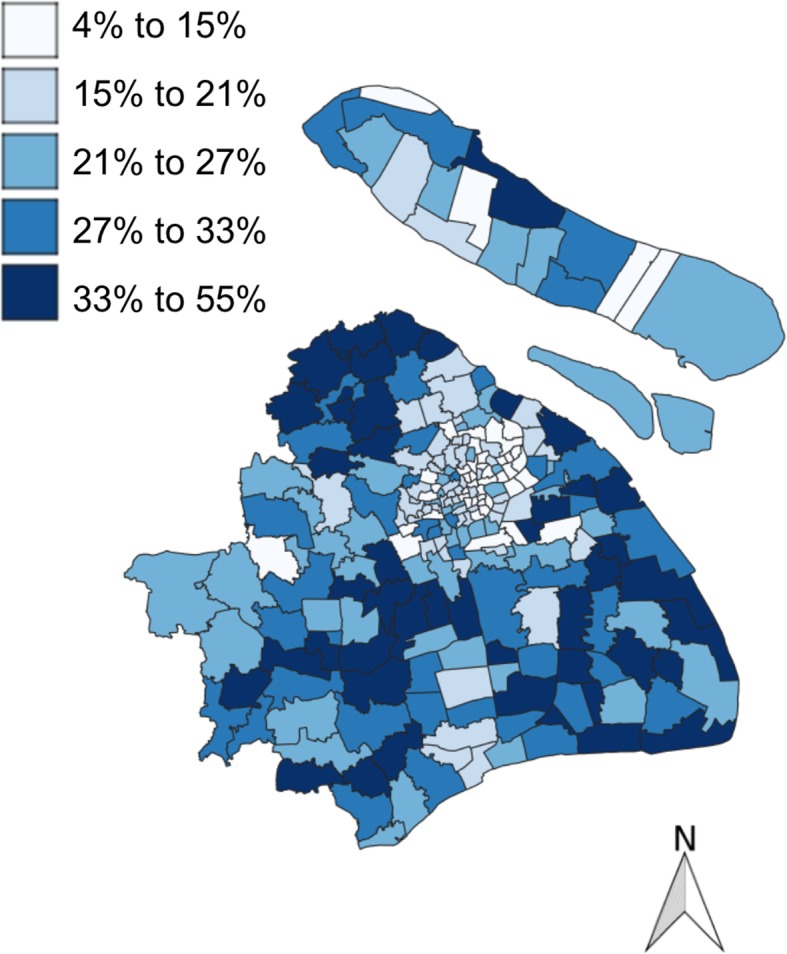
In the sample of 2,531,227 individuals ≥15 years, 22.8% were vaccinated for pneumonia from January 2013 to July 2017, and the vaccination coverage of influenza in the 2016/17 influenza season was 0.4%. Vaccination coverage was highest in those 70-79 and lowest in those younger than 60. Compared to urban areas, uptake in rural areas was higher for pneumonia vaccination (OR: 2.43, 95% CI: 2.41, 2.45), but lower for influenza vaccination (OR: 0.55, 95% CI: 0.51, 0.59). Having a greater number of chronic diseases was associated with higher likelihood of pneumonia vaccination (3 vs 1: OR: 1.68, 95% CI: 1.64, 1.71), but this relationship was not statistically significant for influenza vaccination.
We found low levels with of pneumococcal vaccination, and extremely low uptake of influenza vaccination among individuals with high risk conditions in Shanghai who should be priority groups targeted for vaccination. Interventions could be designed to target groups with low uptake - like younger adults, and individuals who have not yet retired.
患有心脏病、糖尿病或肺部疾病等慢性病的成年人更有可能因多种可通过疫苗预防的疾病(包括流感和肺炎)而出现并发症。在这项研究中,我们使用上海慢性病管理信息系统的数据来估计上海慢性病患者季节性流感和 23 价肺炎球菌多糖疫苗(PPSV23)的疫苗接种率,并描述其预测因素。
上海市疾病预防控制中心拥有与慢性病管理、医院记录和免疫接种相关的信息系统。2017 年 7 月,从高血压、糖尿病和慢性阻塞性肺疾病(COPD)患者中提取数据。主要结果是肺炎球菌和流感疫苗的接种率。在不同人群中计算肺炎球菌和流感疫苗的接种率。通过 Pearson 卡方检验评估二变量关联的显著性,通过逐步向前的逻辑回归模型评估多变量模型中的显著性,以选择变量。
在 2531227 名年龄≥15 岁的样本中,2013 年 1 月至 2017 年 7 月期间有 22.8%的人接种了肺炎疫苗,2016/17 流感季流感疫苗的接种率为 0.4%。70-79 岁人群的接种率最高,而 60 岁以下人群的接种率最低。与城市地区相比,农村地区的肺炎疫苗接种率更高(OR:2.43,95%CI:2.41,2.45),但流感疫苗接种率更低(OR:0.55,95%CI:0.51,0.59)。患有更多慢性病与更高的肺炎疫苗接种可能性相关(3 种 vs 1 种:OR:1.68,95%CI:1.64,1.71),但流感疫苗接种无统计学意义。
我们发现上海高危人群的肺炎球菌疫苗接种率较低,流感疫苗接种率极低。可以设计干预措施,针对接种率较低的人群,如年轻人和尚未退休的人群。