Pournasrollah Alireza, Negahdari Ramin, Gharekhani Vahedeh, Torab Ali, Jannati Ataei Soheil
Department of Prosthodontics, Faculty of Dentistry, Tabriz University of Medical Sciences, Tabriz, Iran.
Department of Prosthodontics, Faculty of Dentistry, Urmia University of Medical Sciences, Urmia, Iran.
J Dent Res Dent Clin Dent Prospects. 2019 Fall;13(4):289-297. doi: 10.15171/joddd.2019.044.
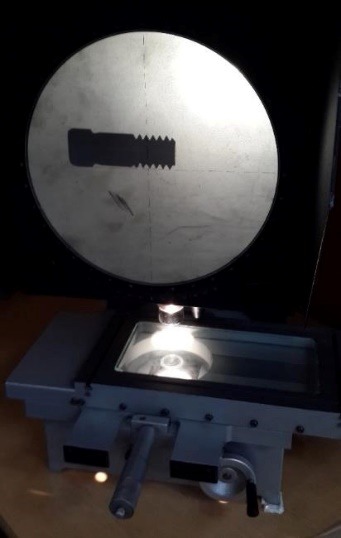
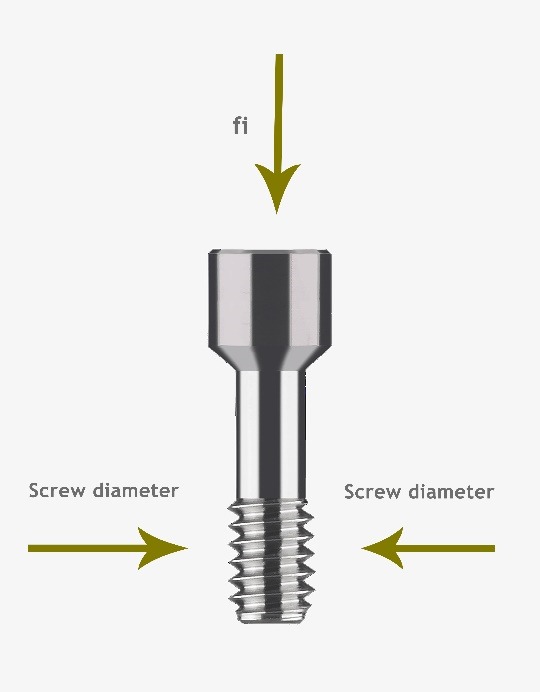
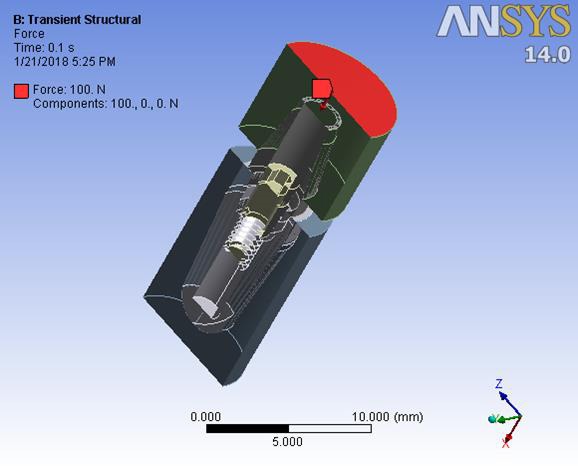
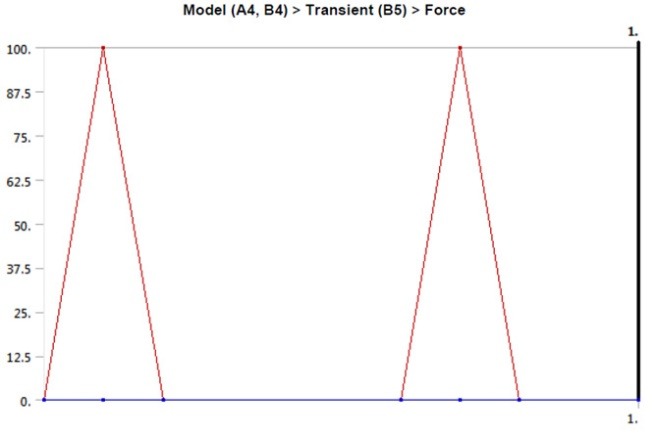
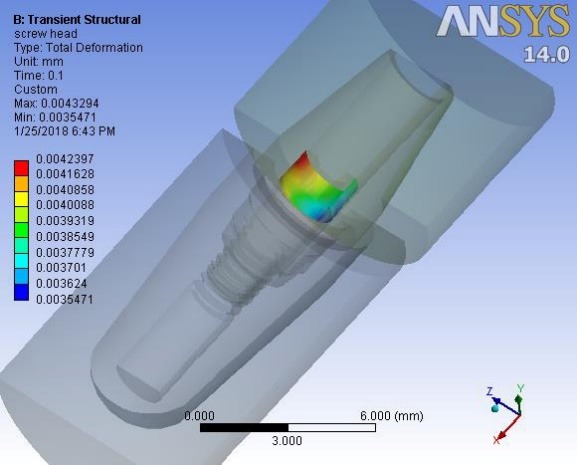
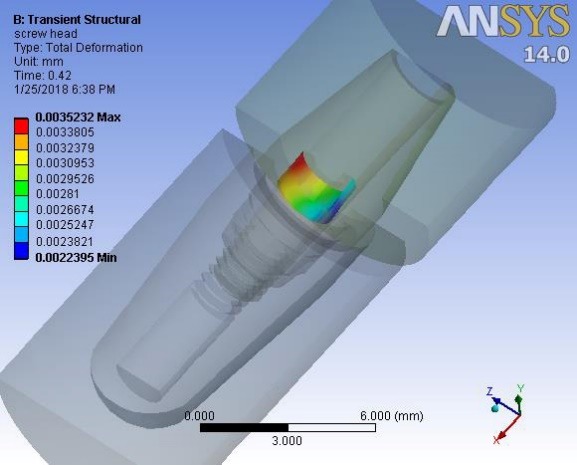
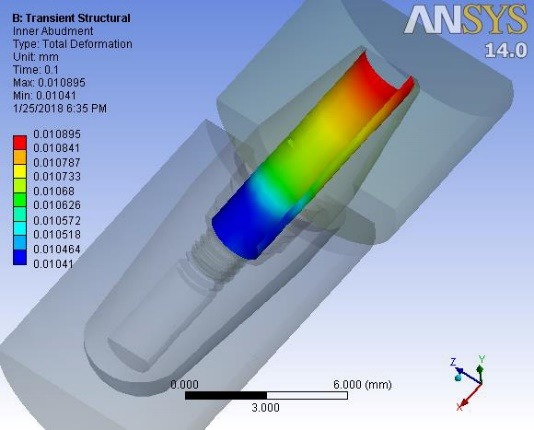
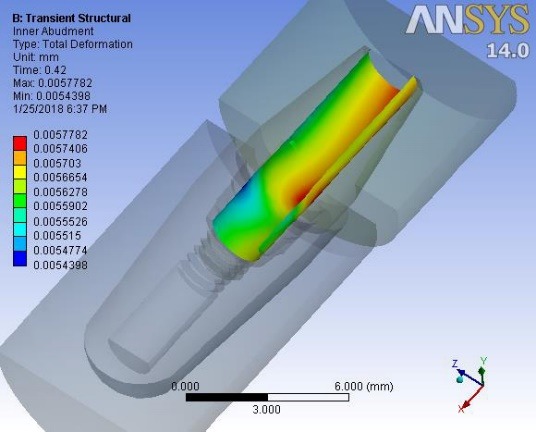
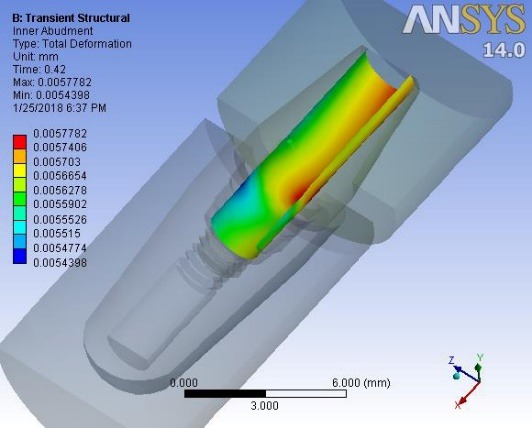
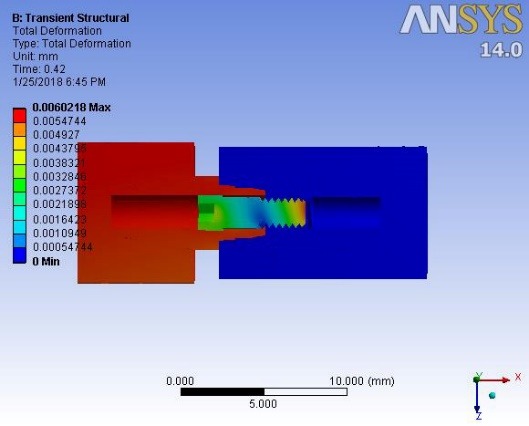
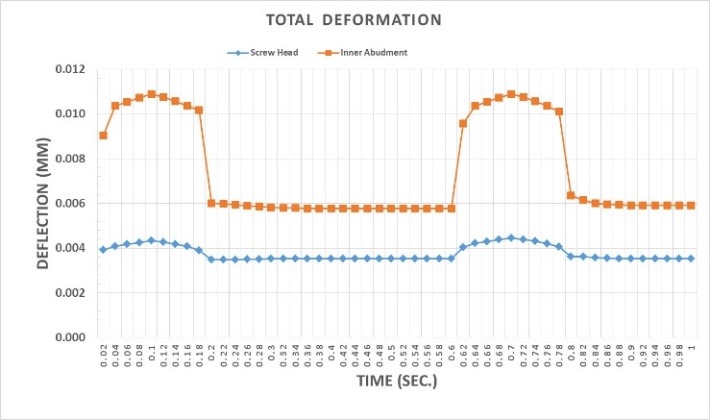
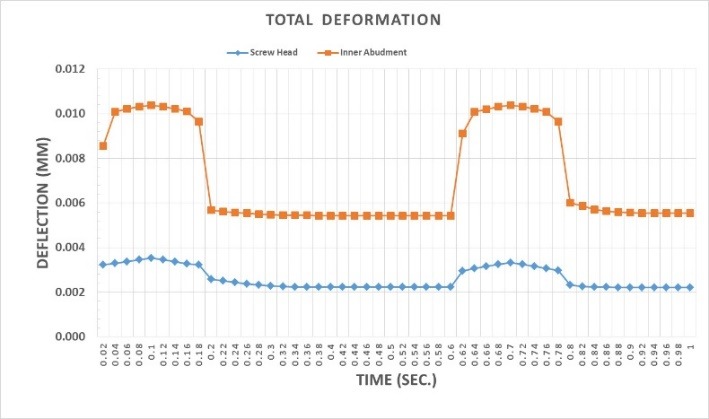
The most common problem associated with dental implants is the abutment screw loosening. This research aimed to investigate the effect of the type of connection on screw loosening, using a finite element method (FEM). Periosave system and different types of the implant-abutment connection were used for modeling. After being measured, CAD files were modeled using CATIA software and imported to the ANSYS analysis software, and the model was loaded. A force of 100 N was applied at 0.1 second, and no force was applied at 0.42 second. The screw head deformation at 0.1 and 0.42 seconds was 8 and 3.8 μm, and 7.6 and 2.8 μm at morse taper and octagon dental implant connections, respectively. The displacement rate of the internal surface of the abutment at 0.1 and 0.42 seconds was 10.7 and 8.4 μm, and 5.7 and 5.6 µm in the octagon and morse taper dental implant connections, respectively. The displacement of the implant suprastructure-abutment interface from the screw head at 0.1 and 0.42 seconds was 9 and 7 μm, and 7 and 6 μm in the morse taper and octagon dental implant connections, respectively. At intervals of 0 to 0.1 seconds and 0.6 to 0.8 seconds, the octagon connection was separated at the maximum screw head displacement and the internal part of the abutment, but the morse taper connection did not exhibit any separation. In the above time intervals, the results were similar to the maximum state in case of the minimum displacement of the screw head and the internal part of the abutment. Screw loosening is less likely to occur in the morse hex connection compared to the octagon connection due to the lack of separation of the screw from the internal surface of the abutment.
与牙种植体相关的最常见问题是基台螺丝松动。本研究旨在使用有限元方法(FEM)研究连接类型对螺丝松动的影响。使用Periosave系统和不同类型的种植体-基台连接进行建模。测量后,使用CATIA软件对CAD文件进行建模并导入ANSYS分析软件,然后加载模型。在0.1秒时施加100 N的力,在0.42秒时不施加力。在0.1秒和0.42秒时,莫氏锥度和八角形牙种植体连接的螺丝头变形分别为8和3.8μm,以及7.6和2.8μm。在0.1秒和0.42秒时,基台内表面的位移速率在八角形和莫氏锥度牙种植体连接中分别为10.7和8.4μm,以及5.7和5.6μm。在0.1秒和0.42秒时,种植体上部结构-基台界面相对于螺丝头的位移在莫氏锥度和八角形牙种植体连接中分别为9和7μm,以及7和6μm。在0至0.1秒和0.6至0.8秒的时间间隔内,八角形连接在螺丝头最大位移和基台内部出现分离,但莫氏锥度连接未出现任何分离。在上述时间间隔内,结果与螺丝头和基台内部最小位移情况下的最大状态相似。由于螺丝与基台内表面没有分离,与八角形连接相比,莫氏六角连接中螺丝松动的可能性较小。