Mitsias Dimitrios I, Dimou Maria V, Lakoumentas John, Alevizopoulos Konstantinos, Sousa-Pinto Bernardo, Fonseca Joao A, Bousquet Jean, Papadopoulos Nikolaos G
1Allergy Department, 2nd Pediatric Clinic, Athens General Children's Hospital "P&A Kyriakou", University of Athens, Thivon and Levadias 1, Athens, Greece.
Gerolymatos Int.S.A., Krioneri, Greece.
Clin Transl Allergy. 2020 Mar 13;10:9. doi: 10.1186/s13601-020-00313-2. eCollection 2020.
Nasal irrigations (NI) are increasingly used as an over-the-counter adjunctive treatment for allergic rhinitis (AR), but clinical studies on their effectiveness are limited.
An open-label, controlled, non-randomized, real-life study was conducted to evaluate the effectiveness of NI with a new hypertonic solution as add-on treatment for AR. Children and adolescents with AR were prescribed symptomatic treatment. The active group also received an additional sea-water NI solution supplemented with algae extracts. The primary endpoint was symptom control, assessed by the control of allergic rhinitis and asthma test (CARAT) questionnaires. Moreover, the MASK/Allergy Diary was used to track symptoms and daily medication use that were combined in a novel total symptom/medication score (TSMS).
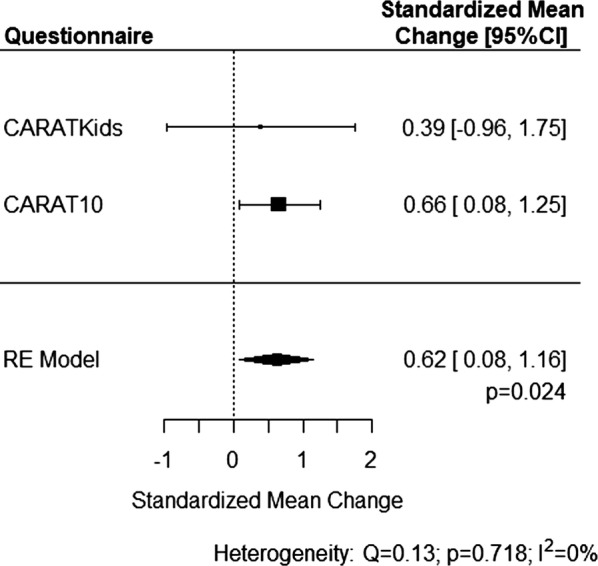
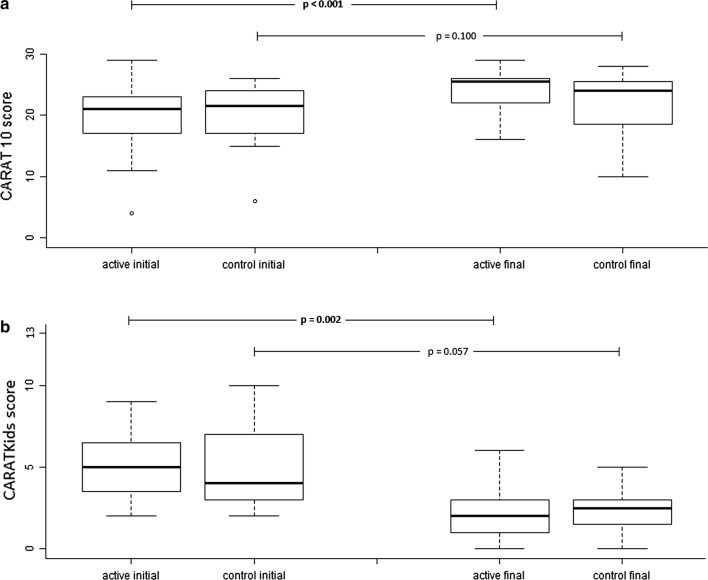
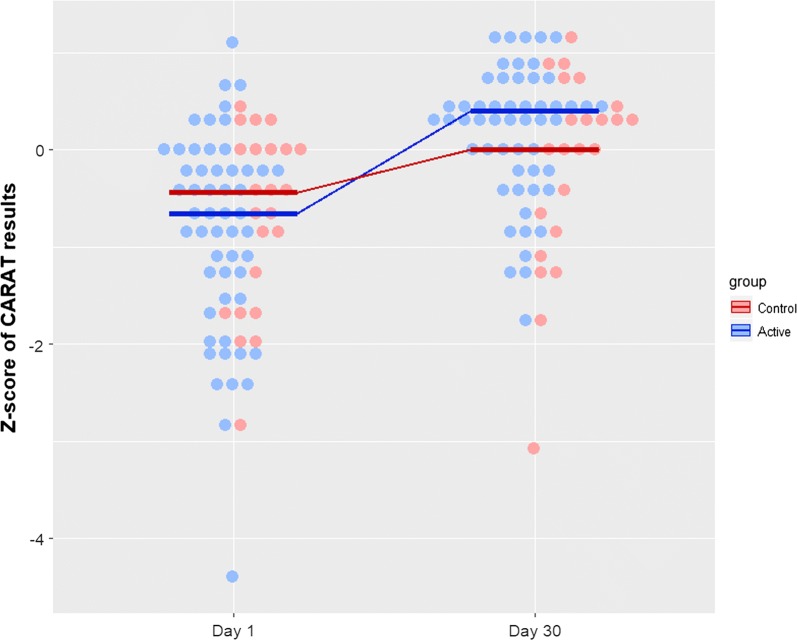
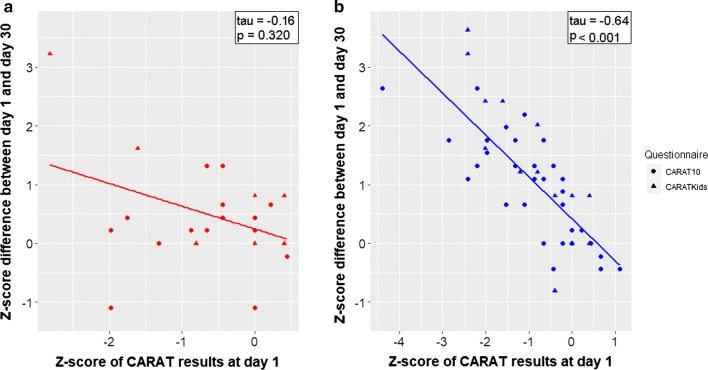
We assessed 76 patients. Overall, there was a significant improvement of CARAT results (median Z-score change of 1.1 in the active/NI group vs. 0.4 in the control group; = 0.035). Among patients > 12 years old (n = 51), there was a significant improvement in CARAT10 results among participants receiving NI (21.0 to 25.5; < 0.001), but not in the regular treatment group (21.5 to 24.0; = 0.100). For children < 12 years old (n = 25), the ΝΙ group had significantly improved symptom control (CARATKids results: 5.0 to 2.0; = 0.002), in contrast to the control group (4.0 to 2.5; = 0.057). MASK data on allergic symptoms were comparable between groups. However, the NI group had lower TSMS, more days with < 20% symptoms and fewer days using symptomatic treatment (26.9% vs. 43.5%; = 0.005).
Addition of NI with a sea-water solution to regular treatment improved AR symptom control. CARAT questionnaires and MASK application can be useful outcome tools in real-life studies.
鼻腔冲洗(NI)作为过敏性鼻炎(AR)的非处方辅助治疗方法,其使用日益广泛,但关于其有效性的临床研究有限。
开展一项开放标签、对照、非随机的现实生活研究,以评估一种新型高渗溶液鼻腔冲洗作为AR附加治疗的有效性。为患有AR的儿童和青少年开了对症治疗药物。治疗组还额外接受了一种添加藻类提取物的海水鼻腔冲洗溶液。主要终点是症状控制,通过过敏性鼻炎和哮喘控制测试(CARAT)问卷进行评估。此外,使用MASK/过敏日记来跟踪症状和日常用药情况,并将其合并为一个新的总症状/用药评分(TSMS)。
我们评估了76例患者。总体而言,CARAT结果有显著改善(治疗组/NI组的中位数Z评分变化为1.1,而对照组为0.4;P = 0.035)。在12岁以上的患者(n = 51)中,接受鼻腔冲洗的参与者的CARAT10结果有显著改善(从21.0至25.5;P < 0.001),而常规治疗组则无显著改善(从21.5至24.0;P = 0.100)。对于12岁以下的儿童(n = 25),与对照组(从4.0至2.5;P = 0.057)相比,鼻腔冲洗组的症状控制有显著改善(CARATKids结果:从5.0至2.0;P = 0.002)。两组之间关于过敏症状的MASK数据具有可比性。然而,鼻腔冲洗组的TSMS较低,症状<20%的天数更多,使用对症治疗的天数更少(26.9%对43.5%;P = 0.005)。
在常规治疗中添加海水溶液鼻腔冲洗可改善AR症状控制。CARAT问卷和MASK应用可成为现实生活研究中有用的结果工具。