Li Xin, Lv Jiancheng, Liu Shuai
Department of Urology, Shandong Provincial Hospital Affiliated to Shandong University, Ji'nan 250021, P. R. China; Department of Urology, Graduate School of Medicine, Kyoto University, Kyoto 606-8501, Japan.
Department of Urology, The First Affiliated Hospital of Nanjing Medical University, Nanjing 210029, P. R. China.
Mol Ther Nucleic Acids. 2020 Jun 5;20:265-278. doi: 10.1016/j.omtn.2020.01.016. Epub 2020 Jan 23.
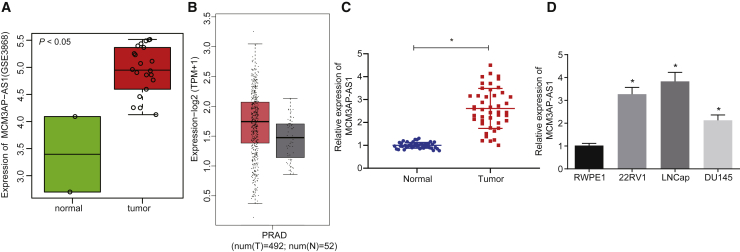
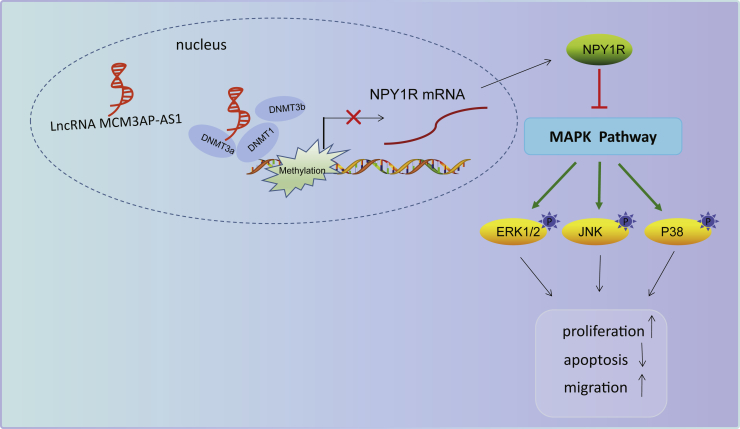
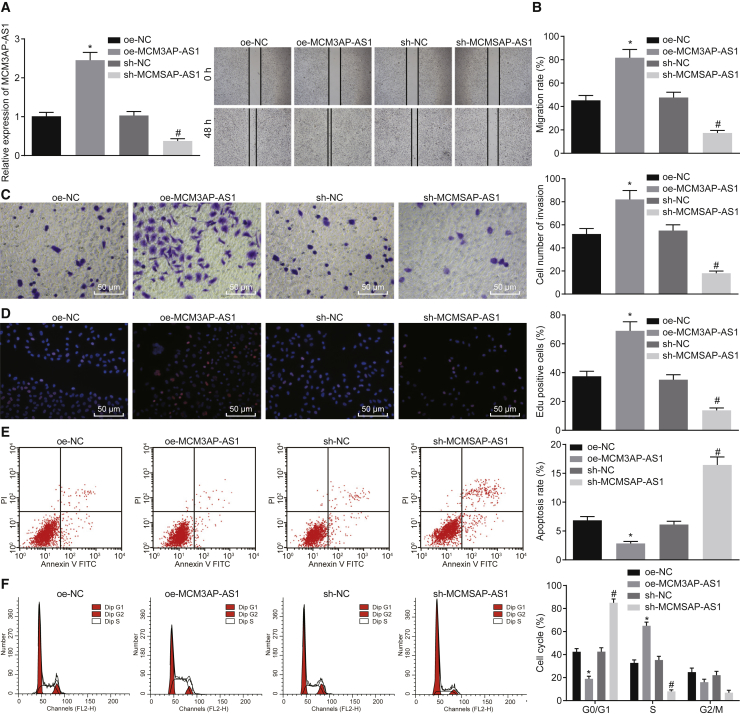
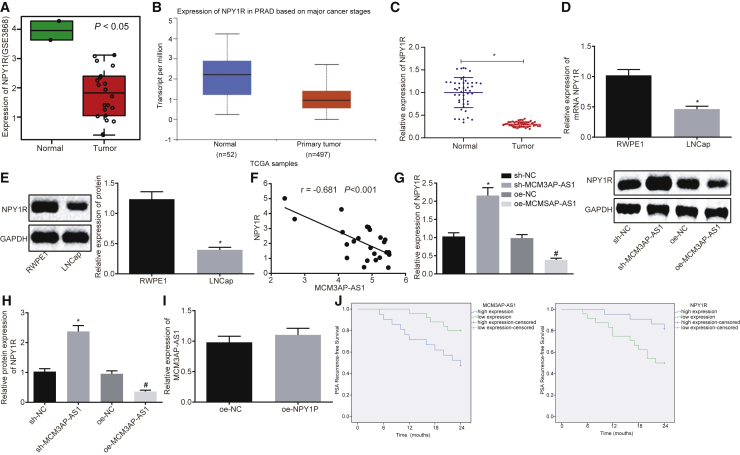
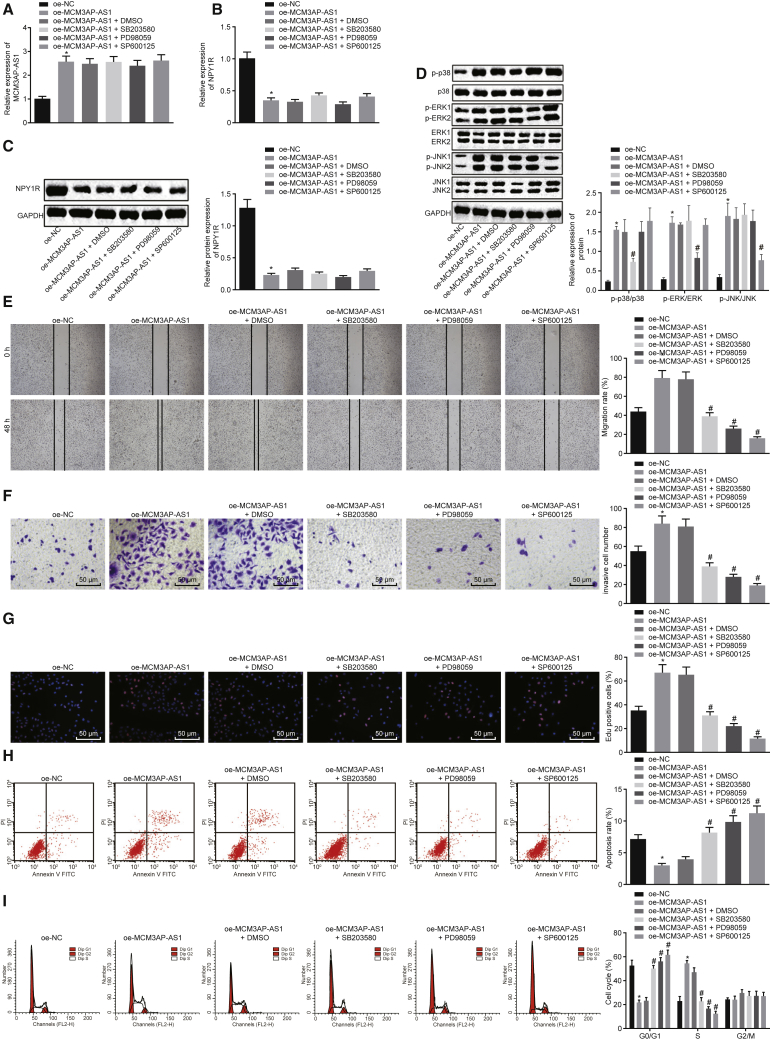
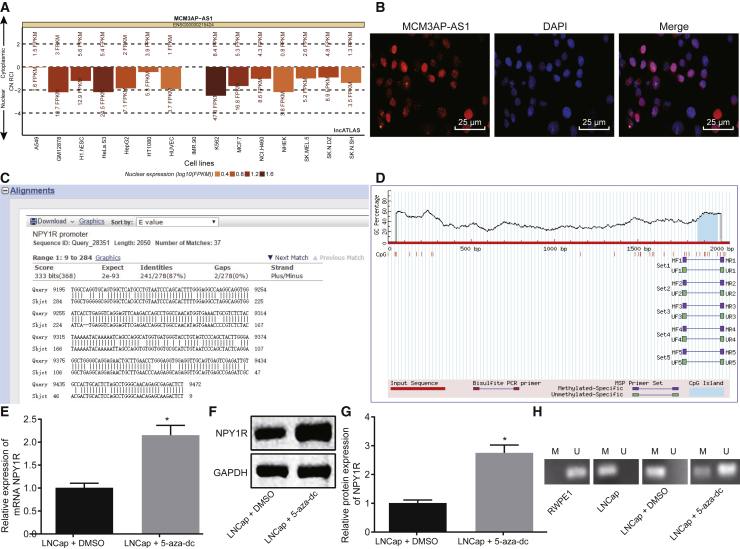
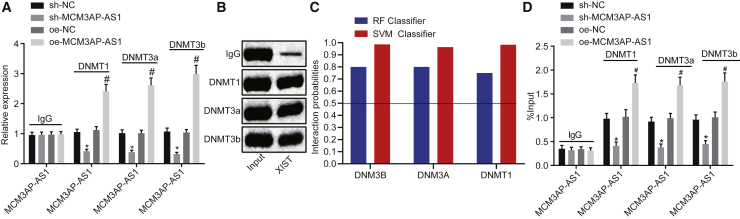
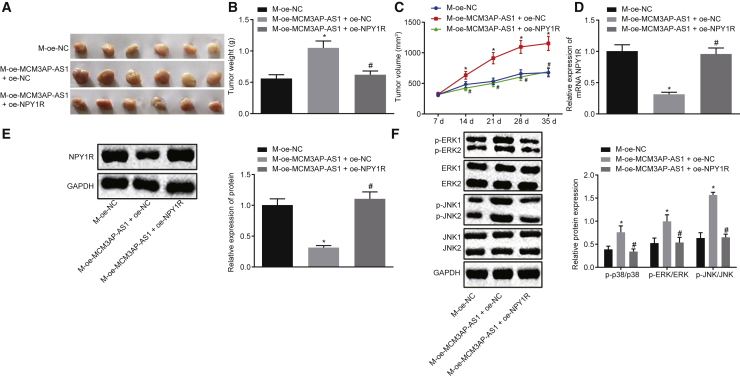
Prostate cancer (PCa) is a heterogeneous tumor that commonly occurs among males worldwide. This study explored the potential role that long non-coding RNA MCM3AP antisense RNA 1 (MCM3AP-AS1) plays in PCa progression, and investigated its mechanism. MCM3AP-AS1 and neuropeptide Y receptor Y1 (NPY1R) expression was determined in PCa cells. The regulatory role of MCM3AP-AS1 in PCa cells was defined using scratch test, Transwell assay, 5-ethynyl-2'-deoxyuridine (EdU) assay, and flow cytometry. Methylation-specific PCR (MSP) was used to test the methylation level of NPY1R. Subsequently, the interaction among MCM3AP-AS1, DNA methyltransferase (DNMT)1/DNMT3 (A/B), and NPY1R was investigated using RNA immunoprecipitation, RNA pull-down, and chromatin immunoprecipitation. Finally, we observed xenograft tumor in nude mice. MCM3AP-AS1 was highly, whereas NPY1R was poorly, expressed in PCa. Lentivirus-mediated overexpression of MCM3AP-AS1 promoted proliferation, invasion, and migration while suppressing apoptosis of PCa cells, whereas opposite trends were detected after inhibition of the mitogen-activated protein kinase (MAPK) pathway. MCM3AP-AS1 promoted methylation of NPY1R promoter via recruitment of DNMT1/DNMT3 (A/B), thereby downregulating NPY1R expression to activate the MAPK pathway. Furthermore, overexpressed MCM3AP-AS1 was observed to facilitate PCa development in vivo, which could be reversed by overexpressed NPY1R. Altogether, MCM3AP-AS1 silencing inhibits PCa progression by disrupting methylation of the NPY1R promoter to inactivate the MAPK pathway.
前列腺癌(PCa)是一种异质性肿瘤,在全球男性中普遍存在。本研究探讨了长链非编码RNA MCM3AP反义RNA 1(MCM3AP-AS1)在PCa进展中所起的潜在作用,并研究了其机制。测定了PCa细胞中MCM3AP-AS1和神经肽Y受体Y1(NPY1R)的表达。使用划痕试验、Transwell试验、5-乙炔基-2'-脱氧尿苷(EdU)试验和流式细胞术确定了MCM3AP-AS1在PCa细胞中的调节作用。采用甲基化特异性PCR(MSP)检测NPY1R的甲基化水平。随后,使用RNA免疫沉淀、RNA下拉和染色质免疫沉淀研究了MCM3AP-AS1、DNA甲基转移酶(DNMT)1/DNMT3(A/B)和NPY1R之间的相互作用。最后,我们在裸鼠中观察了异种移植肿瘤。MCM3AP-AS1在PCa中高表达,而NPY1R低表达。慢病毒介导的MCM3AP-AS1过表达促进了PCa细胞的增殖、侵袭和迁移,同时抑制了其凋亡,而在抑制丝裂原活化蛋白激酶(MAPK)途径后检测到相反的趋势。MCM3AP-AS1通过招募DNMT1/DNMT3(A/B)促进NPY1R启动子的甲基化,从而下调NPY1R表达以激活MAPK途径。此外,观察到过表达的MCM3AP-AS1促进了体内PCa的发展,而过表达的NPY1R可以逆转这种情况。总之,MCM3AP-AS1沉默通过破坏NPY1R启动子的甲基化使MAPK途径失活,从而抑制PCa进展。