Li Yong, Li Yiqun, Li Dengke, Li Kaiming, Quan Zhengyang, Wang Ziyi, Sun Zhenxiao
School of Life Sciences, Beijing University of Chinese Medicine, Beijing, China.
Front Pharmacol. 2020 Mar 3;11:187. doi: 10.3389/fphar.2020.00187. eCollection 2020.
Drug repositioning, development of new uses for marketed drugs, is an effective way to discover new antitumor compounds. In this study, we used a new method, filtering compounds molecular docking to find key targets combination.
The data of gene expression in cancer and normal tissues of colorectal, breast, and liver cancer were obtained from The Cancer Genome Atlas Project (TCGA). The key targets combination was obtained from the protein-protein interaction network (PPI network) and the correlation analysis of the targets. Molecular docking was used to reposition the drugs which were obtained from DrugBank. MTT proliferation assay and animal experiments were used to verify the activity of candidate compounds. Flow cytometric analysis of proliferation, cell cycle and apoptosis, slice analysis, gene regulatory network, and Western blot were performed to elucidate the mechanism of drug action.
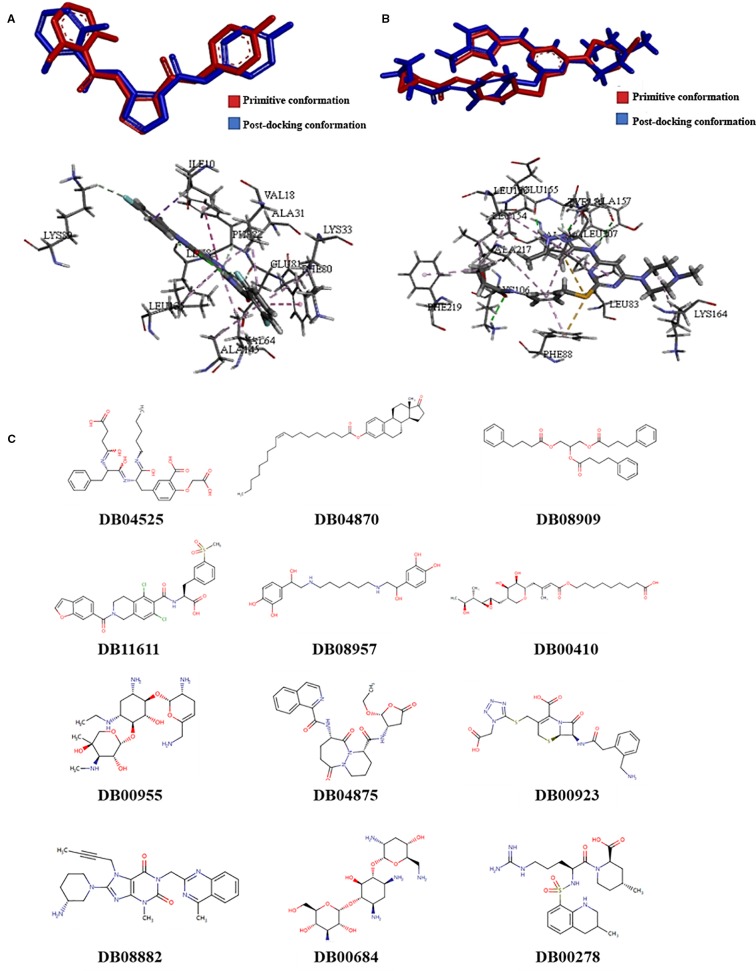
CDK1 and AURKB were identified as a pair of key targets by the analysis of different expression gene from TCGA. Three compounds, linagliptin, mupirocin, and tobramycin, from 12 computationally predicted compounds, were verified to inhibit cell viability in HCT116 (colorectal), MCF7 (breast), and HepG2 (liver) cancer cells. Linagliptin, a hypoglycemic drug, was proved to inhibit cell proliferation by cell cycle arrest and induce apoptosis in HCT116 cells, and suppress tumor growth in nude mice bearing HCT116 cells. Linagliptin reduced the tumor size and decreased the expression of Ki67, a nuclear protein expressed in all proliferative cells. Gene regulatory network and Western blot analysis suggested that linagliptin inhibited tumor cell proliferation and promoted cell apoptosis through suppressing the expression and phosphorylation of Rb, plus down-regulating the expression of Pro-caspase3 and Bcl-2, respectively.
The combination of key targets based on the protein-protein interaction network that were built by the different gene expression of TCGA data to reposition the marketed drugs turned out to be a new approach to discover new antitumor drugs. Hypoglycemic drug linagliptin could potentially lead to novel therapeutics for the treatment of tumors, especially for colorectal cancer. Gene regulatory network is a valuable method for predicting and explaining the mechanism of drugs action.
药物重新定位,即开发已上市药物的新用途,是发现新的抗肿瘤化合物的有效途径。在本研究中,我们使用了一种新方法,即通过分子对接筛选化合物以找到关键靶点组合。
从癌症基因组图谱计划(TCGA)获取结直肠癌、乳腺癌和肝癌的癌组织与正常组织中的基因表达数据。通过蛋白质-蛋白质相互作用网络(PPI网络)和靶点的相关性分析获得关键靶点组合。利用分子对接对从药物银行(DrugBank)获取的药物进行重新定位。采用MTT增殖试验和动物实验验证候选化合物的活性。通过流式细胞术分析增殖、细胞周期和凋亡,切片分析、基因调控网络和蛋白质印迹法来阐明药物作用机制。
通过对TCGA数据中差异表达基因的分析,确定细胞周期蛋白依赖性激酶1(CDK1)和极光激酶B(AURKB)为一对关键靶点。在12种通过计算机预测的化合物中,三种化合物,即利拉鲁肽、莫匹罗星和妥布霉素,被证实可抑制HCT116(结直肠癌)、MCF7(乳腺癌)和HepG2(肝癌)癌细胞的细胞活力。降糖药利拉鲁肽被证明可通过细胞周期阻滞抑制HCT116细胞的增殖并诱导其凋亡,并抑制携带HCT116细胞的裸鼠体内肿瘤生长。利拉鲁肽减小了肿瘤大小,并降低了Ki67的表达,Ki67是一种在所有增殖细胞中表达的核蛋白。基因调控网络和蛋白质印迹分析表明,利拉鲁肽通过抑制视网膜母细胞瘤蛋白(Rb)的表达和磷酸化,以及分别下调前半胱天冬酶3(Pro-caspase3)和Bcl-2的表达,来抑制肿瘤细胞增殖并促进细胞凋亡。
基于TCGA数据的差异基因表达构建蛋白质-蛋白质相互作用网络,进而组合关键靶点以重新定位已上市药物,结果证明这是发现新的抗肿瘤药物的一种新方法。降糖药利拉鲁肽可能会为肿瘤治疗,尤其是结直肠癌治疗带来新的疗法。基因调控网络是预测和解释药物作用机制的一种有价值的方法。