Zhu Sha, Bai Qifeng, Li Lanqing, Xu Tingyang
Key Lab of Preclinical Study for New Drugs of Gansu Province, Institute of Biochemistry and Molecular Biology, School of Basic Medical Sciences, Lanzhou University, Lanzhou, Gansu 730000, PR China.
Tencent AI Lab, Shenzhen, PR China.
Comput Struct Biotechnol J. 2022 Jun 1;20:2839-2847. doi: 10.1016/j.csbj.2022.05.057. eCollection 2022.
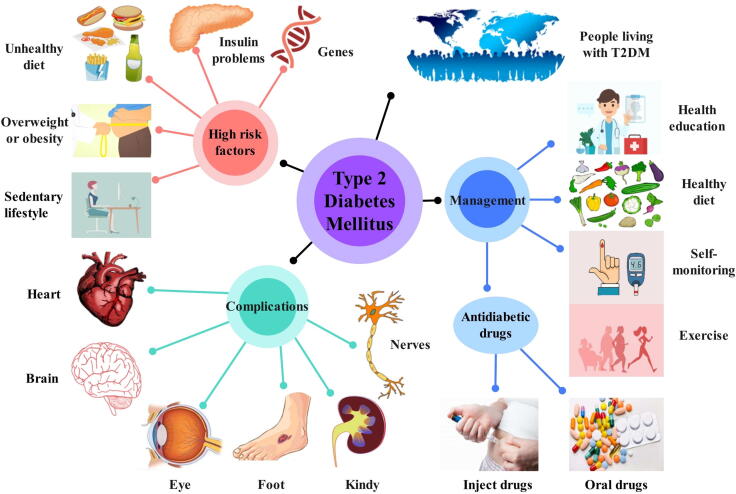
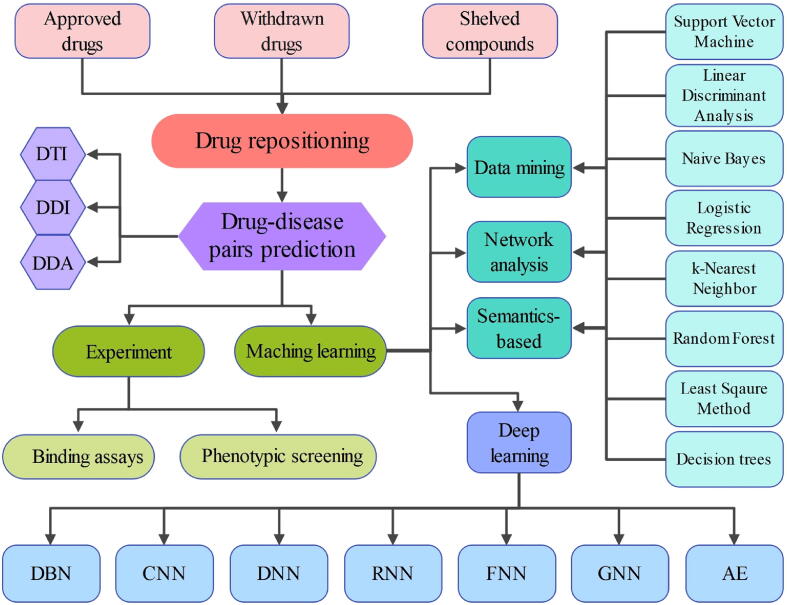
Repositioning or repurposing drugs account for a substantial part of entering approval pipeline drugs, which indicates that drug repositioning has huge market potential and value. Computational technologies such as machine learning methods have accelerated the process of drug repositioning in the last few decades years. The repositioning potential of type 2 diabetes mellitus (T2DM) drugs for various diseases such as cancer, neurodegenerative diseases, and cardiovascular diseases have been widely studied. Hence, the related summary about repurposing antidiabetic drugs is of great significance. In this review, we focus on the machine learning methods for the development of new T2DM drugs and give an overview of the repurposing potential of the existing antidiabetic agents.
药物重新定位或重新用途占进入审批流程药物的很大一部分,这表明药物重新定位具有巨大的市场潜力和价值。在过去几十年中,诸如机器学习方法等计算技术加速了药物重新定位的进程。2型糖尿病(T2DM)药物对癌症、神经退行性疾病和心血管疾病等各种疾病的重新定位潜力已得到广泛研究。因此,关于抗糖尿病药物重新用途的相关综述具有重要意义。在本综述中,我们聚焦于用于开发新型T2DM药物的机器学习方法,并概述现有抗糖尿病药物的重新用途潜力。