Cifrová Petra, Oulehlová Denisa, Kollárová Eva, Martinek Jan, Rosero Amparo, Žárský Viktor, Schwarzerová Kateřina, Cvrčková Fatima
Department of Experimental Plant Biology, Faculty of Science, Charles University, Prague, Czechia.
Institute of Experimental Botany, Academy of Sciences of the Czech Republic, Prague, Czechia.
Front Plant Sci. 2020 Mar 2;11:148. doi: 10.3389/fpls.2020.00148. eCollection 2020.
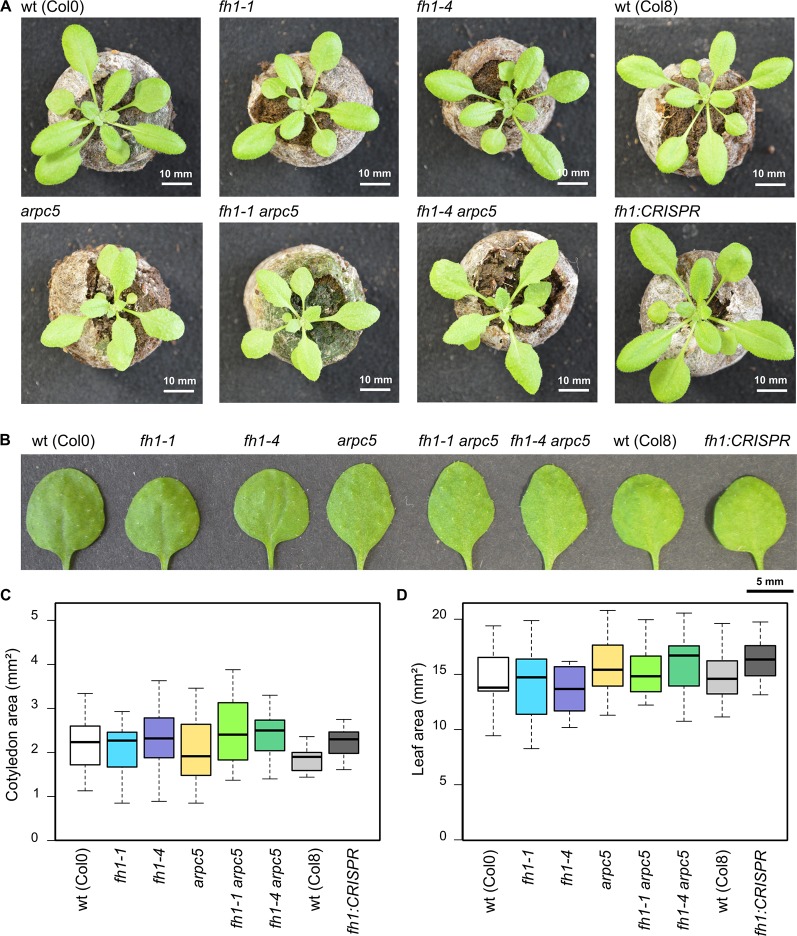
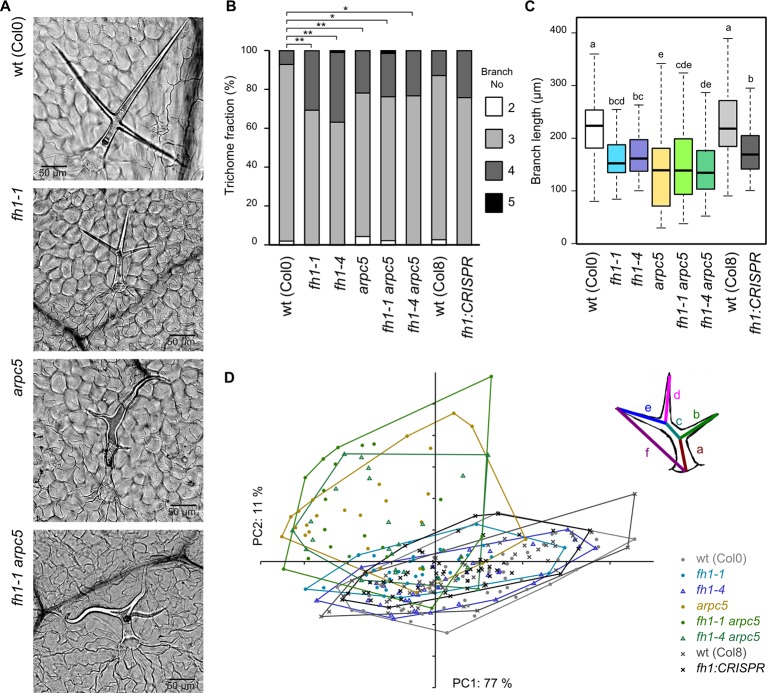
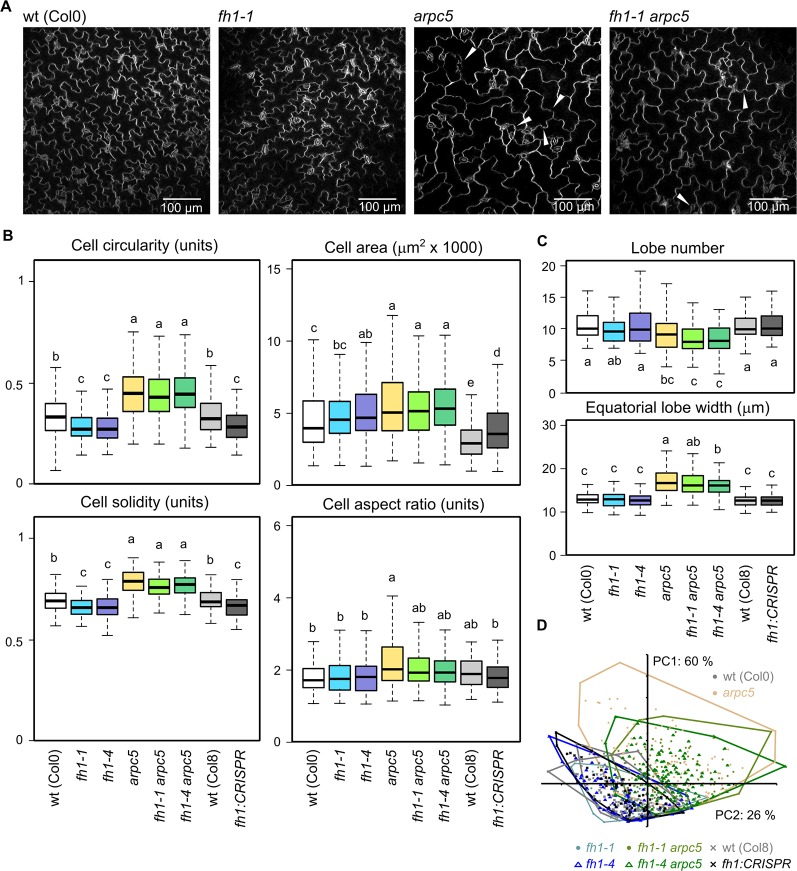
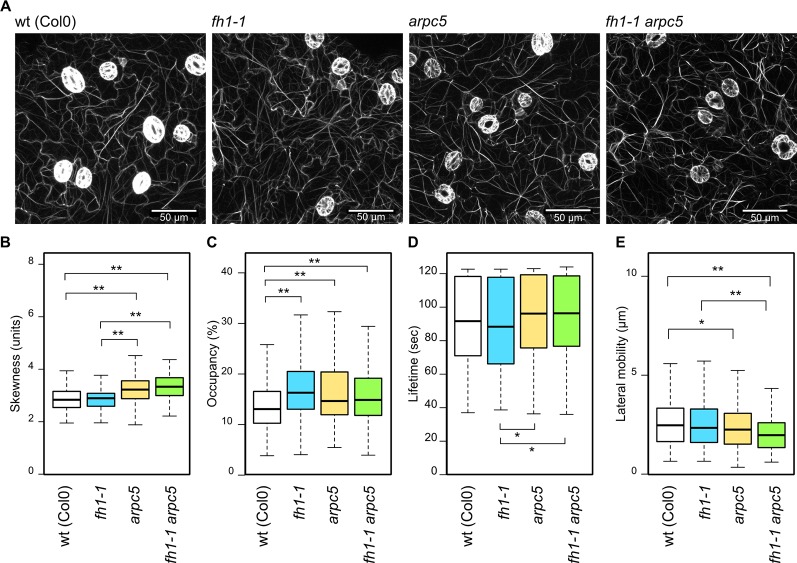
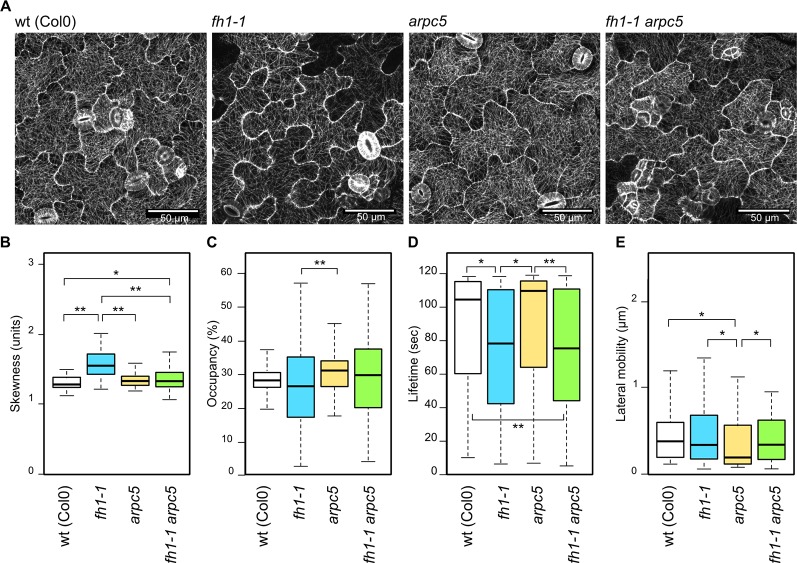
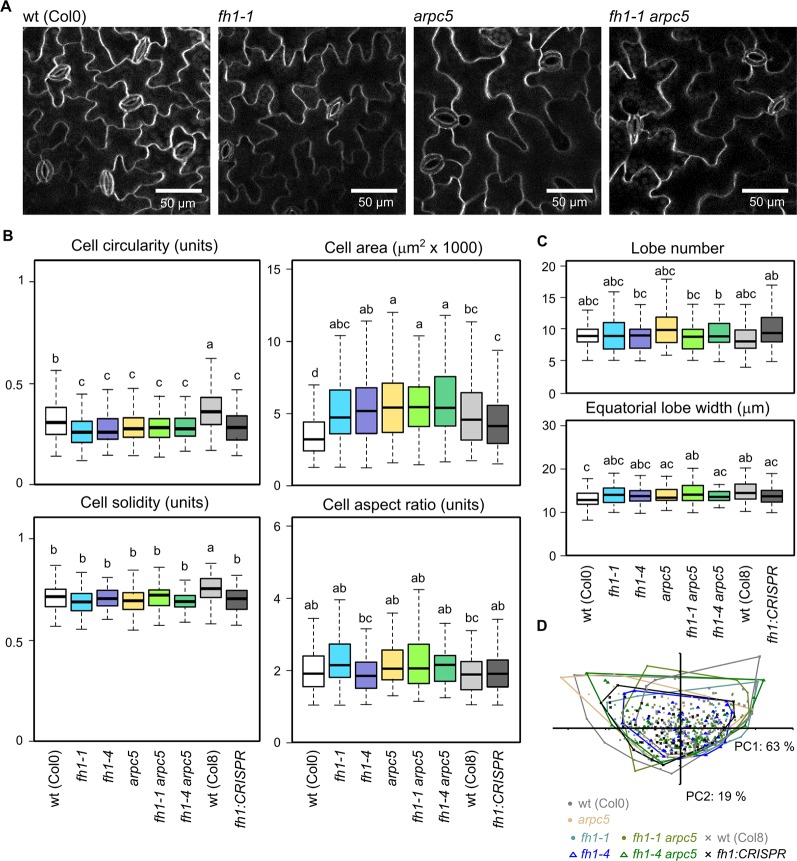
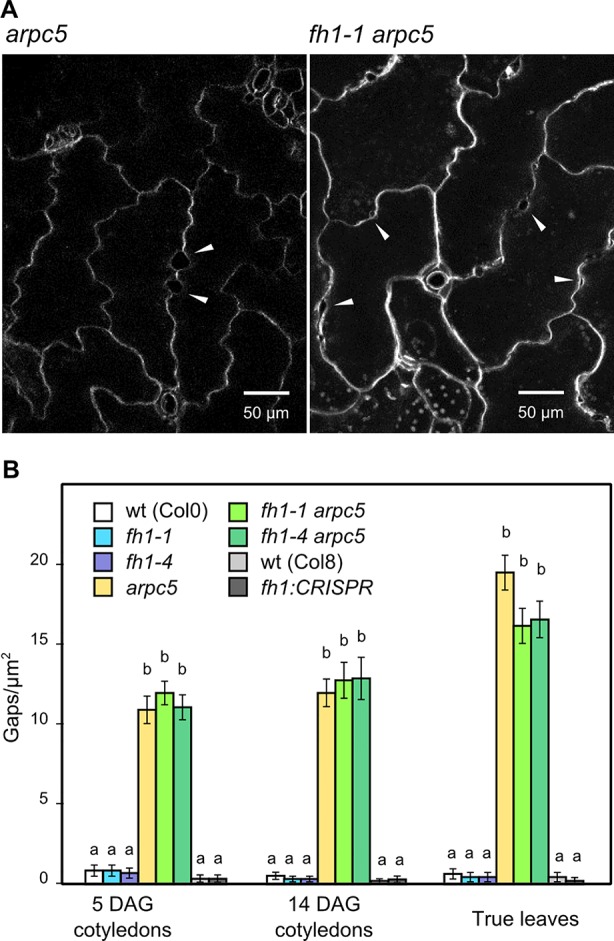
The ARP2/3 complex and formins are the only known plant actin nucleators. Besides their actin-related functions, both systems also modulate microtubule organization and dynamics. Loss of the main housekeeping Class I membrane-targeted formin FH1 (At3g25500) is known to increase cotyledon pavement cell lobing, while mutations affecting ARP2/3 subunits exhibit an opposite effect. Here we examine the role of FH1 and the ARP2/3 complex subunit ARPC5 (At4g01710) in epidermal cell morphogenesis with focus on pavement cells and trichomes using a model system of single and , as well as double mutants. While cotyledon pavement cell shape in double mutants mostly resembled single mutants, analysis of true leaf epidermal morphology, as well as actin and microtubule organization and dynamics, revealed a more complex relationship between the two systems and similar, rather than antagonistic, effects on some parameters. Both and mutations increased actin network density and increased cell shape complexity in pavement cells and trichomes of first true leaves, in contrast to cotyledons. Thus, while the two actin nucleation systems have complementary roles in some aspects of cell morphogenesis in cotyledon pavement cells, they may act in parallel in other cell types and developmental stages.
ARP2/3复合体和formin是已知的仅有的植物肌动蛋白成核因子。除了其与肌动蛋白相关的功能外,这两个系统还调节微管的组织和动态变化。已知主要的管家I类膜靶向formin FH1(At3g25500)缺失会增加子叶铺板细胞的叶状化,而影响ARP2/3亚基的突变则表现出相反的效果。在这里,我们使用单突变体、双突变体模型系统,研究了FH1和ARP2/3复合体亚基ARPC5(At4g01710)在表皮细胞形态发生中的作用,重点是铺板细胞和毛状体。虽然双突变体中子叶铺板细胞的形状大多类似于单突变体,但对真叶表皮形态以及肌动蛋白和微管的组织与动态变化的分析表明,这两个系统之间的关系更为复杂,并且对某些参数具有相似而非拮抗的作用。与子叶相反,FH1和ARPC5突变均增加了第一片真叶铺板细胞和毛状体中肌动蛋白网络的密度,并增加了细胞形状的复杂性。因此,虽然这两个肌动蛋白成核系统在子叶铺板细胞的细胞形态发生的某些方面具有互补作用,但它们可能在其他细胞类型和发育阶段并行发挥作用。