Chen Sheng, Qin Lei, Wu Xiaohao, Fu Xuekun, Lin Sixiong, Chen Di, Xiao Guozhi, Shao Zengwu, Cao Huiling
Department of Orthopaedics, Union Hospital, Tongji Medical College, Huazhong University of Science and Technology, Wuhan, China.
Guangdong Provincial Key Laboratory of Cell Microenvironment and Disease Research, Shenzhen Key Laboratory of Cell Microenvironment, and Department of Biology, Southern University of Science and Technology, Shenzhen, China.
Front Cell Dev Biol. 2020 Mar 3;8:127. doi: 10.3389/fcell.2020.00127. eCollection 2020.
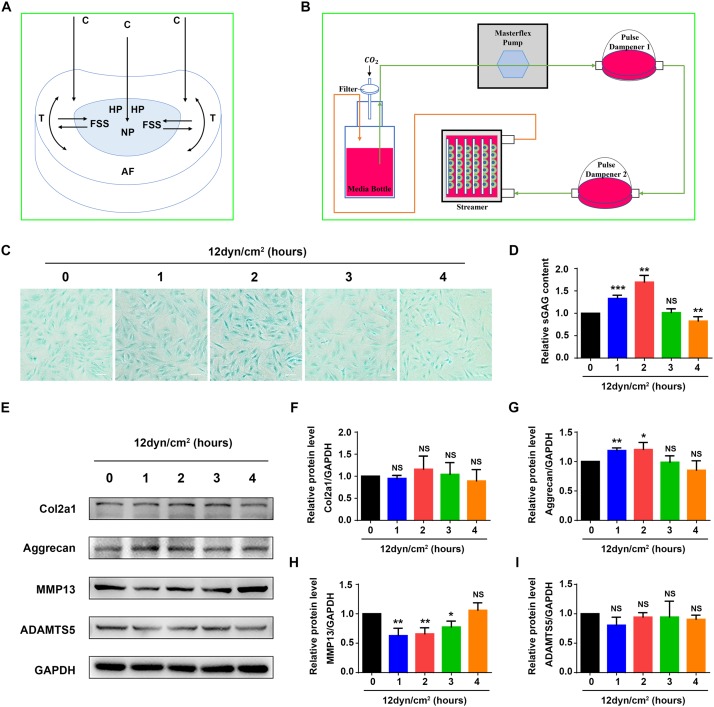
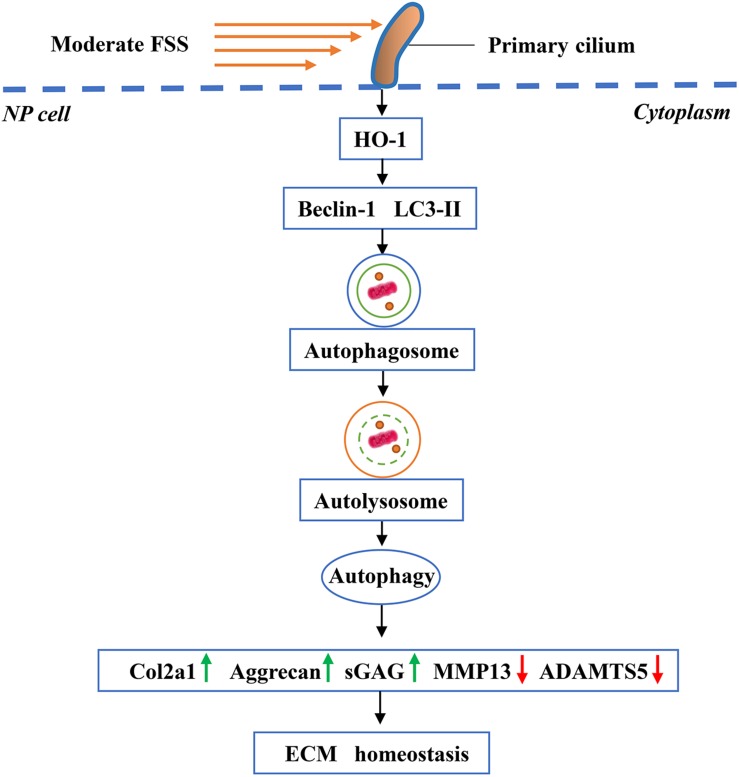
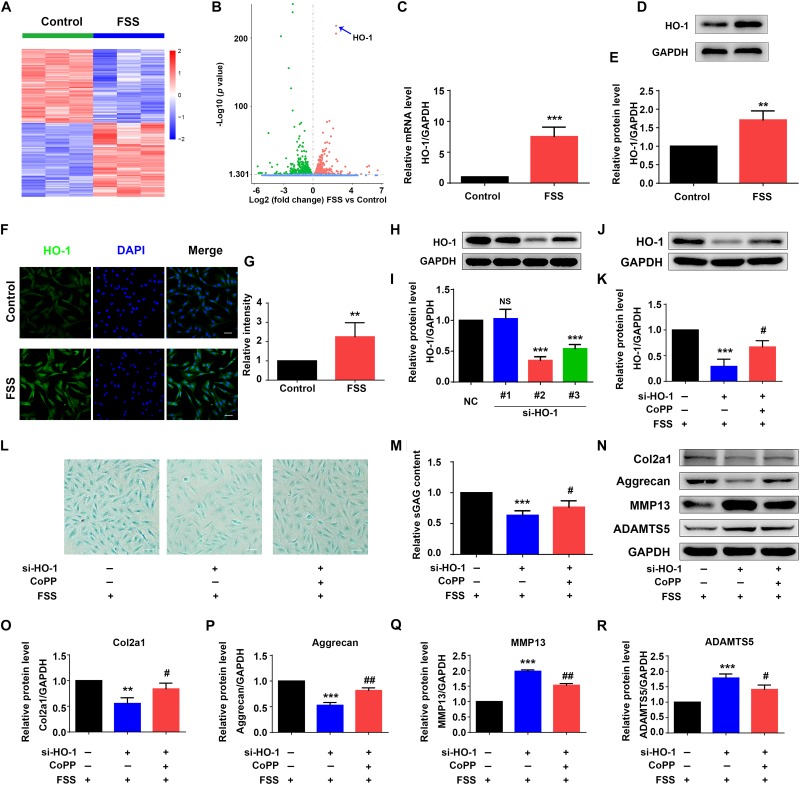
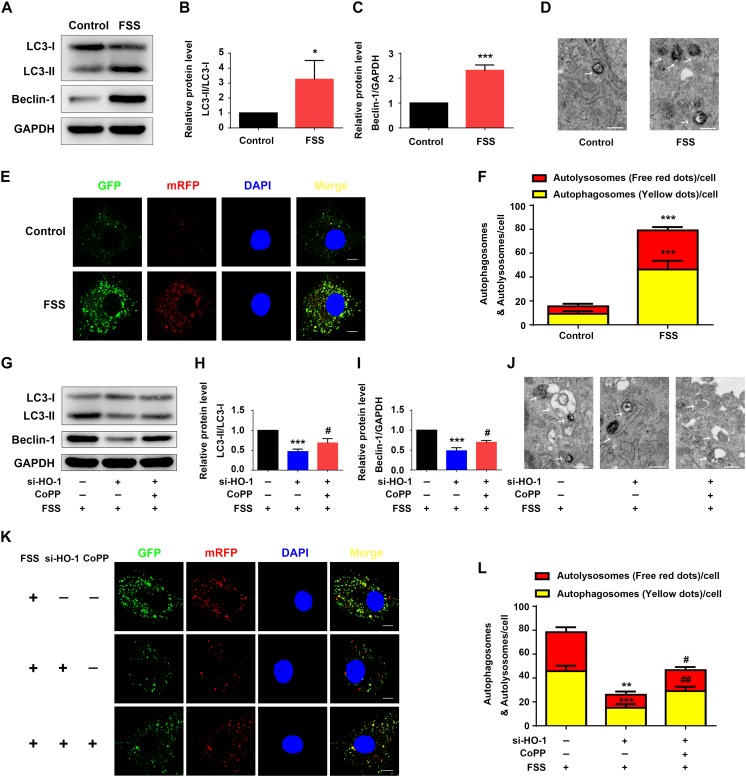
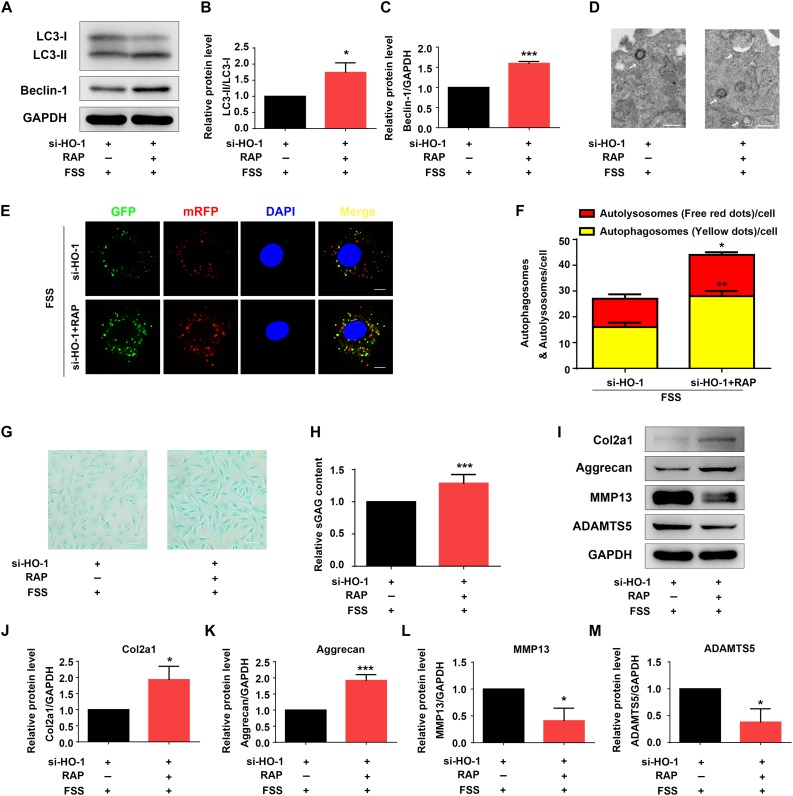
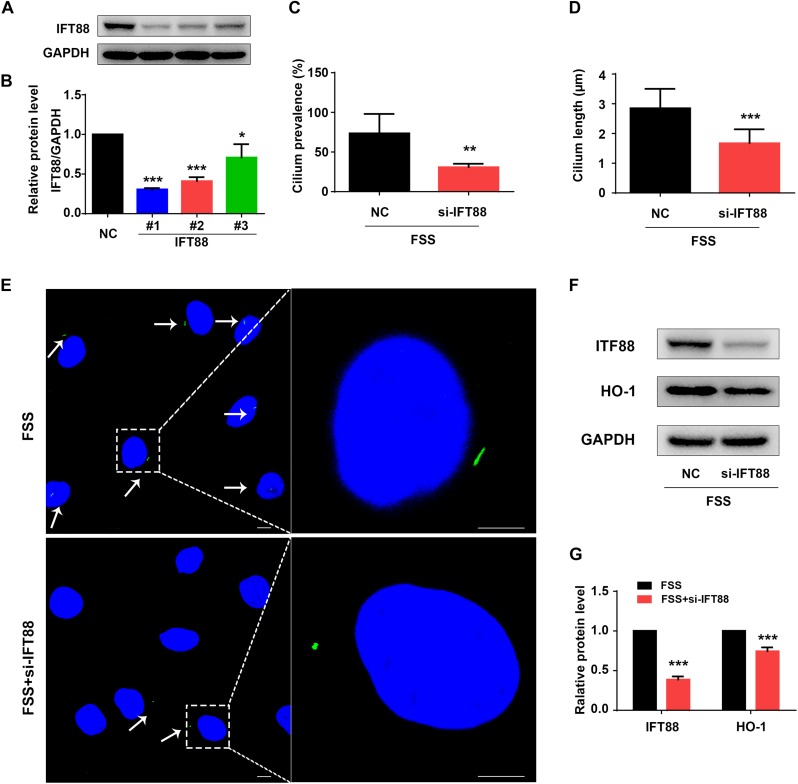
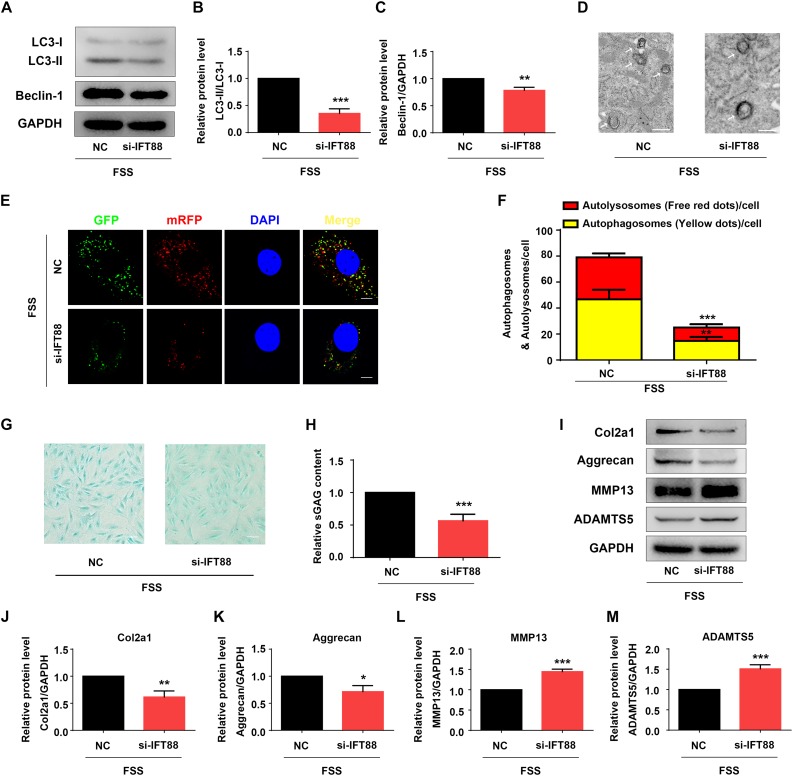
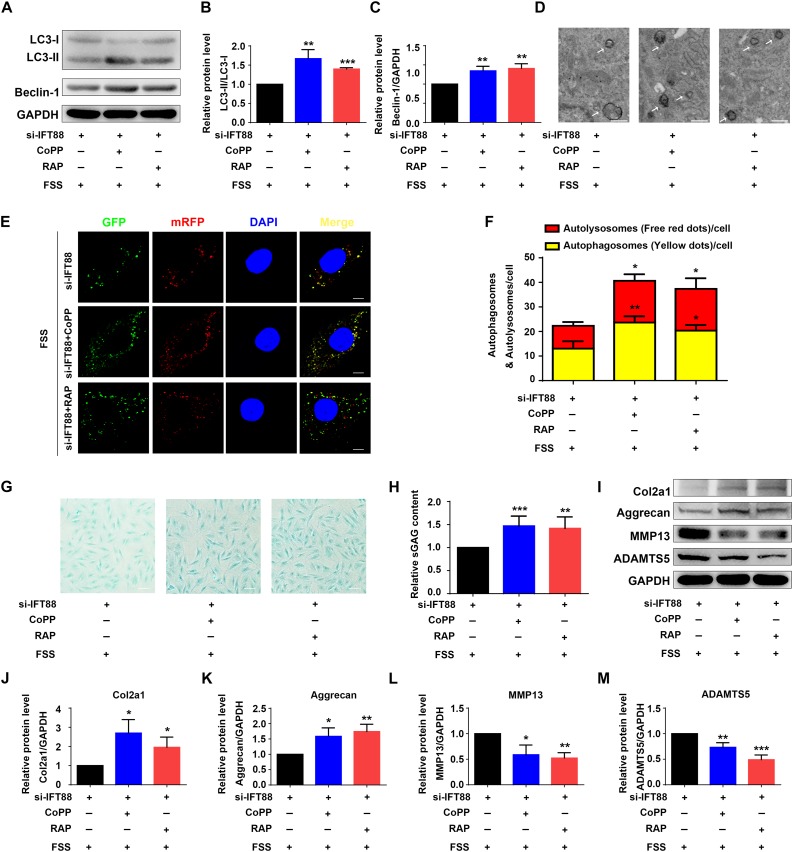
In vertebrate, the nucleus pulposus (NP), which is an essential component of the intervertebral disk, is constantly impacted by fluid shear stress (FSS); however, molecular mechanism(s) through which FSS modulates the NP homeostasis is poorly understood. Here we show that FSS regulates the extracellular matrix (ECM) homeostasis in NP cells. A moderate dose of FSS (i.e., 12 dyne/cm) increases the sulfated glycosaminoglycan (sGAG) content and protein levels of Col2a1 and Aggrecan and decreases those of matrix metalloproteinase 13 (MMP13) and a disintegrin and metalloproteinase with thrombospondin motif 5 (ADMATS5) in rat NP cells, while a higher dose of FSS (i.e., 24 dyne/cm) displays opposite effects. Results from RNA sequencing analysis, quantitative real-time RT-PCR analysis and western blotting establish that the heme oxygenase-1 (HO-1) is a key downstream mediator of the FSS actions in NP cells. HO-1 knockdown abolishes FSS-induced alterations in ECM protein production and sGAG content in NP cells, which is reversed by HO-1 induction. Furthermore, FSS activates the autophagic pathway by increasing the LC3-II/LC3-I ratio, Beclin-1 protein level, and formation of autophagosome and autolysosome and thereby regulates ECM protein and sGAG production in a HO-1 dependent manner. Finally, we demonstrate that the intraflagellar transport (IFT) 88, a core trafficking protein of primary cilia, is critically involved in the HO-1-mediated autophagy activation and ECM protein and sGAG production in FSS-treated NP cells. Thus, we for the first time demonstrate that FSS plays an important role in maintaining ECM homeostasis through HO-1-dependent activation of autophagy in NP cells.
在脊椎动物中,髓核(NP)是椎间盘的重要组成部分,不断受到流体剪切应力(FSS)的影响;然而,FSS调节NP稳态的分子机制尚不清楚。在此我们表明,FSS调节NP细胞中的细胞外基质(ECM)稳态。中等剂量的FSS(即12达因/平方厘米)可增加大鼠NP细胞中硫酸化糖胺聚糖(sGAG)含量以及Col2a1和聚集蛋白聚糖的蛋白质水平,并降低基质金属蛋白酶13(MMP13)和含血小板反应蛋白基序的解聚素和金属蛋白酶5(ADMATS5)的水平,而更高剂量的FSS(即24达因/平方厘米)则显示出相反的效果。RNA测序分析、定量实时RT-PCR分析和蛋白质印迹结果表明,血红素加氧酶-1(HO-1)是NP细胞中FSS作用的关键下游介质。敲低HO-1可消除FSS诱导的NP细胞中ECM蛋白产生和sGAG含量的变化,而HO-1的诱导可逆转这种变化。此外,FSS通过增加LC3-II/LC3-I比率、Beclin-1蛋白水平以及自噬体和自溶酶体的形成来激活自噬途径,从而以HO-1依赖的方式调节ECM蛋白和sGAG的产生。最后,我们证明,鞭毛内运输(IFT)88是初级纤毛的核心运输蛋白,在FSS处理的NP细胞中,它关键参与了HO-1介导的自噬激活以及ECM蛋白和sGAG的产生。因此,我们首次证明,FSS通过HO-1依赖的自噬激活在维持NP细胞中的ECM稳态中发挥重要作用。