Department of Biological Sciences, University of Arkansas, Fayetteville, AR, USA.
Interdisciplinary Graduate Program in Cell and Molecular Biology, University of Arkansas, Fayetteville, AR, USA.
BMC Genomics. 2020 Mar 20;21(1):249. doi: 10.1186/s12864-020-6673-2.
The increasing number of transcriptomic datasets has allowed for meta-analyses, which can be valuable due to their increased statistical power. However, meta-analyses can be confounded by so-called "batch effects," where technical variation across different batches of RNA-seq experiments can clearly produce spurious signals of differential expression and reduce our power to detect true differences. While batch effects can sometimes be accounted for, albeit with caveats, a better strategy is to understand their sources to better avoid them. In this study, we examined the effects of RNA isolation method as a possible source of batch effects in RNA-seq design.
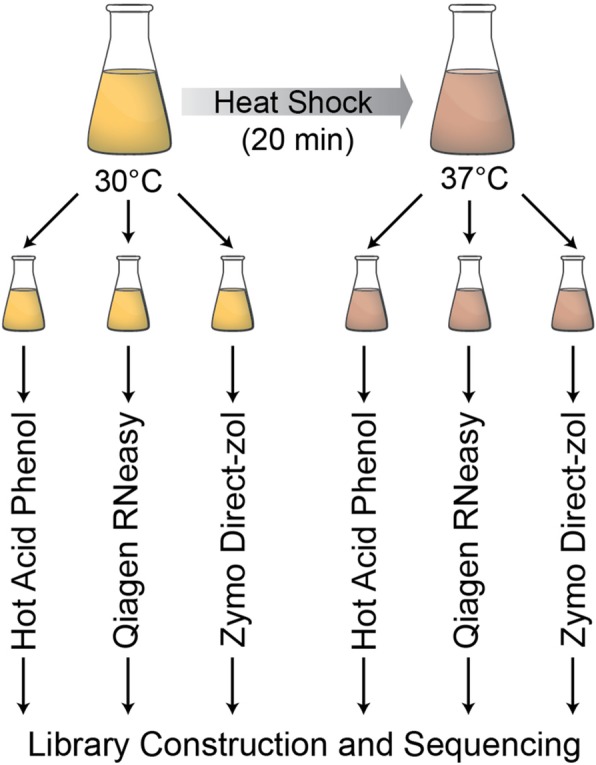
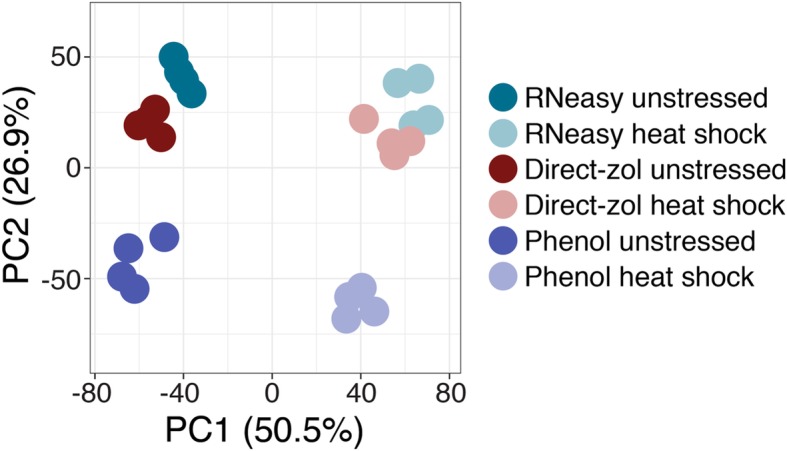
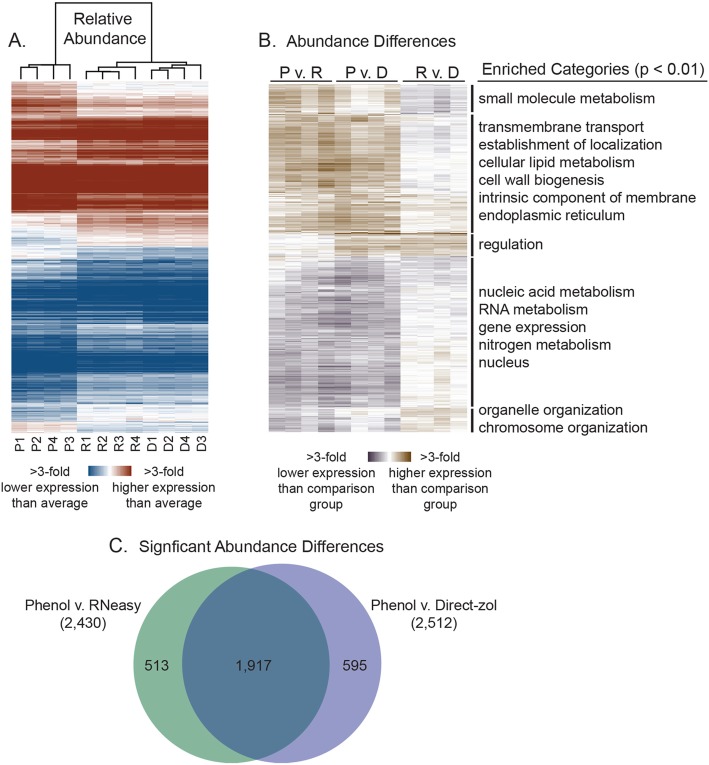
Based on the different chemistries of "classic" hot phenol extraction of RNA compared to common commercial RNA isolation kits, we hypothesized that specific mRNAs may be preferentially extracted depending upon method, which could masquerade as differential expression in downstream RNA-seq analyses. We tested this hypothesis using the Saccharomyces cerevisiae heat shock response as a well-validated environmental response. Comparing technical replicates that only differed in RNA isolation method, we found over one thousand transcripts that appeared "differentially" expressed when comparing hot phenol extraction with the two kits. Strikingly, transcripts with higher abundance in the phenol-extracted samples were enriched for membrane proteins, suggesting that indeed the chemistry of hot phenol extraction better solubilizes those species of mRNA.
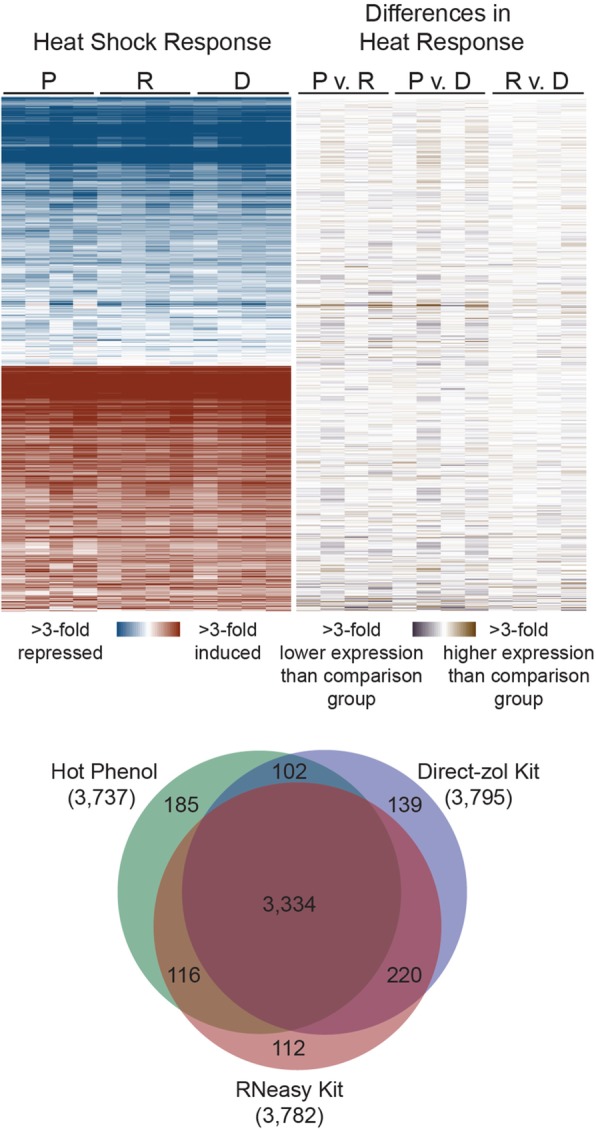
Within a self-contained experimental batch (e.g. control versus treatment), the method of RNA isolation had little effect on the ability to identify differentially expressed transcripts. However, we suggest that researchers performing meta-analyses across different experimental batches strongly consider the RNA isolation methods for each experiment.
越来越多的转录组数据集允许进行荟萃分析,由于其增加的统计功效,这些分析可能非常有价值。然而,荟萃分析可能会受到所谓的“批次效应”的影响,其中不同 RNA-seq 实验批次之间的技术差异显然会产生差异表达的虚假信号,并降低我们检测真实差异的能力。虽然可以在一定程度上解释批次效应,但更好的策略是了解其来源,以更好地避免它们。在这项研究中,我们研究了 RNA 分离方法作为 RNA-seq 设计中批次效应的一个可能来源的影响。
基于经典热酚提取 RNA 的化学性质与常见商业 RNA 分离试剂盒的不同,我们假设特定的 mRNA 可能会根据方法优先提取,这可能会在下游 RNA-seq 分析中伪装成差异表达。我们使用酿酒酵母热休克反应作为经过充分验证的环境反应来测试这一假设。比较仅在 RNA 分离方法上存在差异的技术重复,我们发现超过一千个转录本在比较热酚提取与两种试剂盒时表现出“差异”表达。引人注目的是,在酚抽提样品中丰度较高的转录本富集了膜蛋白,这表明热酚提取的化学性质确实更好地溶解了这些 mRNA 种类。
在自我包含的实验批次内(例如对照与处理),RNA 分离方法对识别差异表达转录本的能力几乎没有影响。然而,我们建议在跨不同实验批次进行荟萃分析的研究人员强烈考虑每个实验的 RNA 分离方法。