Departments of Immunology and Molecular Microbiology, Seoul National University School of Dentistry, Seoul, Korea.
Departments of Oral Medicine and Oral Diagnosis, School of Dentistry and Dental Research Institute, Seoul National University, Seoul, Korea.
PLoS One. 2020 Mar 24;15(3):e0230667. doi: 10.1371/journal.pone.0230667. eCollection 2020.
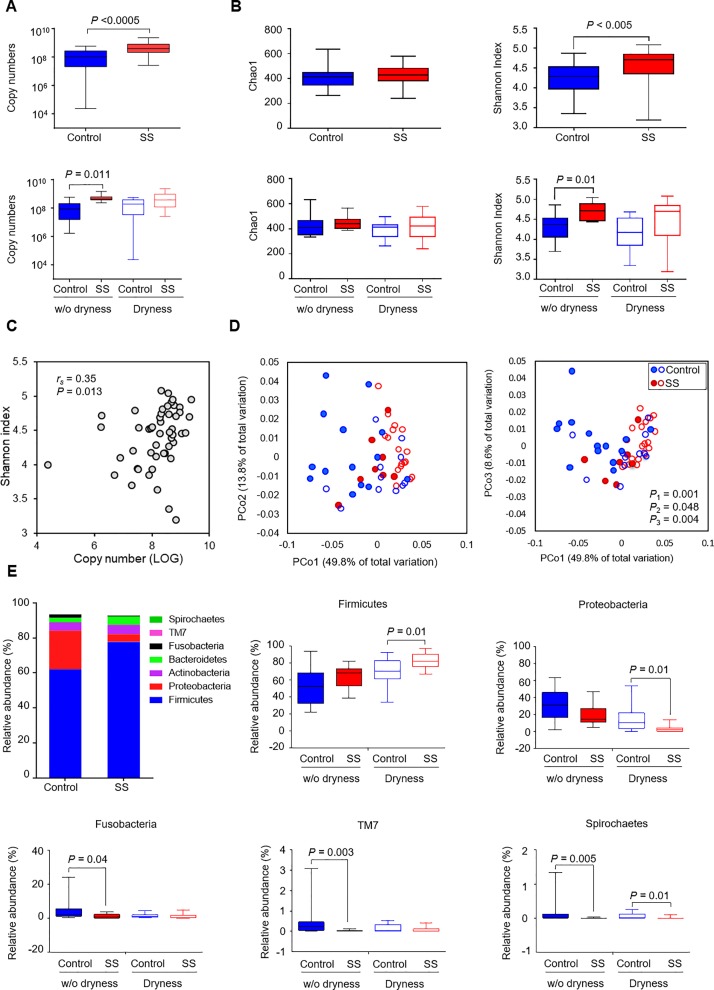
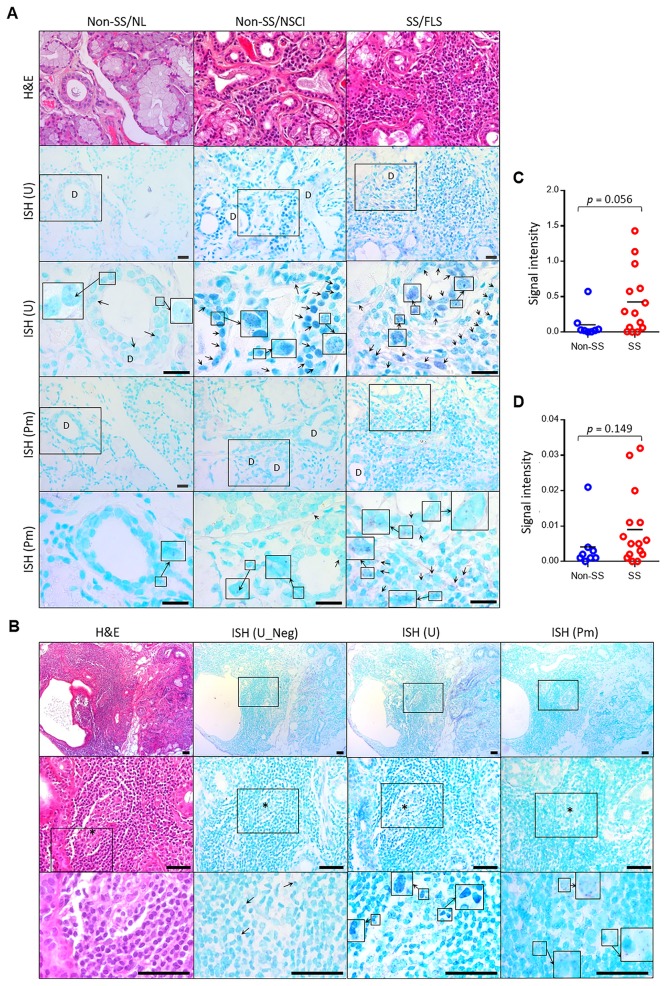
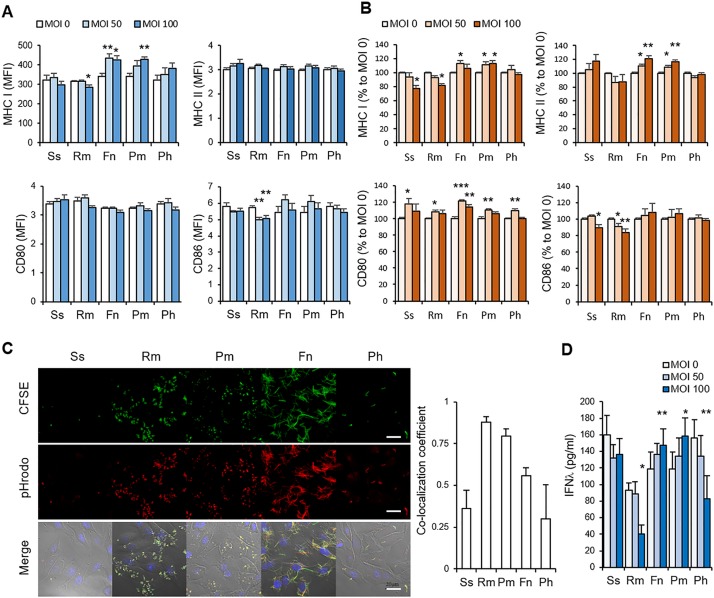
Key events in the pathogenesis of Sjӧgren syndrome (SS) include the change of salivary gland epithelial cells into antigen-presenting cell-like phenotypes and focal lymphocytic sialadenitis (FLS). However, what triggers these features in SS is unknown. Dysbiosis of the gut and oral microbiomes is a potential environmental factor in SS, but its connection to the etiopathogenesis of SS remains unclear. This study aimed to characterize the oral microbiota in SS and to investigate its potential role in the pathogenesis of SS. Oral bacterial communities were collected by whole mouthwash from control subjects (14 without oral dryness and 11 with dryness) and primary SS patients (8 without oral dryness and 17 with dryness) and were analyzed by pyrosequencing. The SS oral microbiota was characterized by an increased bacterial load and Shannon diversity. Through comparisons of control and SS in combined samples and then separately in non-dry and dry conditions, SS-associated taxa independent of dryness were identified. Three SS-associated species and 2 control species were selected and used to challenge human submandibular gland tumor (HSG) cells. Among the selected SS-associated bacterial species, Prevotella melaninogenica uniquely upregulated the expression of MHC molecules, CD80, and IFNλ in HSG cells. Concomitantly, P. melaninogenica efficiently invaded HSG cells. Sections of labial salivary gland (LSG) biopsies from 8 non-SS subjects and 15 SS patients were subjected to in situ hybridization using universal and P. melaninogenica-specific probes. Ductal cells and the areas of infiltration were heavily infected with bacteria in the LSGs with FLS. Collectively, dysbiotic oral microbiota may initiate the deregulation of SGECs and the IFN signature through bacterial invasion into ductal cells. These findings may provide new insights into the etiopathogenesis of SS.
干燥综合征(SS)发病机制中的关键事件包括唾液腺上皮细胞向抗原呈递细胞样表型的转变和局灶性淋巴细胞性涎腺炎(FLS)。然而,引发 SS 出现这些特征的原因尚不清楚。肠道和口腔微生物组的失调是 SS 的一个潜在环境因素,但它与 SS 的病因发病机制的关系尚不清楚。本研究旨在描述 SS 患者的口腔微生物群,并探讨其在 SS 发病机制中的潜在作用。通过全口冲洗收集对照组(14 名无口腔干燥和 11 名有口腔干燥)和原发性 SS 患者(8 名无口腔干燥和 17 名有口腔干燥)的口腔细菌群落,并通过焦磷酸测序进行分析。SS 口腔微生物群的特征是细菌负荷和香农多样性增加。通过对合并样本以及非干燥和干燥条件下的 SS 进行比较,确定了与干燥无关的 SS 相关分类群。选择了 3 种 SS 相关物种和 2 种对照物种,并用于挑战人颌下腺肿瘤(HSG)细胞。在所选的 SS 相关细菌物种中,普雷沃氏菌属黑色素亚种独特地上调了 HSG 细胞中 MHC 分子、CD80 和 IFNλ 的表达。同时,普雷沃氏菌属黑色素亚种有效地入侵了 HSG 细胞。对 8 名非 SS 受试者和 15 名 SS 患者的唇腺活检进行原位杂交,使用通用探针和普雷沃氏菌属黑色素亚种特异性探针。在有 FLS 的 LSG 中,导管细胞和浸润区域都被细菌严重感染。总之,口腔微生物组失调可能通过细菌入侵导管细胞,引发 SGEC 失调和 IFN 特征。这些发现可能为 SS 的病因发病机制提供新的见解。