Department of Microbial Immune Regulation, Helmholtz Centre for Infection Research, Braunschweig, Germany.
ESF International Graduate School on Analysis, Imaging and Modelling of Neuronal and Inflammatory Processes, Otto-von-Guericke University, Magdeburg, Germany.
PLoS Pathog. 2020 Mar 24;16(3):e1008448. doi: 10.1371/journal.ppat.1008448. eCollection 2020 Mar.
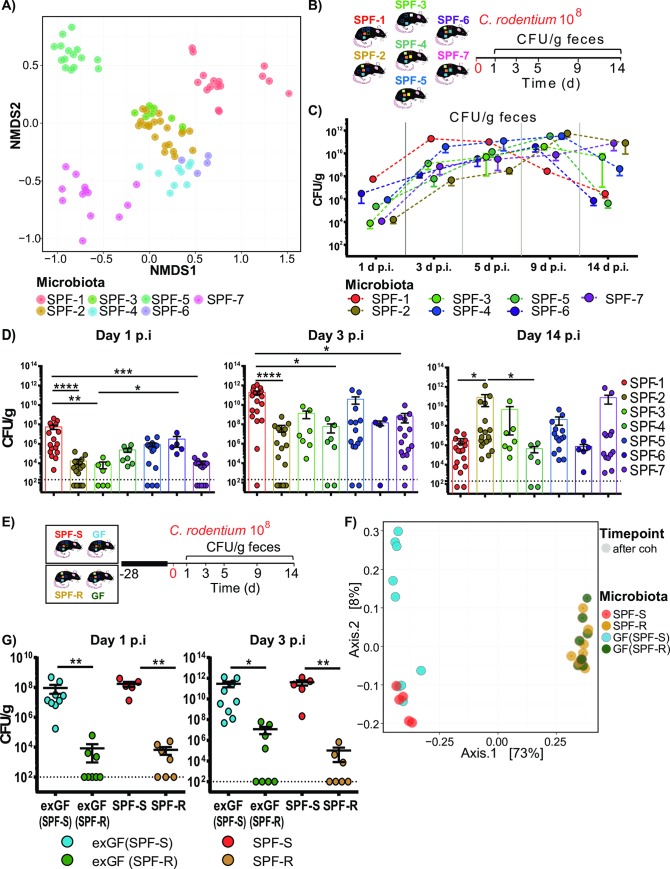
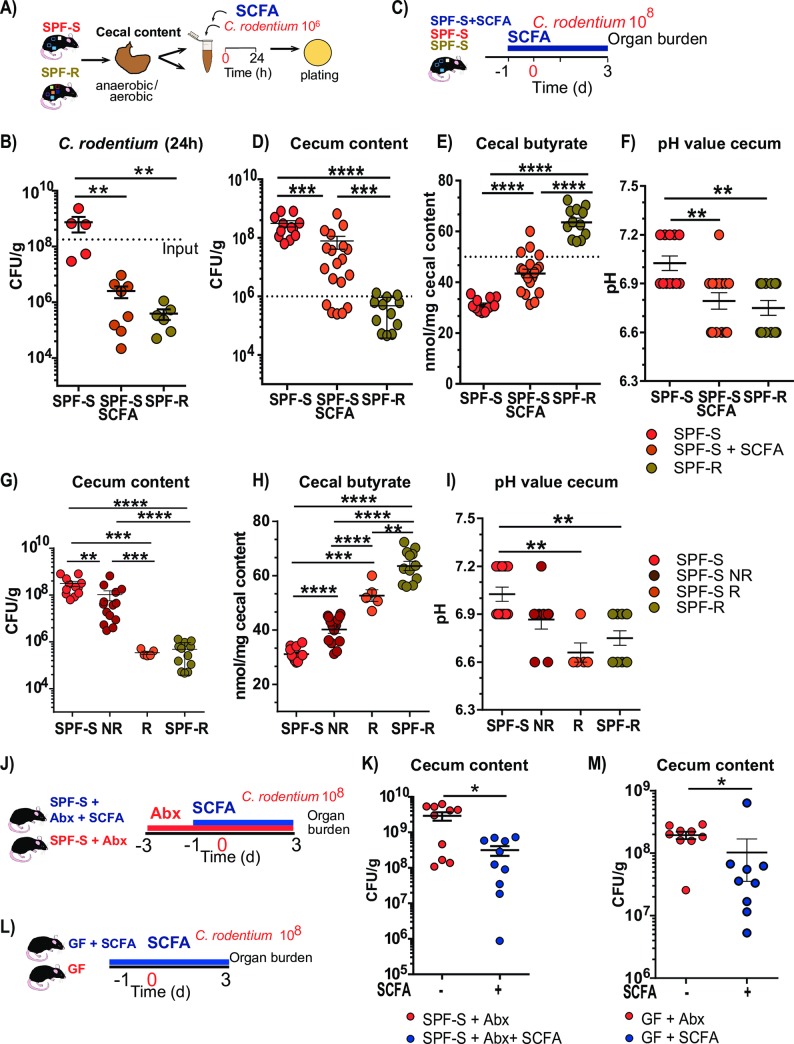
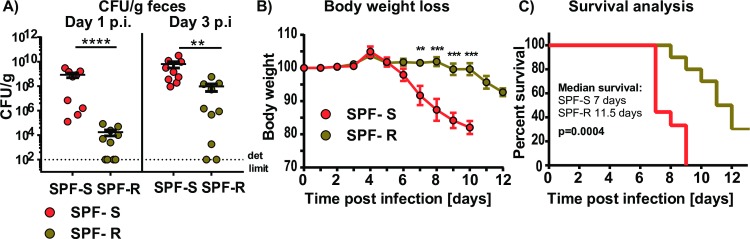
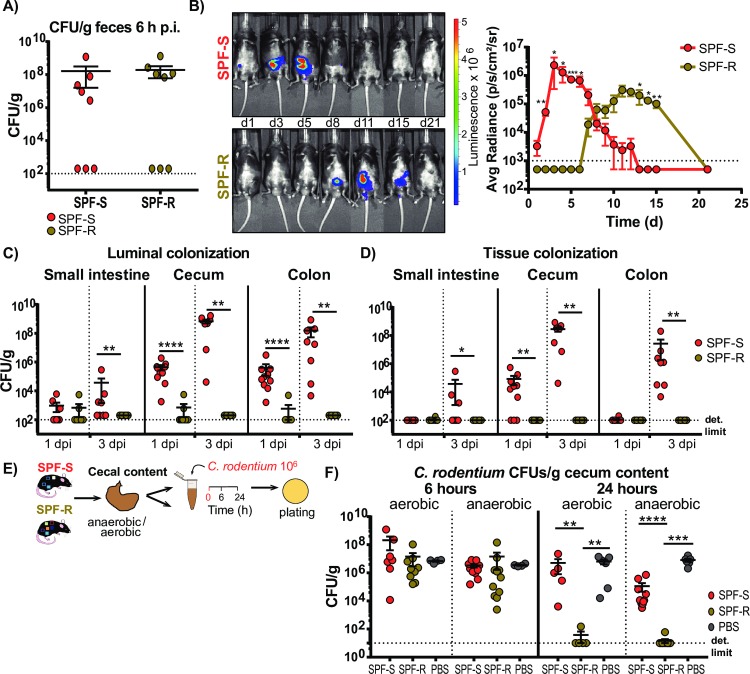
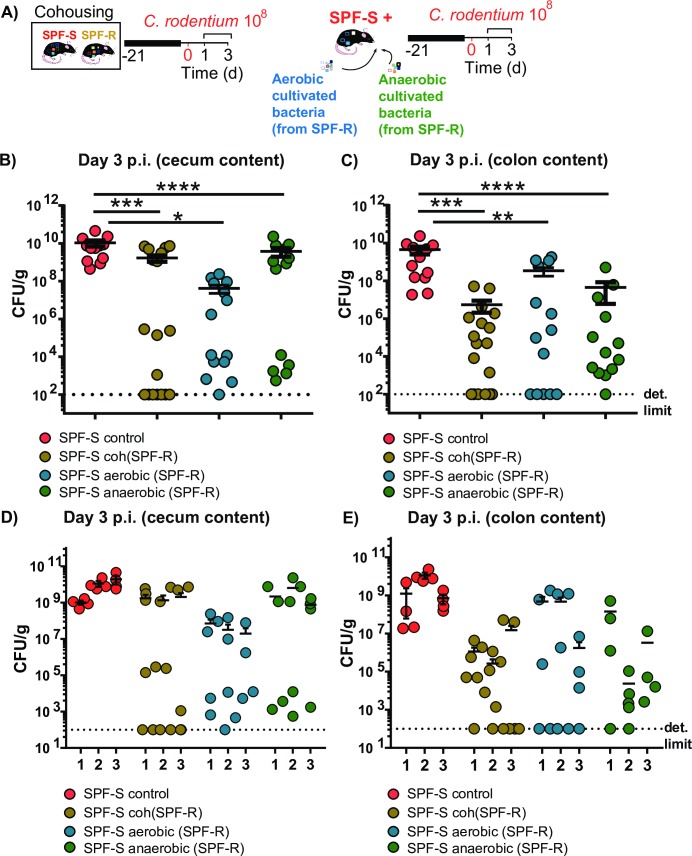
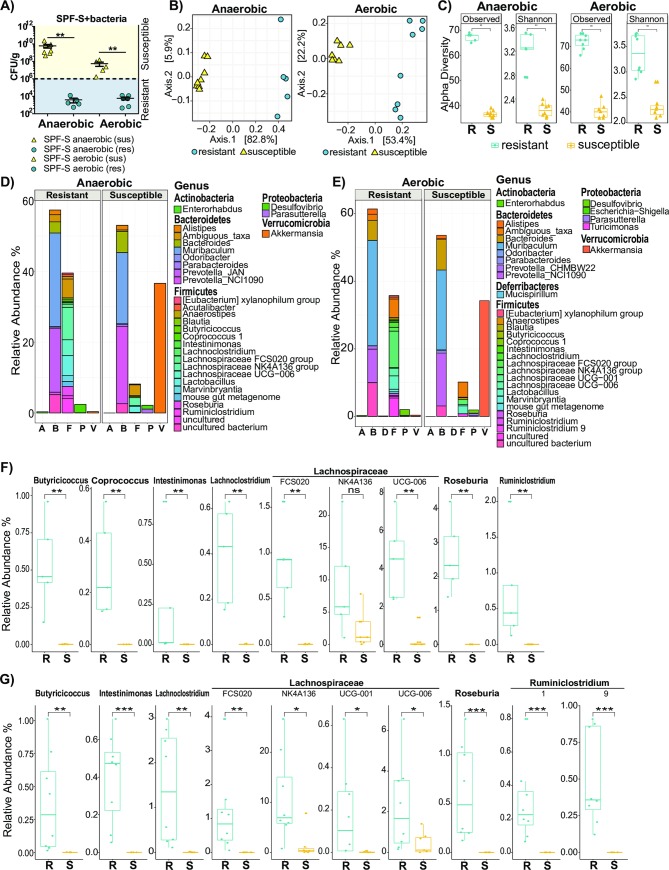
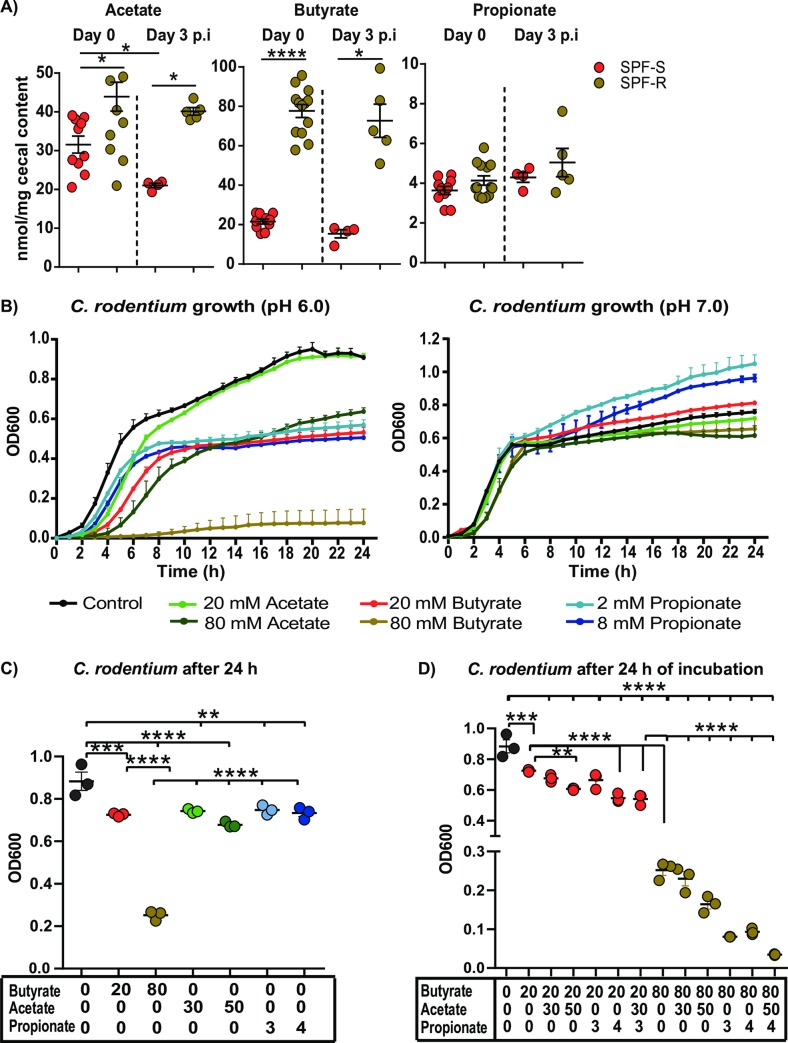
The composition of the intestinal microbiota influences the outcome of enteric infections in human and mice. However, the role of specific members and their metabolites contributing to disease severity is largely unknown. Using isogenic mouse lines harboring distinct microbiota communities, we observed highly variable disease kinetics of enteric Citrobacter rodentium colonization after infection. Transfer of communities from susceptible and resistant mice into germ-free mice verified that the varying susceptibilities are determined by microbiota composition. The strongest differences in colonization were observed in the cecum and could be maintained in vitro by coculturing cecal bacteria with C. rodentium. Cohousing of animals as well as the transfer of cultivable bacteria from resistant to susceptible mice led to variable outcomes in the recipient mice. Microbiome analysis revealed that a higher abundance of butyrate-producing bacteria was associated with the resistant phenotype. Quantification of short-chain fatty acid (SCFA) levels before and after infection revealed increased concentrations of acetate, butyrate and propionate in mice with delayed colonization. Addition of physiological concentrations of butyrate, but not of acetate and/or propionate strongly impaired growth of C. rodentium in vitro. In vivo supplementation of susceptible, antibiotic-treated and germ-free mice with butyrate led to the same level of protection, notably only when cecal butyrate concentration reached a concentration higher than 50 nmol/mg indicating a critical threshold for protection. In the recent years, commensal-derived primary and secondary bacterial metabolites emerged as potent modulators of hosts susceptibility to infection. Our results provide evidence that variations in SCFA production in mice fed fibre-rich chow-based diets modulate susceptibility to colonization with Enterobacteriaceae not only in antibiotic-disturbed ecosystems but even in undisturbed microbial communities. These findings emphasise the need for microbiota normalization across laboratory mouse lines for infection experiments with the model-pathogen C. rodentium independent of investigations of diet and antibiotic usage.
肠道微生物群落的组成影响人类和小鼠的肠道感染结果。然而,特定成员及其代谢物对疾病严重程度的作用在很大程度上尚不清楚。使用具有不同微生物群落的同基因小鼠系,我们观察到感染后肠道柠檬酸杆菌定植的疾病动力学具有高度可变性。将来自易感和抗性小鼠的群落转移到无菌小鼠中证实,不同的易感性是由微生物群落组成决定的。在盲肠中观察到定植的最强差异,并且可以通过将盲肠细菌与柠檬酸杆菌共培养在体外维持。动物共饲养以及将抗性小鼠中的可培养细菌转移到易感小鼠中,导致受体小鼠的结果不同。微生物组分析显示,丁酸产生菌的丰度较高与抗性表型相关。感染前后短链脂肪酸 (SCFA) 水平的定量分析显示,在定植延迟的小鼠中,乙酸盐、丁酸盐和丙酸盐的浓度增加。生理浓度的丁酸的添加,而不是乙酸盐和/或丙酸盐的添加,强烈抑制柠檬酸杆菌在体外的生长。用丁酸对易感、抗生素处理和无菌小鼠进行体内补充导致相同程度的保护,特别是当盲肠丁酸浓度达到高于 50 nmol/mg 时,表明存在保护的关键阈值。近年来,共生衍生的初级和次级细菌代谢物已成为宿主对感染易感性的有力调节剂。我们的结果提供了证据,表明富含纤维的基于饲料的饮食中 SCFA 产生的变化可调节肠道杆菌定植的易感性,不仅在抗生素扰乱的生态系统中,甚至在未受干扰的微生物群落中也是如此。这些发现强调了需要对感染模型病原体柠檬酸杆菌的实验室小鼠系进行微生物群正常化,无论是否进行饮食和抗生素使用的调查。