Department of Medical Biochemistry and Microbiology, Science for Life Laboratory, Uppsala University, Box 582, SE-751 23 Uppsala, Sweden.
Biomolecules. 2020 Mar 23;10(3):487. doi: 10.3390/biom10030487.
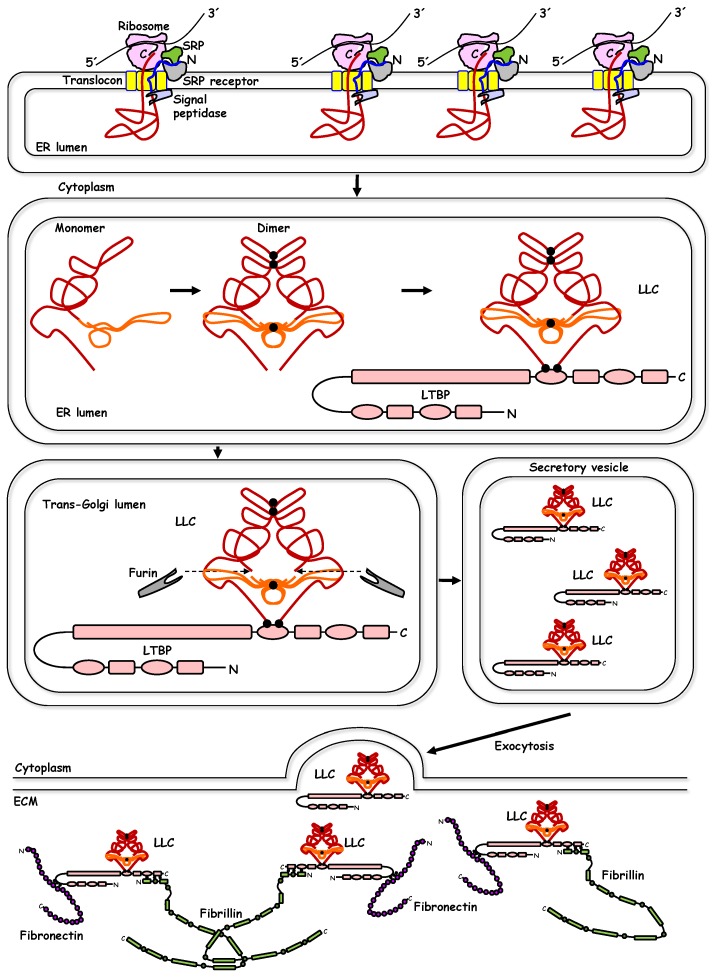
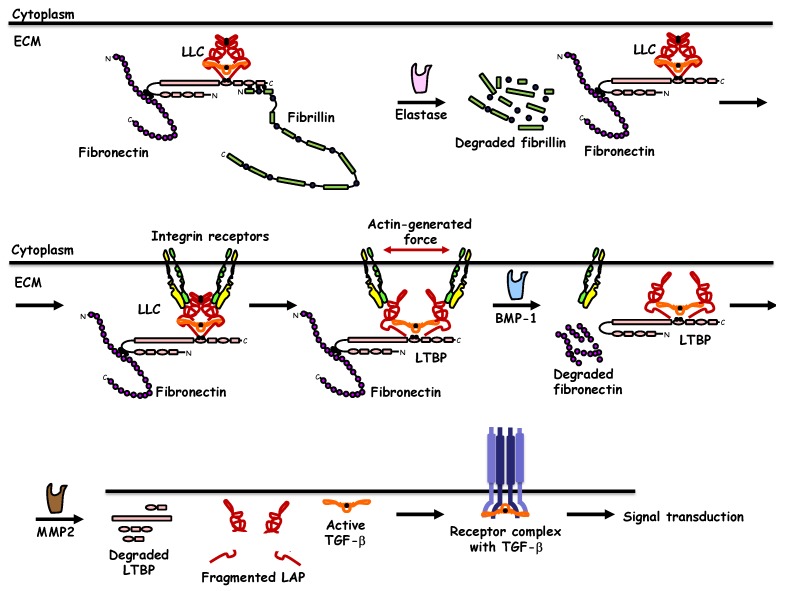
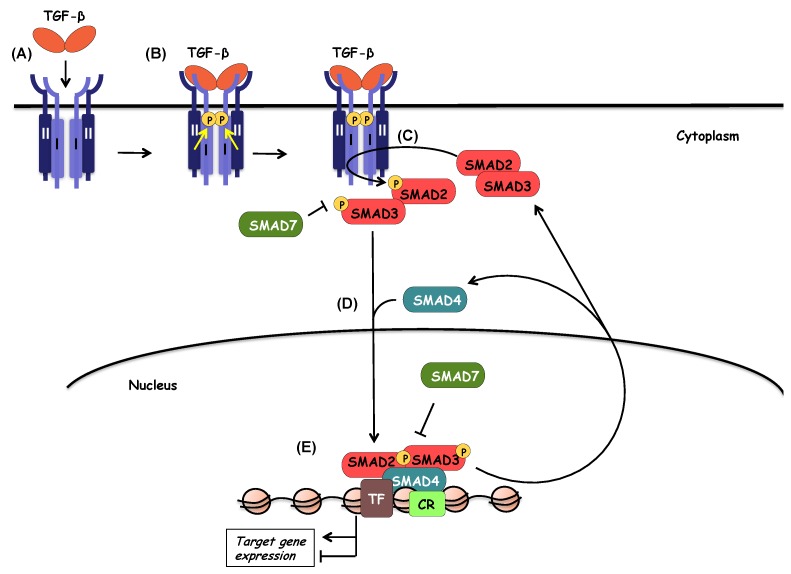
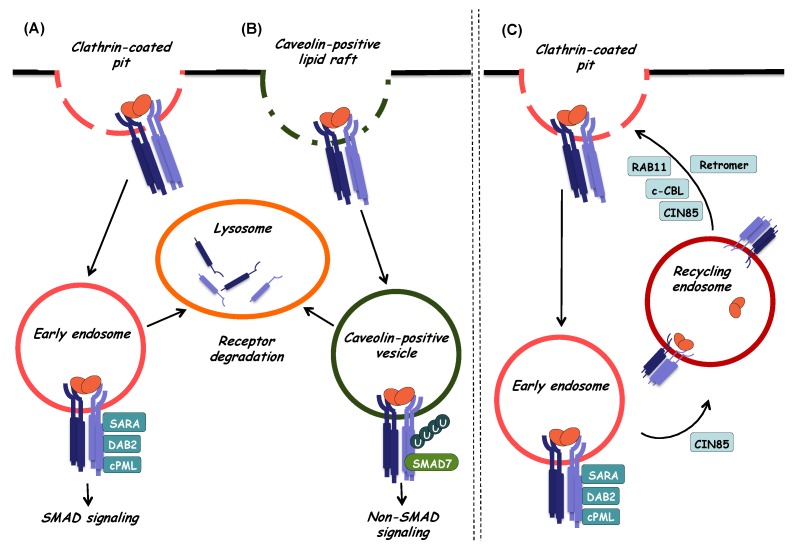
Transforming growth factor-β (TGF-β) represents an evolutionarily conserved family of secreted polypeptide factors that regulate many aspects of physiological embryogenesis and adult tissue homeostasis. The TGF-β family members are also involved in pathophysiological mechanisms that underlie many diseases. Although the family comprises many factors, which exhibit cell type-specific and developmental stage-dependent biological actions, they all signal via conserved signaling pathways. The signaling mechanisms of the TGF-β family are controlled at the extracellular level, where ligand secretion, deposition to the extracellular matrix and activation prior to signaling play important roles. At the plasma membrane level, TGF-βs associate with receptor kinases that mediate phosphorylation-dependent signaling to downstream mediators, mainly the SMAD proteins, and mediate oligomerization-dependent signaling to ubiquitin ligases and intracellular protein kinases. The interplay between SMADs and other signaling proteins mediate regulatory signals that control expression of target genes, RNA processing at multiple levels, mRNA translation and nuclear or cytoplasmic protein regulation. This article emphasizes signaling mechanisms and the importance of biochemical control in executing biological functions by the prototype member of the family, TGF-β.
转化生长因子-β(TGF-β)代表了一组进化保守的分泌多肽因子家族,它们调节生理胚胎发生和成人组织稳态的许多方面。TGF-β 家族成员也参与了许多疾病的病理生理机制。尽管该家族包含许多因子,它们表现出细胞类型特异性和发育阶段依赖性的生物学作用,但它们都通过保守的信号通路进行信号传递。TGF-β 家族的信号机制在细胞外水平受到控制,其中配体分泌、细胞外基质沉积和信号传递前的激活在其中发挥重要作用。在质膜水平,TGF-βs 与受体激酶结合,介导磷酸化依赖性信号传递到下游介质,主要是 SMAD 蛋白,并介导寡聚依赖性信号传递到泛素连接酶和细胞内蛋白激酶。SMAD 蛋白和其他信号蛋白之间的相互作用介导调节信号,控制靶基因的表达、多个水平的 RNA 加工、mRNA 翻译和核或细胞质蛋白调节。本文强调了信号机制以及生化控制在家族原型成员 TGF-β 中执行生物学功能的重要性。