Tabibzadeh Alireza, Karbalaie Niya Mohammad Hadi, Esghaei Maryam, Bokharaei-Salim Farah, Ataei-Pirkooh Angila, Kiani Seyed Jalal, Monavari Seyed Hamid Reza
Department of Virology, Iran University of Medical Sciences, Tehran, Iran.
Gastrointestinal and Liver Disease Research Center, Iran University of Medical Sciences, Tehran, Iran.
Asian Pac J Cancer Prev. 2020 Mar 1;21(3):693-698. doi: 10.31557/APJCP.2020.21.3.693.
Epstein-Barr virus (EBV) is associated with different malignant diseases, such as Hodgkin lymphoma (HL) and lymphoproliferative disorders. Patients with hematologic malignancies by variable severity could be suspected for the infection with different types of this virus. This preliminary study reported the genotyping and related viral load of Epstein-Barr virus in Iranian patients with hematologic malignancies for estimation of possible factors affecting malignancy.
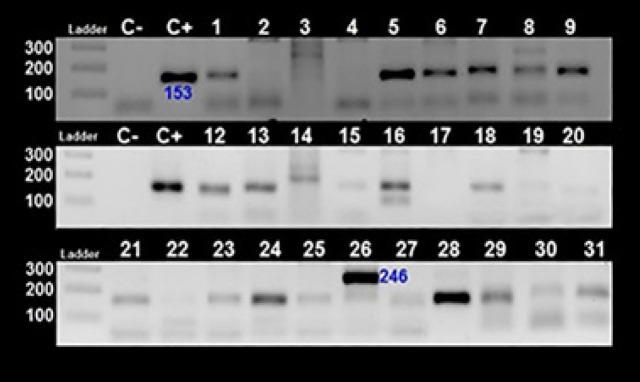
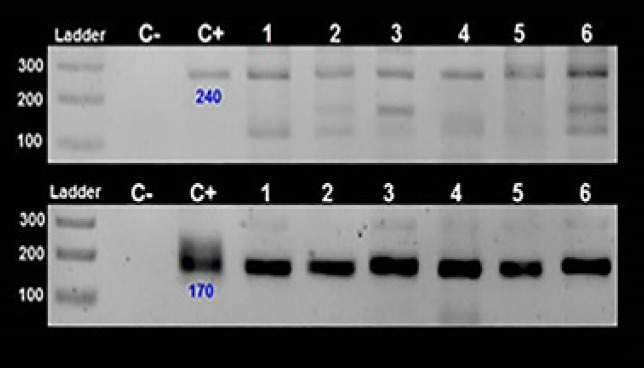
Peripheral blood mononuclear cells (PBMC) of HL (n=20), NHL (n=29), acute lymphocytic leukemia (ALL) (n=18) and chronic lymphocytic leukemia (CLL) (n=12) were obtained. After DNA extraction, a nested-PCR and a conventional-PCR targeting EBNA-2 and EBNA-3C genes were performed. A real-time PCR assay for viral load quantitation carried out. Standard curve analysis used for evaluation of amplification specificity.
Of 79 included patients, 34 (43%) were EBV positive. There were 23.5% (8/34), 38.2% (13/34), 23.5% (8/34), 14.8% (5/34) in HL, NHL, ALL and CLL groups, respectively. Also, the main genotype was genotype I (91.2%) which it follows by 8.8% (3/34) genotype II. The real-time PCR assay showed the mean viral load ± std. deviation was 2.75×10⁵ ± 1.202×10⁶ copies/μg DNA and the higher viral load was seen in NHL patients.
This preliminary investigation in Iran shows that the main EBV genotype into our region probably is genotype I (91.2%) which it is similar to others. We could not find any statistically significant association between the virus infection and viral load with any specific disease and patients' demographic data.
.
爱泼斯坦-巴尔病毒(EBV)与不同的恶性疾病相关,如霍奇金淋巴瘤(HL)和淋巴增殖性疾病。患有不同严重程度血液系统恶性肿瘤的患者可能被怀疑感染了这种病毒的不同类型。这项初步研究报告了伊朗血液系统恶性肿瘤患者中爱泼斯坦-巴尔病毒的基因分型和相关病毒载量,以评估影响恶性肿瘤的可能因素。
获取HL(n = 20)、NHL(n = 29)、急性淋巴细胞白血病(ALL)(n = 18)和慢性淋巴细胞白血病(CLL)(n = 12)患者的外周血单个核细胞(PBMC)。提取DNA后,进行靶向EBNA - 2和EBNA - 3C基因的巢式PCR和常规PCR。进行实时PCR测定以定量病毒载量。使用标准曲线分析评估扩增特异性。
在纳入的79例患者中,34例(43%)EBV呈阳性。HL、NHL、ALL和CLL组分别为23.5%(8/34)、38.2%(13/34)、23.5%(8/34)、14.8%(5/34)。此外,主要基因型为I型(91.2%),其次是II型(8.8%,3/34)。实时PCR测定显示平均病毒载量±标准差为2.75×105 ± 1.202×10⁶拷贝/μg DNA,NHL患者的病毒载量更高。
伊朗的这项初步调查表明,我们地区主要的EBV基因型可能是I型(91.2%),与其他地区相似。我们未发现病毒感染和病毒载量与任何特定疾病及患者人口统计学数据之间存在任何统计学上的显著关联。