Fenta Demissie Assegu, Nuru Metsihet Mohammed, Yemane Tilahun, Asres Yaregal, Wube Temesgen Bizuayehu
School of Medical Laboratory, College of Medicine and Health Sciences, Hawassa University, Hawassa, Ethiopia.
School of Medical Laboratory Sciences, Faculty of Health Sciences, Jimma University, Jimma, Ethiopia.
Drug Healthc Patient Saf. 2020 Mar 13;12:49-56. doi: 10.2147/DHPS.S230935. eCollection 2020.
Human Immunodeficiency Virus (HIV) and its therapy cause a variety of hematological abnormalities that have been known to be one of the most common causes of morbidity and mortality in HIV-positive children. One of the commonly observed hematologic manifestations in HIV-positive children is anemia and it has a multifactorial source. We intended to assess the prevalence, as well as its related factors of anemia among Highly Active Antiretroviral Therapy (HAART), experienced children.
A hospital-based cross-sectional study was employed at Hawassa comprehensive specialized hospital from February 15-June 15, 2018. Overall, 273 HAART-practiced children were included in the study. Socio-demographic variables and clinical data were collected using a standard and pretested questionnaire. Medical records were reviewed for each study participant using a standard checklist. Blood specimens were collected and examined for complete blood count, CD4 cell count and blood film for hemoparasites and morphological classification of anemia, whereas stool specimens were collected and examined for intestinal parasites. Data were entered into Epidata and transferred to SPSS (Statistical Package for Social Science) version 20 software. Descriptive analysis was done for prevalence and binary and multivariate logistic regression was used to determine factors associated with anemia. Statistical significance was stated at P-value<0.05.
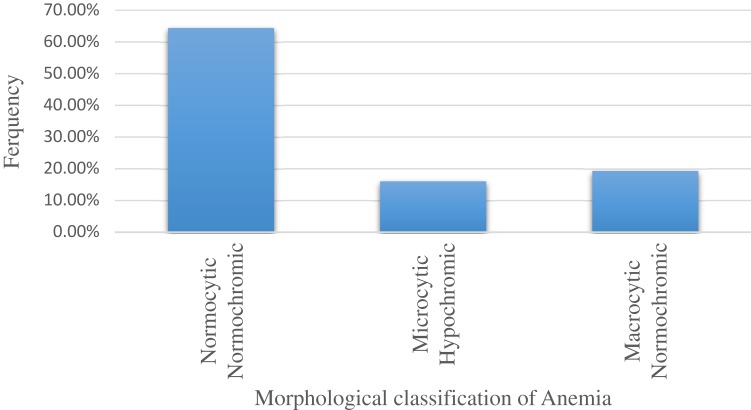
The overall prevalence of anemia in this study was 11.4%. Morphologically the predominant anemia was Normocytic Normochromic anemia which accounted for 64.5%. In the current study, children within the age group of <7years (AOR: 3, CI: 1.2-7.5, P=0.02), those who were rural residents (AOR: 2.6, CI: 1.0-6.6, P=0.042) and those with viral load >150 copies/mL (AOR: 3.4, CI: 1.36-8.3, P=0.009) were found to be significantly associated with anemia.
The prevalence of anemia in this study was 11.4%. It was significantly associated with different factors such as age, residence and viral load. Therefore, regular follow-up management should be emphasized for HAART-experienced children. Hence, there is a need for a longitudinal study to be conducted further to explore the causes of anemia due to HIV and the pattern of hemoglobin changes with HAART- experienced children will be very important.
人类免疫缺陷病毒(HIV)及其治疗会引发多种血液学异常,这已成为HIV阳性儿童发病和死亡的最常见原因之一。HIV阳性儿童常见的血液学表现之一是贫血,其病因是多方面的。我们旨在评估接受高效抗逆转录病毒治疗(HAART)的儿童中贫血的患病率及其相关因素。
2018年2月15日至6月15日,在哈瓦萨综合专科医院开展了一项基于医院的横断面研究。总共273名接受HAART治疗的儿童纳入研究。使用标准且经过预测试的问卷收集社会人口统计学变量和临床数据。使用标准清单对每个研究参与者的病历进行审查。采集血样并检查全血细胞计数、CD4细胞计数以及血涂片以检测血液寄生虫和贫血的形态学分类,同时采集粪便样本并检查肠道寄生虫。数据录入Epidata并转移到SPSS(社会科学统计软件包)20版软件。对患病率进行描述性分析,并使用二元和多因素逻辑回归来确定与贫血相关的因素。P值<0.05时具有统计学意义。
本研究中贫血的总体患病率为11.4%。形态学上,主要的贫血类型是正细胞正色素性贫血,占64.5%。在本研究中,年龄<7岁的儿童(调整后比值比:3,置信区间:1.2 - 7.5,P = 0.02)、农村居民(调整后比值比:2.6,置信区间:1.0 - 6.6,P = 0.042)以及病毒载量>150拷贝/mL的儿童(调整后比值比:3.4,置信区间:1.36 - 8.3,P = 0.009)被发现与贫血显著相关。
本研究中贫血的患病率为11.4%。它与年龄、居住地和病毒载量等不同因素显著相关。因此,对于接受HAART治疗的儿童应强调定期随访管理。因此,有必要进一步开展纵向研究,以探索HIV导致贫血的原因,并且了解接受HAART治疗的儿童血红蛋白变化模式将非常重要。