Departments of Psychiatry, University of Pennsylvania, Philadelphia, United States.
Departments of Bioengineering, University of Pennsylvania, Philadelphia, United States.
Elife. 2020 Mar 27;9:e53060. doi: 10.7554/eLife.53060.
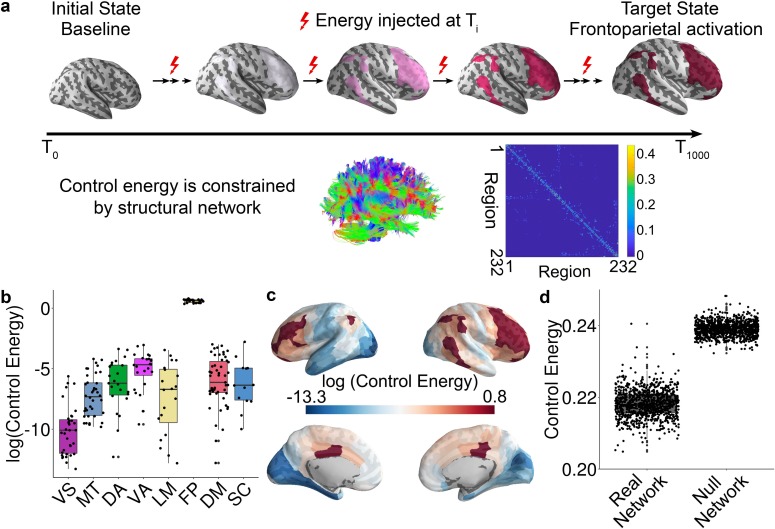
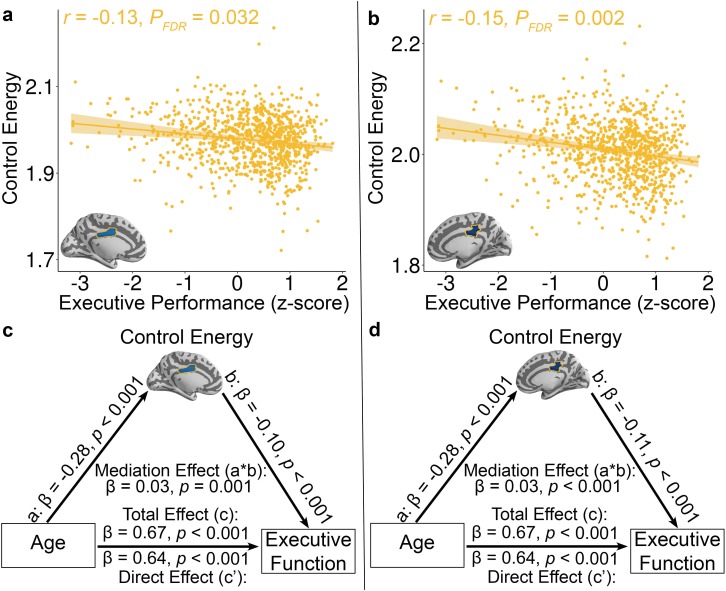
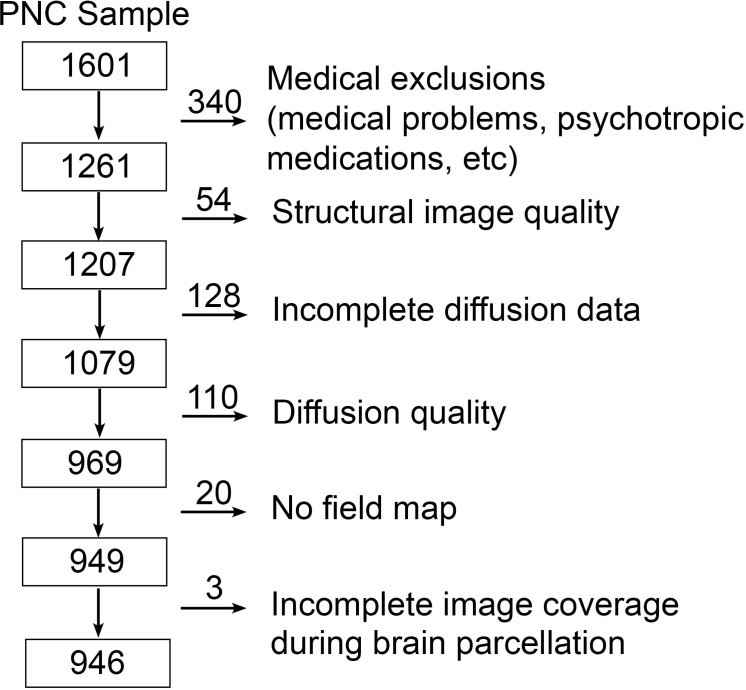
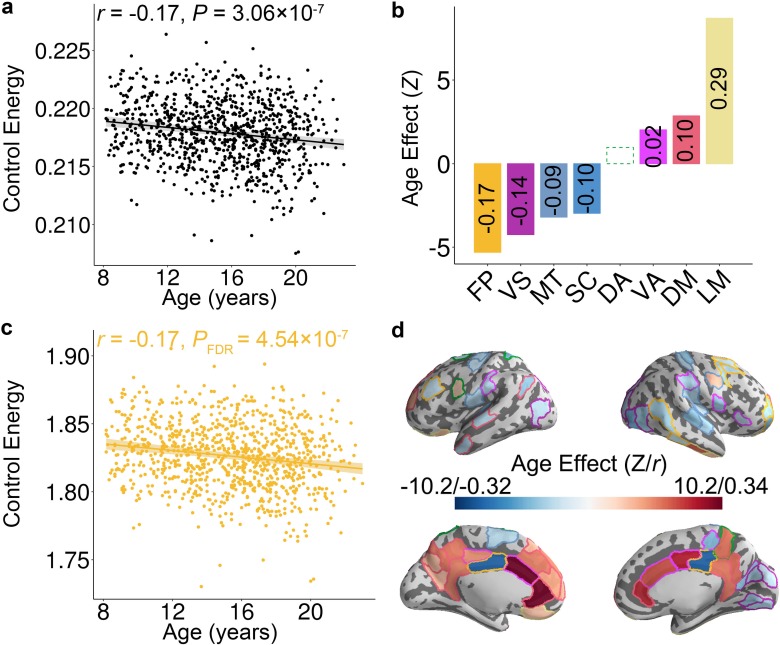
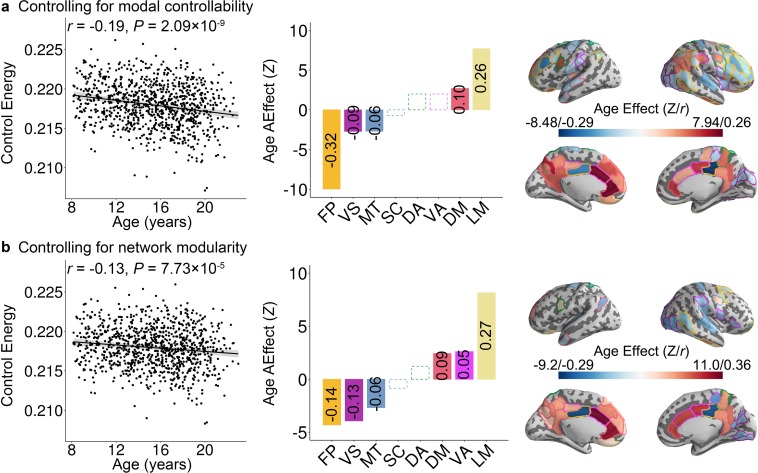
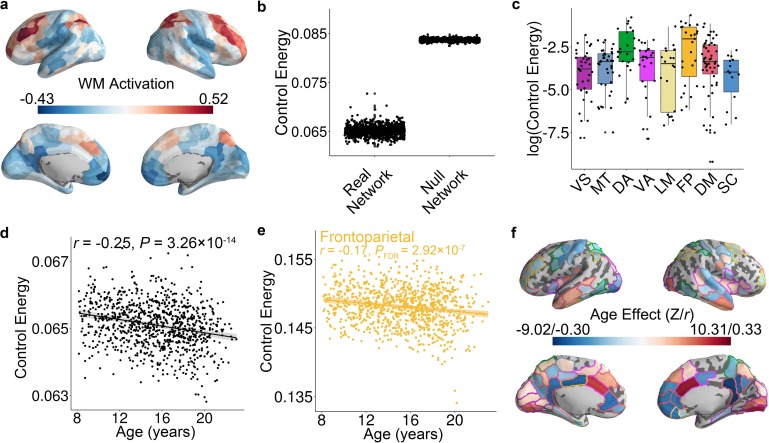
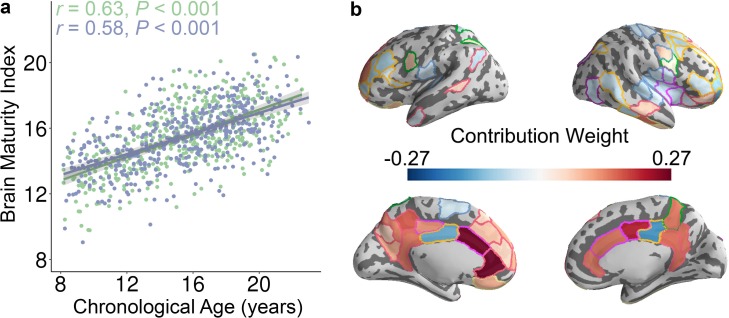
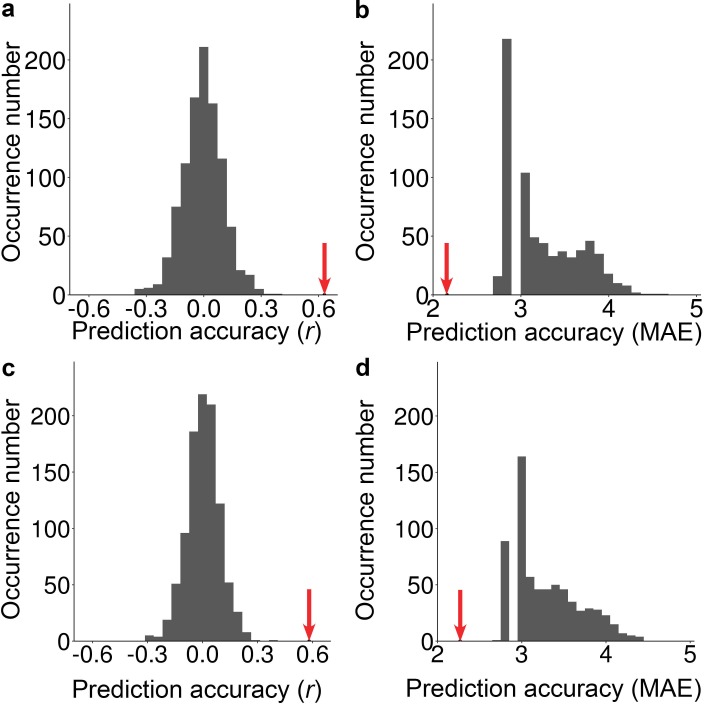
Executive function develops during adolescence, yet it remains unknown how structural brain networks mature to facilitate activation of the fronto-parietal system, which is critical for executive function. In a sample of 946 human youths (ages 8-23y) who completed diffusion imaging, we capitalized upon recent advances in linear dynamical network control theory to calculate the energetic cost necessary to activate the fronto-parietal system through the control of multiple brain regions given existing structural network topology. We found that the energy required to activate the fronto-parietal system declined with development, and the pattern of regional energetic cost predicts unseen individuals' brain maturity. Finally, energetic requirements of the cingulate cortex were negatively correlated with executive performance, and partially mediated the development of executive performance with age. Our results reveal a mechanism by which structural networks develop during adolescence to reduce the theoretical energetic costs of transitions to activation states necessary for executive function.
执行功能在青春期发展,但目前尚不清楚结构脑网络如何成熟,以促进额顶系统的激活,这对于执行功能至关重要。在一个由 946 名人类青少年(8-23 岁)组成的样本中,他们完成了扩散成像,我们利用线性动力网络控制理论的最新进展,计算了在给定现有结构网络拓扑的情况下,通过控制多个大脑区域来激活额顶系统所需的能量成本。我们发现,激活额顶系统所需的能量随着发育而降低,并且区域能量成本的模式预测了未见到的个体的大脑成熟度。最后,扣带皮层的能量需求与执行表现呈负相关,并且部分中介了随着年龄的增长执行表现的发展。我们的研究结果揭示了结构网络在青春期发展的机制,以降低执行功能所需的激活状态转换的理论能量成本。