Cancer and Blood Diseases Institute, Cincinnati Children's Hospital Medical Center, Cincinnati, Ohio, USA.
Division of Immunobiology, Cincinnati Children's Hospital Research Foundation, Cincinnati, Ohio, USA.
J Immunother Cancer. 2020 Mar;8(1). doi: 10.1136/jitc-2019-000245.
Developing novel strategies to overcome the immunosuppressive tumor microenvironment is a critically important area of cancer therapy research. Here, we assess the therapeutic potential of CD244 (2B4/signaling lymphocyte activation molecule family 4), an immunoregulatory receptor found on a variety of immune cells, including exhausted CD8 T cells, dendritic cells (DCs), and myeloid-derived suppressor cells (MDSCs).
Using de-identified human tumor and blood samples from patients with head and neck squamous cell carcinoma (HNSCC) and HNSCC models in WT and CD244 mice, we assessed the therapeutic potential of CD244 using flow cytometry, RT-PCR, Luminex immunoassays and histopathological analyses.
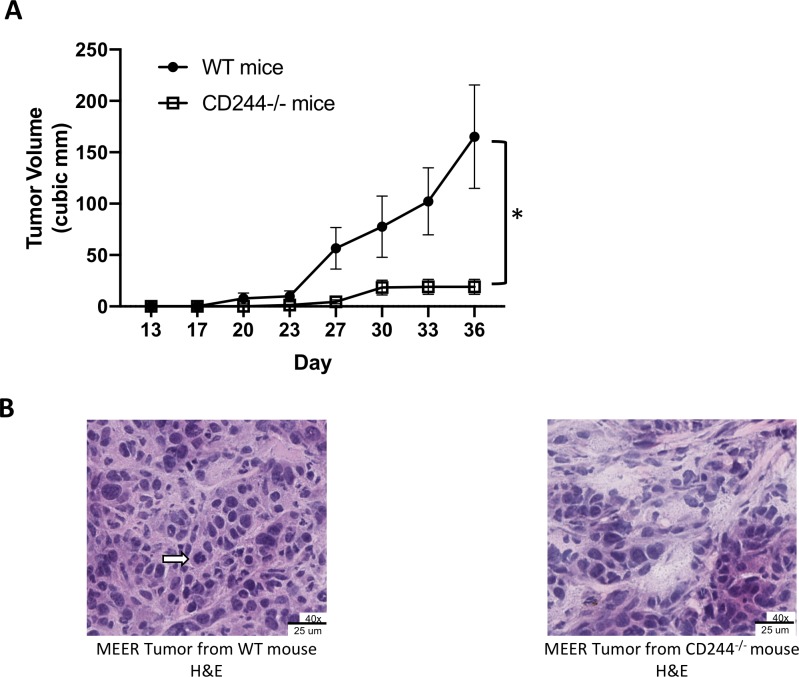
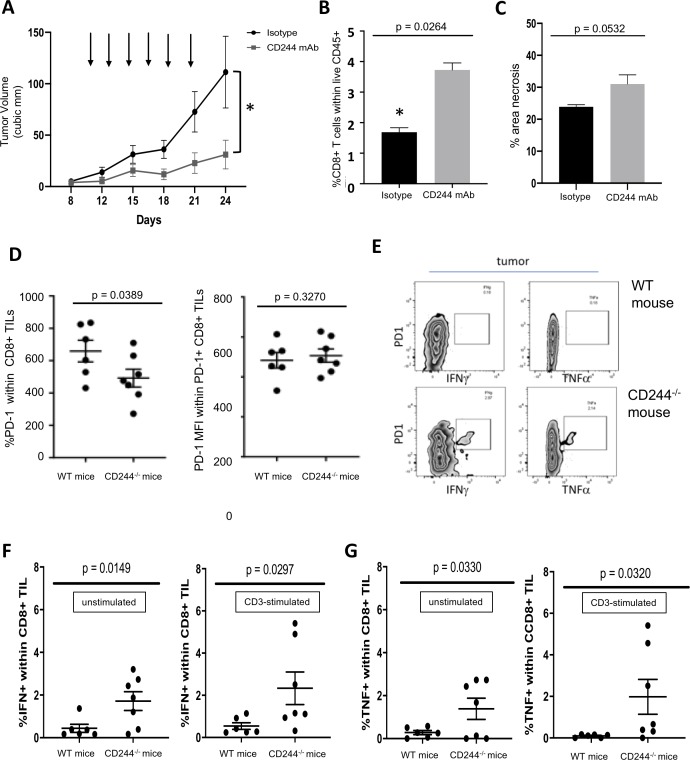
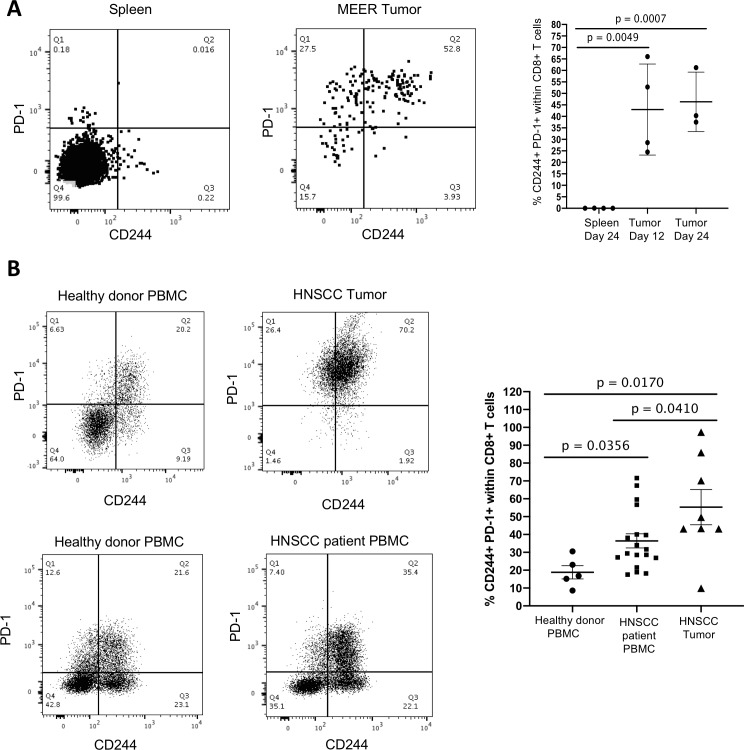
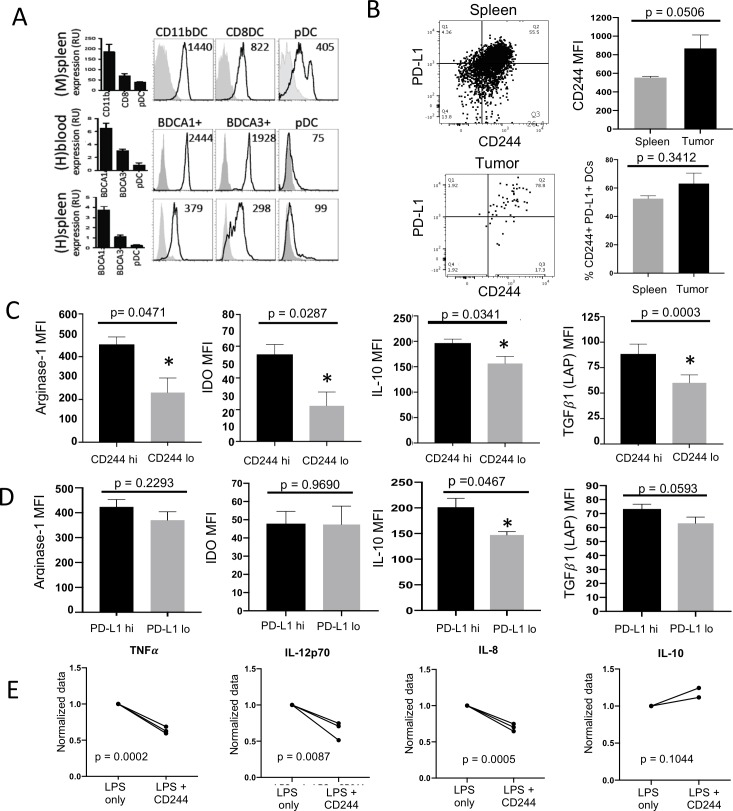
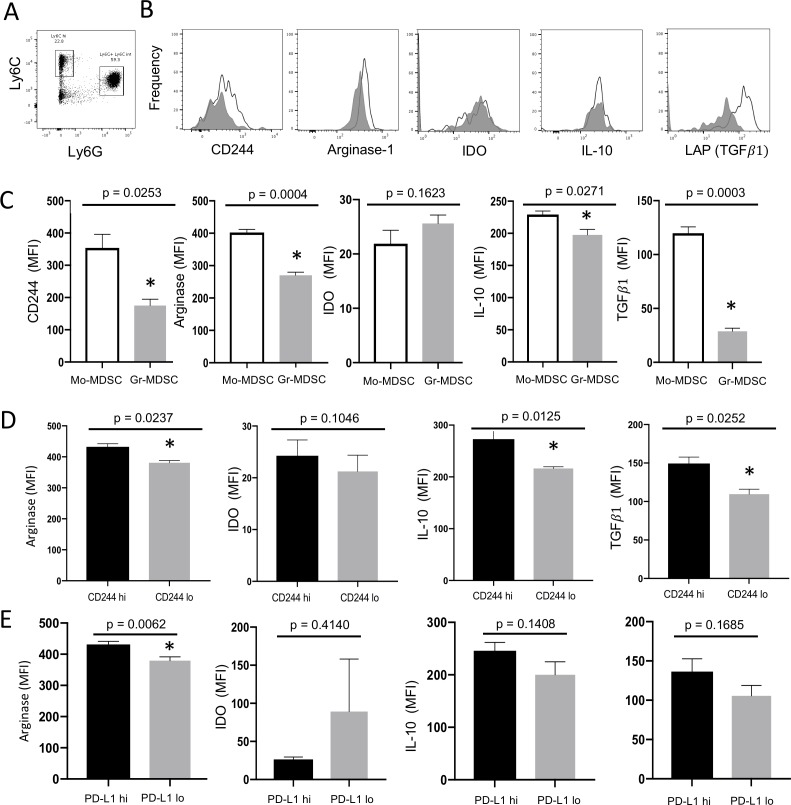
Compared with healthy tissues, tumor infiltrating CD8 T cells from HNSCC patients and a HNSCC mouse model showed significant increased expression of CD244 expression that correlated with PD1 expression. Moreover, CD244 was increased on intratumoral DC and MDSC and high CD244 expression correlated with PD-L1 expression and increased spontaneous expression of immune-suppressive mediators. In addition, CD244 activation inhibited production of proinflammatory cytokines in human DC in vitro. Importantly, CD244 mice showed significantly impaired tumor growth of HNSCC and interventional treatment of WT mice with anti-CD244 monoclonal antibody significantly impaired the growth of established HNSCC tumors and increased tumor-infiltrating CD8 T cells.
Together these data suggest that CD244 contributes to the overall immune-suppressive environment and therefore has potential as a new immunotherapy target in the treatment of malignancies.
开发克服免疫抑制性肿瘤微环境的新策略是癌症治疗研究的一个至关重要的领域。在这里,我们评估了 CD244(2B4/信号淋巴细胞激活分子家族 4)作为一种免疫调节受体的治疗潜力,该受体存在于多种免疫细胞上,包括耗竭的 CD8 T 细胞、树突状细胞(DC)和髓系来源的抑制细胞(MDSC)。
使用来自头颈部鳞状细胞癌(HNSCC)患者和 WT 和 CD244 小鼠 HNSCC 模型的未识别的人肿瘤和血液样本,我们使用流式细胞术、RT-PCR、Luminex 免疫测定和组织病理学分析评估了 CD244 的治疗潜力。
与健康组织相比,HNSCC 患者和 HNSCC 小鼠模型的肿瘤浸润性 CD8 T 细胞显示出明显增加的 CD244 表达,与 PD1 表达相关。此外,肿瘤内 DC 和 MDSC 上的 CD244 表达增加,高 CD244 表达与 PD-L1 表达和增加的自发表达免疫抑制介质相关。此外,CD244 激活抑制了体外人 DC 中促炎细胞因子的产生。重要的是,CD244 敲除小鼠明显抑制了 HNSCC 的肿瘤生长,而 WT 小鼠的抗 CD244 单克隆抗体干预治疗明显抑制了已建立的 HNSCC 肿瘤的生长并增加了肿瘤浸润性 CD8 T 细胞。
这些数据表明,CD244 有助于整体免疫抑制环境,因此具有作为治疗恶性肿瘤的新免疫治疗靶标的潜力。