Laboratoire de Génie Chimique, Université de Toulouse, CNRS, Toulouse CEDEX 31326, France.
Toxins (Basel). 2020 Mar 26;12(4):209. doi: 10.3390/toxins12040209.
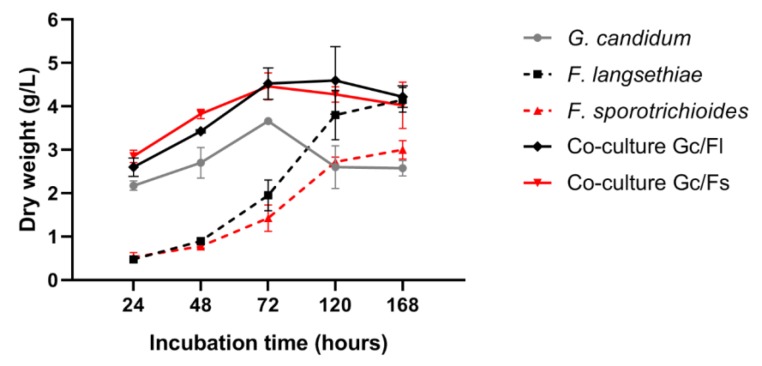
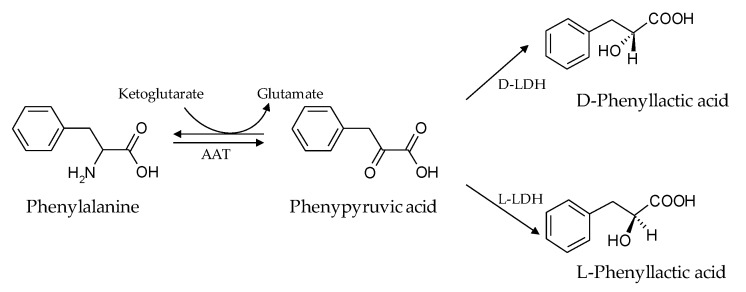
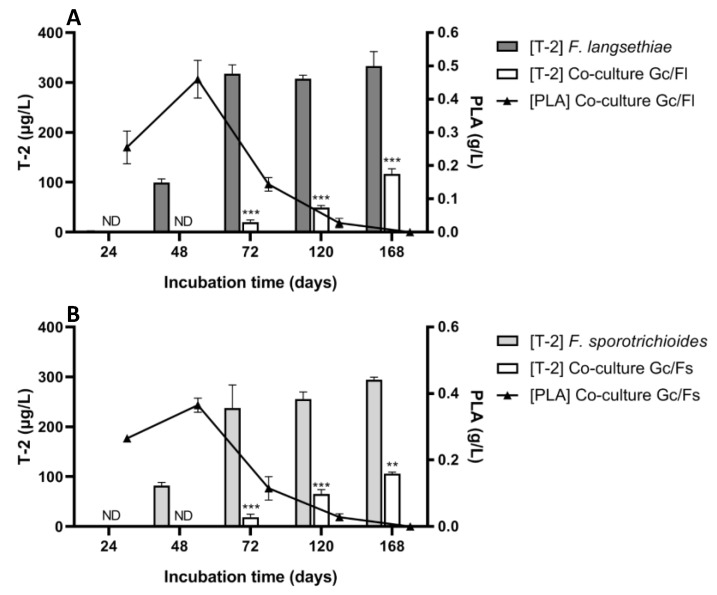
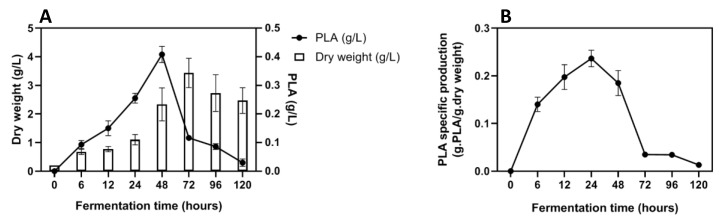
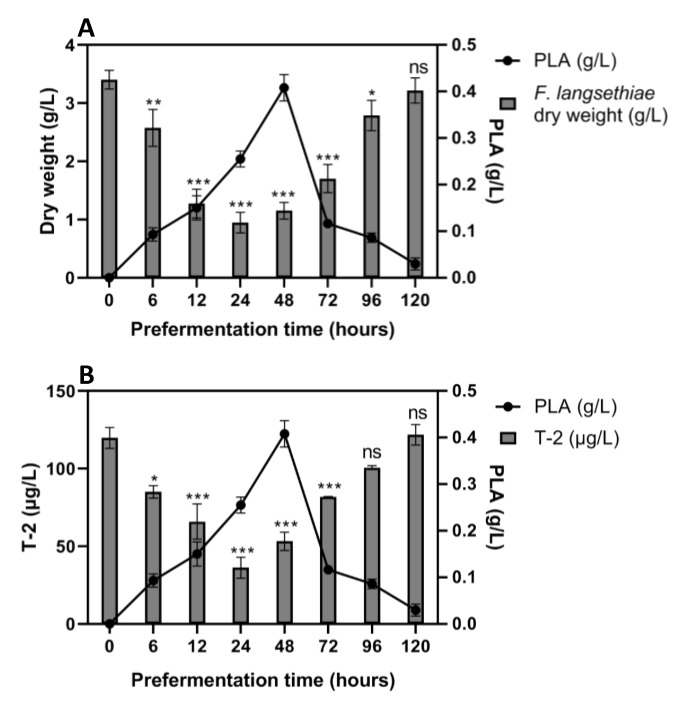
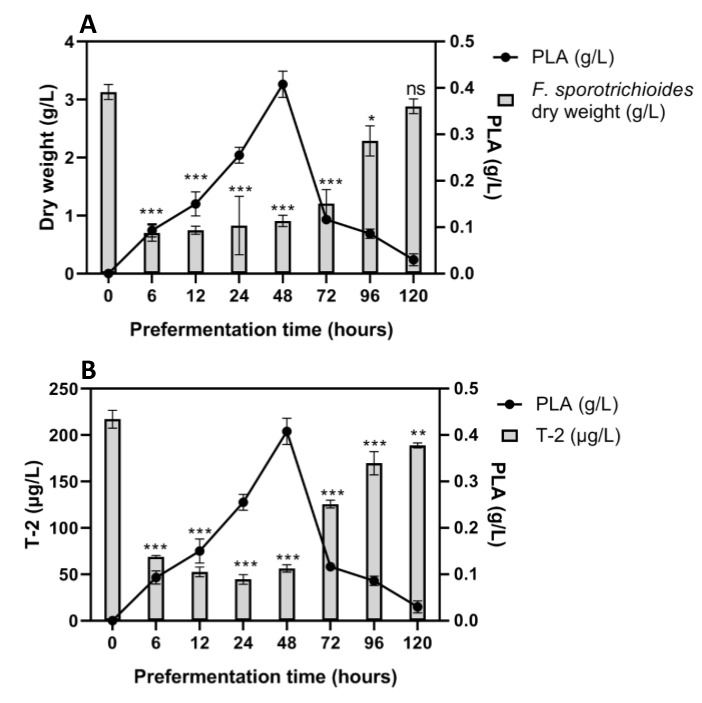
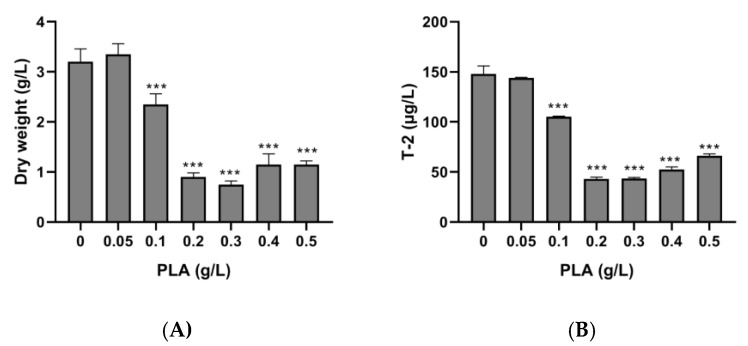
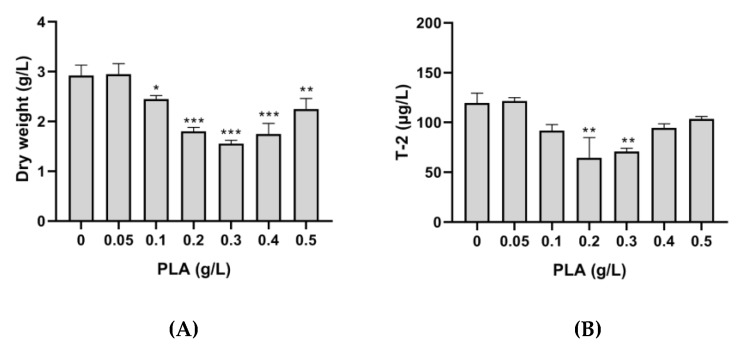
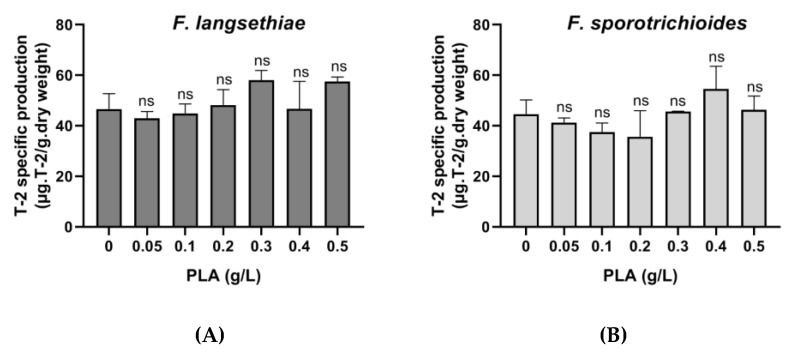
and are present in barley crops. Their toxic metabolites, mainly T-2 toxin, affect the quality and safety of raw material and final products such as beer. Therefore, it is crucial to reduce . proliferation and T-2 toxin contamination during the brewing process. The addition of has been previously demonstrated to reduce the proliferation of . and the production of toxic metabolites, but the mechanism of action is still not known. Thus, this study focuses on the elucidation of the interaction mechanism between and . in order to improve this bioprocess. First, over a period of 168 h, the co-culture kinetics showed an almost 90% reduction in T-2 toxin concentration, starting at 24 h. Second, sequential cultures lead to a reduction in growth and T-2 toxin concentration. Simultaneously, it was demonstrated that produces phenyllactic acid (PLA) at the early stages of growth, which could potentially be responsible for the reduction in growth and T-2 toxin concentration. To prove the PLA effect, and were cultivated in PLA supplemented medium. The expected results were achieved with 0.3 g/L of PLA. These promising results contribute to a better understanding of the bioprocess, allowing its optimization at an up-scaled industrial level.
和 存在于大麦作物中。它们的有毒代谢物,主要是 T-2 毒素,会影响原料和最终产品(如啤酒)的质量和安全。因此,在酿造过程中减少 的增殖和 T-2 毒素污染至关重要。先前已经证明 添加 可以减少 的增殖和有毒代谢物的产生,但作用机制仍不清楚。因此,本研究侧重于阐明 和 在提高该生物过程中的相互作用机制。首先,在 168 小时的时间内,共培养动力学显示 T-2 毒素浓度在 24 小时后几乎降低了 90%。其次,顺序培养导致 生长和 T-2 毒素浓度降低。同时,证明 在生长的早期阶段产生苯乳酸(PLA),这可能是导致 生长和 T-2 毒素浓度降低的原因。为了证明 PLA 的作用,在添加 PLA 的培养基中培养 和 。在 PLA 为 0.3 g/L 时,达到了预期的结果。这些有希望的结果有助于更好地理解生物过程,允许在扩大的工业规模上对其进行优化。