Research Institute for Medicines (iMed.ULisboa), Faculdade de Farmácia da Universidade de Lisboa, Av. Professor Gama Pinto, 1649-003 Lisboa, Portugal.
Cells. 2020 Mar 26;9(4):796. doi: 10.3390/cells9040796.
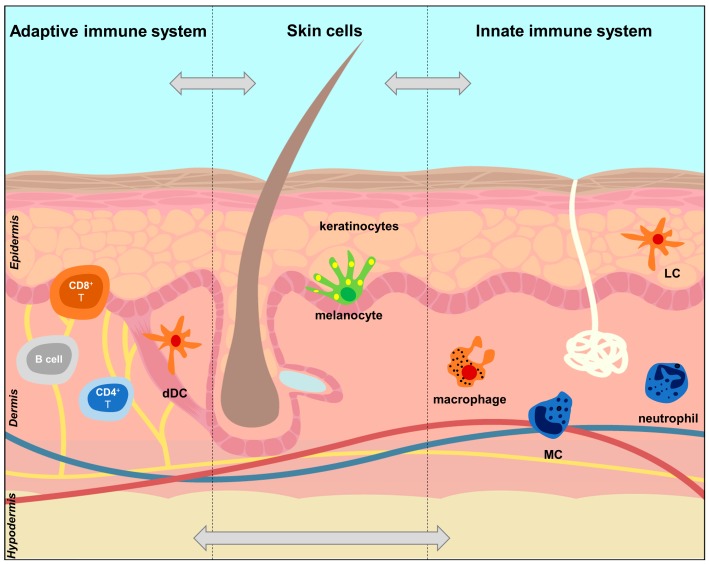
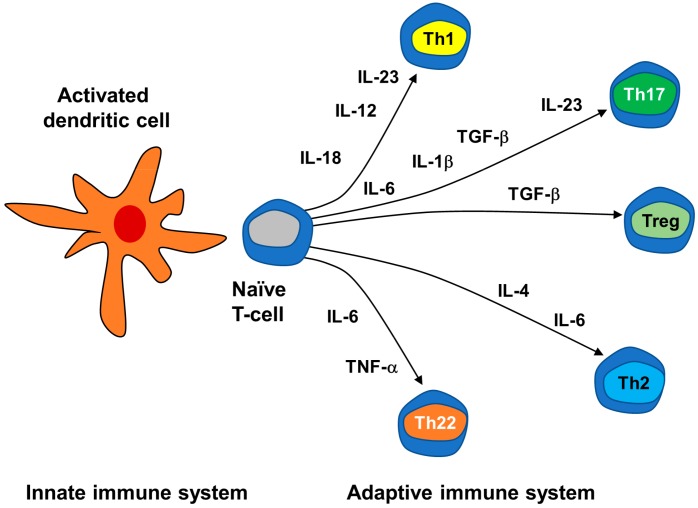
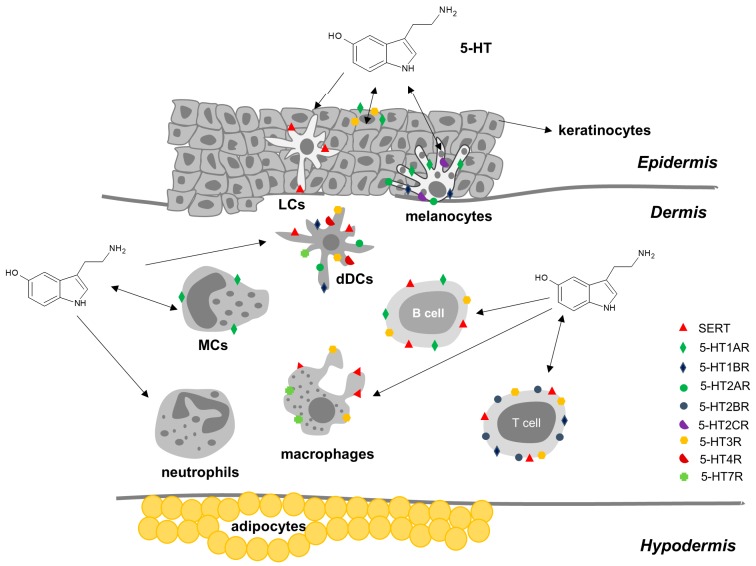
Psoriasis is a common non-communicable chronic immune-mediated skin disease, affecting approximately 125 million people in the world. Its pathogenesis results from a combination of genetic and environmental factors. The pathogenesis of psoriasis seems to be driven by the interaction between innate immune cells, adaptive immune cells and keratinocytes, in a process mediated by cytokines (including interleukins (IL)-6, IL-17 and IL-22, interferon and tumor necrosis factor) and other signaling molecules. This leads to an inflammatory process with increased proliferation of epidermal cells, neo-angiogenesis and infiltration of dendritic cells in the skin. Dysfunctional de novo glucocorticoid synthesis in psoriatic keratinocytes and the skin microbiome have also been suggested as mediators in the pathogenesis of this disease. To understand psoriasis, it is essential to comprehend the processes underlying the skin immunity and neuroendocrinology. This review paper focuses on the skin as a neuroendocrine organ and summarizes what is known about the skin immune system, the brain-skin connection and the role played by the serotonergic system in skin. Subsequently, the alterations of neuroimmune processes and of the serotonergic system in psoriatic skin are discussed, as well as, briefly, the genetic basis of psoriasis.
银屑病是一种常见的非传染性慢性免疫介导性皮肤病,影响着全球约 1.25 亿人。其发病机制是遗传和环境因素共同作用的结果。银屑病的发病机制似乎是由先天免疫细胞、适应性免疫细胞和角质形成细胞相互作用驱动的,这一过程由细胞因子(包括白细胞介素(IL)-6、IL-17 和 IL-22、干扰素和肿瘤坏死因子)和其他信号分子介导。这导致了一个炎症过程,表皮细胞增殖增加,皮肤中的树突状细胞新血管生成和浸润。银屑病角质形成细胞中新生糖皮质激素合成功能障碍和皮肤微生物组也被认为是该疾病发病机制中的介质。为了理解银屑病,理解皮肤免疫和神经内分泌的过程是至关重要的。这篇综述文章重点关注皮肤作为神经内分泌器官,并总结了已知的皮肤免疫系统、脑-皮肤连接以及 5-羟色胺能系统在皮肤中的作用。随后,讨论了银屑病皮肤中神经免疫过程和 5-羟色胺能系统的改变,以及银屑病的遗传基础。