Department of Dermatology, Yale School of Medicine, New Haven, CT.
Department of Psychiatry, Division of Child & Adolescent Psychiatry, Massachusetts General Hospital, Boston, MA.
Yale J Biol Med. 2020 Mar 27;93(1):55-67. eCollection 2020 Mar.
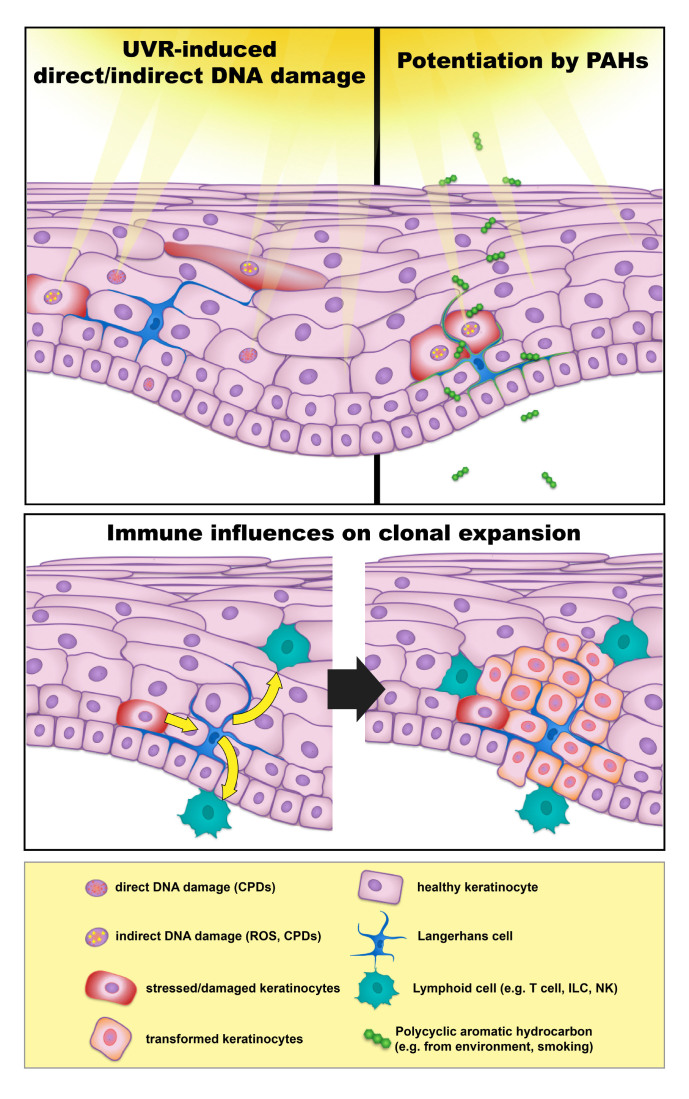
Ultraviolet radiation (UVR) exposure is well established as the major environmental risk factor for the development of melanoma, cutaneous squamous cell carcinoma (cSCC), and basal cell carcinoma (BCC). Additional risk factors including genetic mutations, other environmental agents, and immune status are important in modulating the effects of UVR. Dermatologists advocate a multi-pronged approach to minimizing UVR exposure including lifestyle modifications, UVR protective clothing, and topically applied sun-protective products, sunscreen. New Federal Drug Administration (FDA) regulations on sunscreen have brought certain long-standing ingredients in sunscreen products under scrutiny. The FDA's proposed rule for over the counter (OTC) monograph states that the inorganic sunscreens, zinc oxide and titanium dioxide, were found to be "generally recognized as safe and effective," but cite insufficient evidence to grant organic sunscreens the same designation. This proposed rule by the FDA and our increasing understanding of multifactorial mechanisms of UVR damage are an impetus for innovation and advances in sun protective technology. A complete set of strategies designed to limit the risk of UV-induced skin cell malignant transformation and tumor development must address the fuller consideration of genetic, environmental, and immune factors that cooperatively drive cutaneous carcinogenesis. Recent advances in our understanding of the biochemical processes underpinning UVR associated cutaneous cellular damage, genotoxicity, and clonal expansion provide investigators with a spectrum of opportunities for technologic innovation in the prevention of skin cancer. Strategies to improve upon current topical sunscreen formulations have strived for broader UVR spectral coverage, more favorable aesthetics, increased adherence, and minimal penetration into the living epidermis. In addition to improved sunscreens, future topical therapies may target processes within the epidermis that contribute to carcinogenesis. These include reactive species quenching, delivery of DNA repair enzymes, and targeting of cytokines essential to the proliferation of mutant keratinocytes.
紫外线辐射(UVR)暴露是导致黑色素瘤、皮肤鳞状细胞癌(cSCC)和基底细胞癌(BCC)发生的主要环境风险因素。其他风险因素包括遗传突变、其他环境因素和免疫状态,这些因素在调节 UVR 的作用方面非常重要。皮肤科医生提倡采取多管齐下的方法来尽量减少 UVR 暴露,包括生活方式的改变、UVR 防护衣物和局部应用的防晒产品,防晒霜。新的美国食品药品监督管理局(FDA)对防晒霜的规定使某些长期存在于防晒霜产品中的成分受到了严格审查。FDA 对非处方(OTC)专论的拟议规定指出,无机防晒霜氧化锌和二氧化钛被认为是“安全有效”的,但引用的证据不足以将有机防晒霜也给予相同的认定。FDA 的这项拟议规定以及我们对 UVR 损伤多因素机制的理解不断加深,是推动防晒技术创新和进步的动力。为了限制 UV 诱导的皮肤细胞恶性转化和肿瘤发展的风险,一整套策略必须充分考虑共同推动皮肤癌变的遗传、环境和免疫因素。我们对 UVR 相关皮肤细胞损伤、遗传毒性和克隆扩张的生化过程的理解的最新进展为研究人员提供了一系列在预防皮肤癌方面进行技术创新的机会。为了改善当前的局部防晒霜配方,人们一直在努力扩大 UVR 光谱覆盖范围、提高美观度、增加附着力并减少对活表皮的渗透。除了改进的防晒霜外,未来的局部治疗方法可能针对表皮内有助于癌变的过程。这些包括活性氧物质的淬灭、DNA 修复酶的传递以及靶向对突变角朊细胞增殖至关重要的细胞因子。