Fang Wei, Yang Zhi-Yan, Chen Ting-Yu, Shen Xian-Feng, Zhang Chao
Center for Evidence-Based Medicine and Clinical Research, Taihe Hospital, Hubei University of Medicine, No. 32, South Renmin Road, Shiyan, 442000, China.
Department of General Surgery, Taihe Hospital, Hubei University of Medicine, Shiyan, 442000, China.
J Transl Med. 2020 Mar 30;18(1):145. doi: 10.1186/s12967-020-02308-w.
Bladder cancer is the most common cancer in the urinary system and the fourth most common cancer in males. This study aimed to examine differences in the survival of bladder cancer patients of different ethnicities.
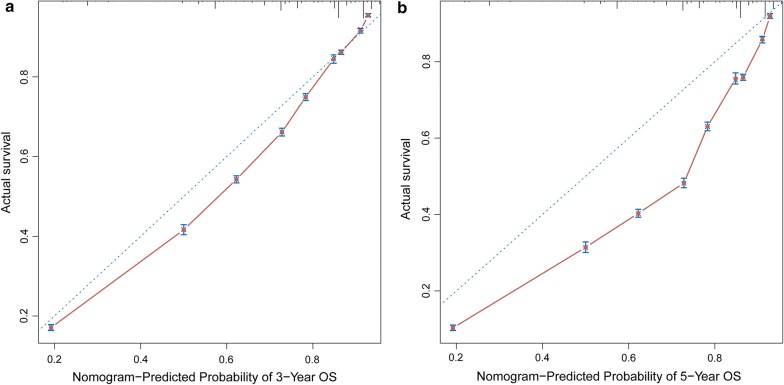
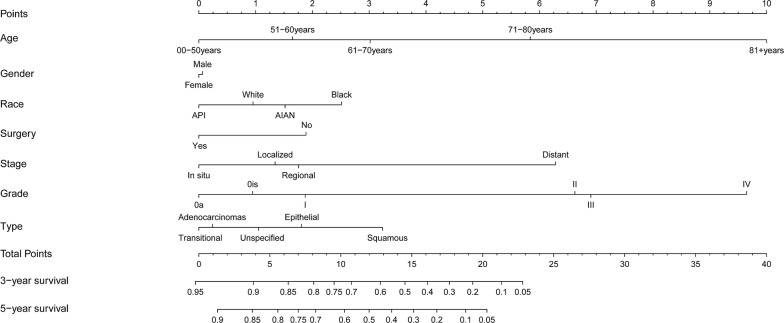
We used the SEER database to obtain data pertaining to bladder cancer patients from 2010 to 2015. Univariate and multivariate Cox proportional hazards regression analyses were used to estimate hazard ratios (HRs) and 95% confidence intervals (CIs) for the association between ethnicity and death. Kaplan-Meier survival and nomogram analyses were used to compare survival differences among patients with different ethnicities.
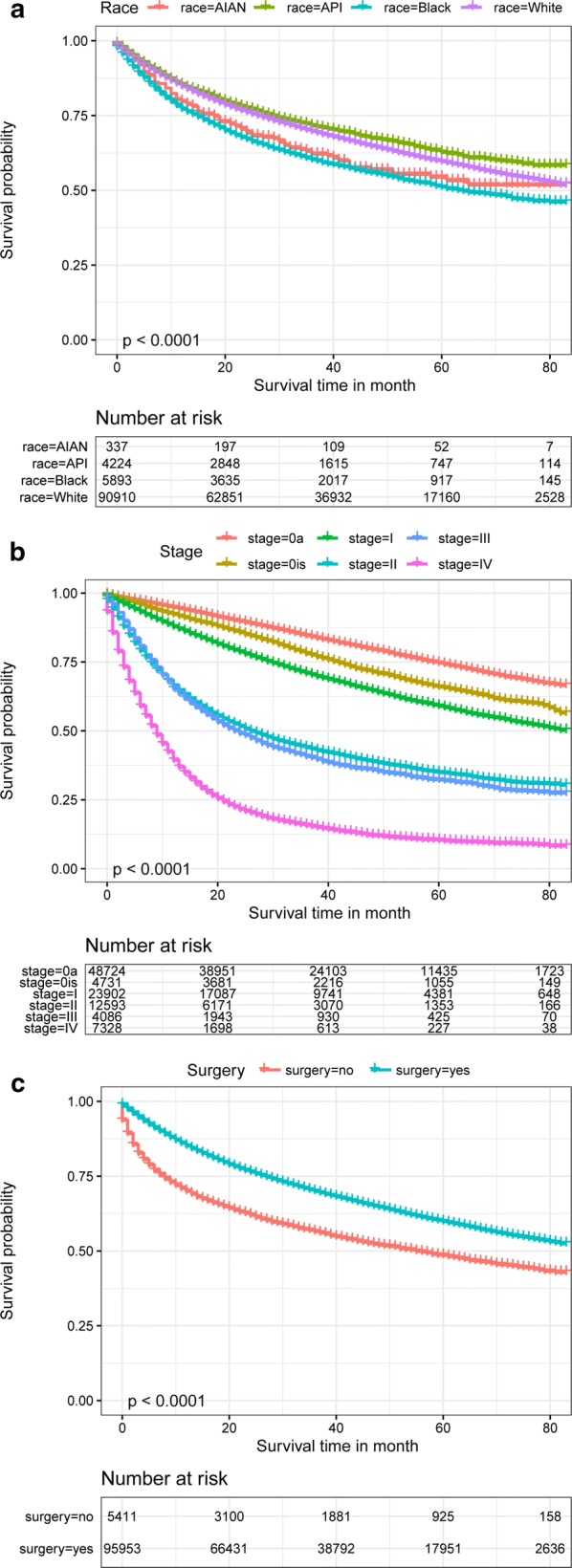
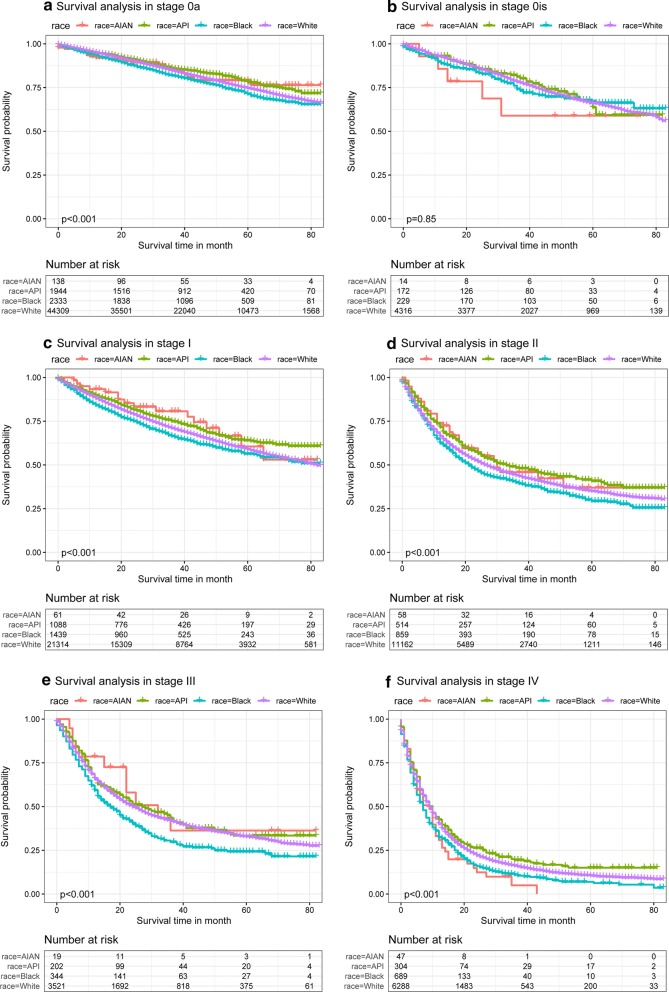
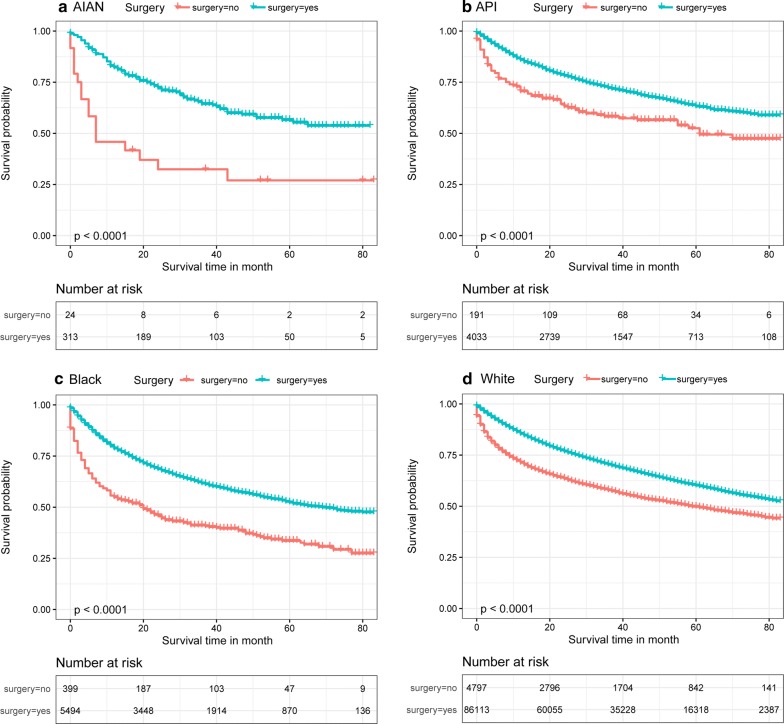
Among 101,364 bladder cancer patients, 90,910 were white, 5893 were black, 337 were American Indian/Alaska Native (AIAN), and 4224 were Asian or Pacific Islander (API). Our multivariate analysis identified differences between different ethnicities. Compared to the API group, the AIAN (HR = 1.31, 95% CI = 1.09-1.57, P < 0.001), black (HR = 1.56, 95% CI = 1.46-1.67, P < 0.001), and white (HR = 1.18, 95% CI = 1.12-1.25, P < 0.001) groups showed lower survival probabilities. Based on data from all Kaplan-Meier survival curves, there was no significant difference in survival between the black and AIAN groups, but the survival of these two races was worse than that of the white and API groups. We also used a nomogram to estimate patient survival and validated its predictive value.
Our results suggest that ethnic differences exist in patients with bladder cancer, that the survival of black and AIAN bladder cancer patients is worse than that of other ethnicities and that the survival of API patients is the best. The significant prognostic factors of overall survival, which include age, sex, ethnicity, summary stage, American Joint Committee on Cancer stage, surgery type, and histologic type, should be applied to bladder cancer patient prognostication.
膀胱癌是泌尿系统中最常见的癌症,在男性中是第四大常见癌症。本研究旨在探讨不同种族膀胱癌患者的生存差异。
我们使用监测、流行病学和最终结果(SEER)数据库获取2010年至2015年膀胱癌患者的数据。采用单因素和多因素Cox比例风险回归分析来估计种族与死亡之间关联的风险比(HR)和95%置信区间(CI)。使用Kaplan-Meier生存分析和列线图分析来比较不同种族患者的生存差异。
在101364例膀胱癌患者中,90910例为白人,5893例为黑人,337例为美国印第安人/阿拉斯加原住民(AIAN),4224例为亚洲人或太平洋岛民(API)。我们的多因素分析确定了不同种族之间的差异。与API组相比,AIAN组(HR = 1.31,95% CI = 1.09 - 1.57,P < 0.001)、黑人组(HR = 1.56,95% CI = 1.46 - 1.67,P < 0.001)和白人组(HR = 1.18,95% CI = 1.12 - 1.25,P < 0.001)的生存概率较低。根据所有Kaplan-Meier生存曲线的数据,黑人和AIAN组之间的生存无显著差异,但这两个种族的生存情况比白人和API组更差。我们还使用列线图来估计患者生存并验证其预测价值。
我们的结果表明,膀胱癌患者存在种族差异,黑人和AIAN膀胱癌患者的生存情况比其他种族更差,而API患者的生存情况最佳。总生存的重要预后因素,包括年龄、性别、种族、总结分期、美国癌症联合委员会分期、手术类型和组织学类型,应应用于膀胱癌患者的预后评估。