Institute of Dairy Science, MoE Key Laboratory of Molecular Animal Nutrition, College of Animal Sciences, Zhejiang University, Hangzhou, 310058, People's Republic of China.
Lipids Health Dis. 2020 Mar 30;19(1):56. doi: 10.1186/s12944-020-01233-7.
Overconditioned dairy cows are prone to greater insulin resistance in transition to successfully adapt to negative energy balance. The associations among body condition score (BCS), insulin resistance, lipid metabolism and oxidative stress in cows during late lactation with positive energy balance remain to be elucidated.
The objectives of this study were to investigate insulin sensitivity and oxidative status in late lactating dairy cows with different BCS but similar milk production, parity and days in milk. Forty-two multiparous Holstein cows were fed the same diet under the same management and divided into three groups based on BCS: low BCS (LBCS; BCS ≤ 2.75; n = 12), medium BCS (MBCS; 3.0 ≤ BCS ≤ 3.5; n = 15) or high BCS (HBCS; BCS ≥ 3.75; n = 15). Blood samples used for analysis of biochemical and hematological parameters were collected from the coccygeal vein at the end of experiment.
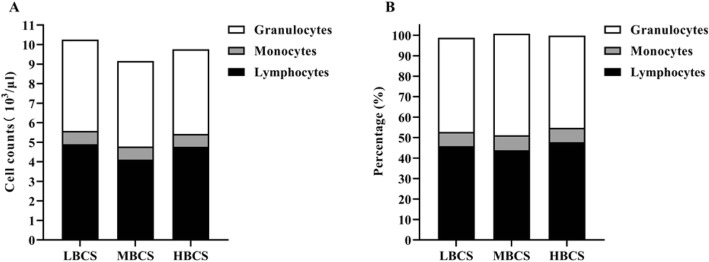
The concentrations of insulin and nonesterified fatty acid were higher and the revised quantitative insulin sensitivity check index (RQUICKI) was lower in HBCS cows than in LBCS and MBCS cows. These results suggest that insulin resistance exacerbates lipolysis in HBCS cows. Serum concentrations of very low-density lipoprotein, apolipoprotein A-I, and apolipoprotein B were lower in HBCS cows than in LBCS or MBCS cows. Although LBCS and MBCS cows had higher reactive oxygen species levels than did HBCS cows, the malondialdehyde concentration was not different among cows with different BCS. Ceruloplasmin activity was higher in MBCS and HBCS cows than in LBCS cows, but superoxide dismutase, glutathione peroxidase, and paraoxonase activities were not different among cows with different BCS. Despite the higher percentage of granulocytes in MBCS cows than in HBCS cows, no differences were found in leukocyte counts, red blood cell profiles and platelet profiles among the cows in the three groups.
Results of this study showed that compared with MBCS and LBCS cows, HBCS cows at late lactation stage may have accumulated more hepatic triacylglycerol and lower antioxidant potential due to greater insulin resistance.
在过渡到成功适应负能平衡时,过度饲养的奶牛更容易出现胰岛素抵抗。在具有正能平衡的泌乳后期,奶牛的体况评分(BCS)、胰岛素抵抗、脂代谢和氧化应激之间的关系仍有待阐明。
本研究的目的是研究不同 BCS 但具有相似产奶量、胎次和泌乳天数的泌乳后期奶牛的胰岛素敏感性和氧化状态。42 头经产荷斯坦奶牛在相同的管理下以相同的饮食饲养,并根据 BCS 分为三组:低 BCS(LBCS;BCS≤2.75;n=12)、中 BCS(MBCS;3.0≤BCS≤3.5;n=15)或高 BCS(HBCS;BCS≥3.75;n=15)。在实验结束时,从尾骨静脉采集血液样本用于分析生化和血液参数。
HBCS 奶牛的胰岛素和非酯化脂肪酸浓度较高,修订后的定量胰岛素敏感性检查指数(RQUICKI)较低。这些结果表明,胰岛素抵抗会加剧 HBCS 奶牛的脂肪分解。HBCS 奶牛的极低密度脂蛋白、载脂蛋白 A-I 和载脂蛋白 B 浓度低于 LBCS 或 MBCS 奶牛。尽管 LBCS 和 MBCS 奶牛的活性氧水平高于 HBCS 奶牛,但不同 BCS 奶牛的丙二醛浓度没有差异。MBCS 和 HBCS 奶牛的铜蓝蛋白活性高于 LBCS 奶牛,但超氧化物歧化酶、谷胱甘肽过氧化物酶和对氧磷酶活性在不同 BCS 奶牛之间没有差异。尽管 MBCS 奶牛中的粒细胞百分比高于 HBCS 奶牛,但三组奶牛的白细胞计数、红细胞图谱和血小板图谱没有差异。
本研究结果表明,与 MBCS 和 LBCS 奶牛相比,泌乳后期的 HBCS 奶牛可能由于胰岛素抵抗而积累了更多的肝三酰甘油和较低的抗氧化潜力。