Structural Biology Program, Memorial Sloan Kettering Cancer Center, New York, United States.
Elife. 2020 Mar 31;9:e53430. doi: 10.7554/eLife.53430.
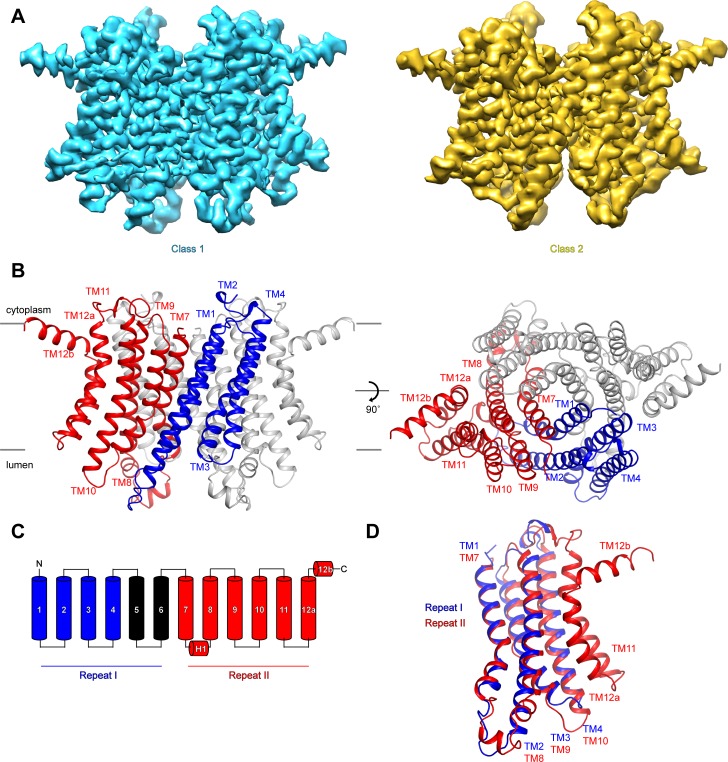
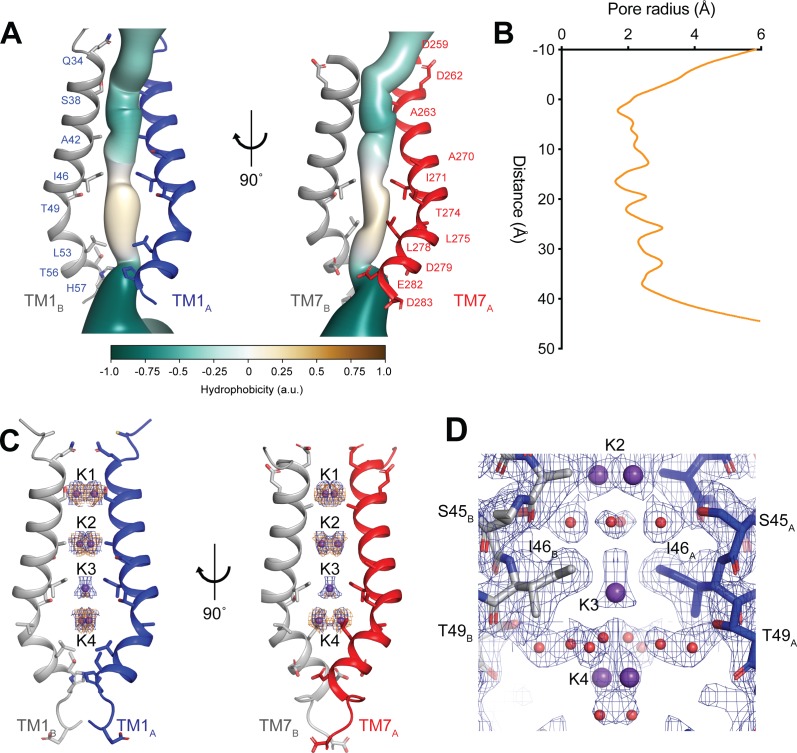
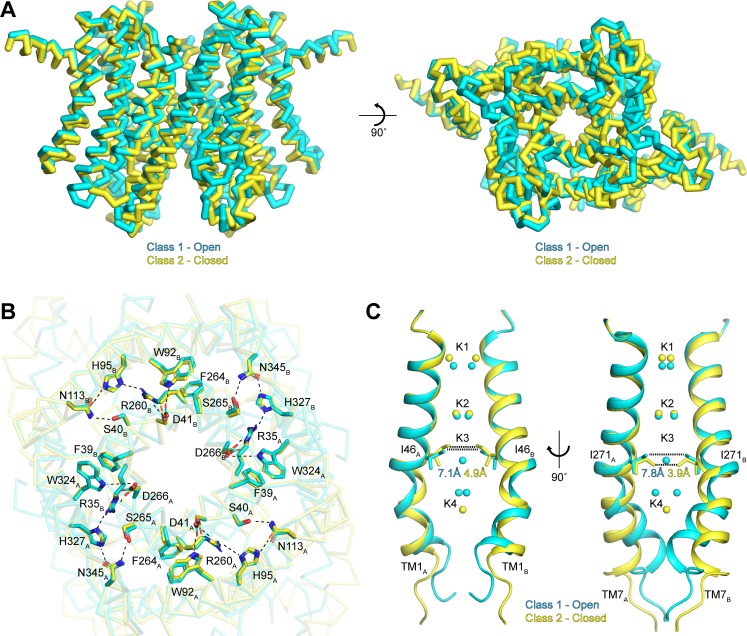
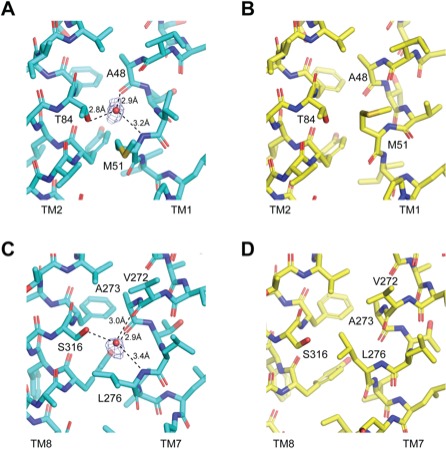
Transmembrane protein 175 (TMEM175) is a K-selective ion channel expressed in lysosomal membranes, where it establishes a membrane potential essential for lysosomal function and its dysregulation is associated with the development of Parkinson's Disease. TMEM175 is evolutionarily distinct from all known channels, predicting novel ion-selectivity and gating mechanisms. Here we present cryo-EM structures of human TMEM175 in open and closed conformations, enabled by resolutions up to 2.6 Å. Human TMEM175 adopts a homodimeric architecture with a central ion-conduction pore lined by the side chains of the pore-lining helices. Conserved isoleucine residues in the center of the pore serve as the gate in the closed conformation. In the widened channel in the open conformation, these same residues establish a constriction essential for K selectivity. These studies reveal the mechanisms of permeation, selectivity and gating and lay the groundwork for understanding the role of TMEM175 in lysosomal function.
跨膜蛋白 175(TMEM175)是一种在溶酶体膜中表达的 K 选择性离子通道,它在溶酶体功能中建立了一个必需的膜电位,其失调与帕金森病的发展有关。TMEM175 在进化上与所有已知的通道不同,预测了新的离子选择性和门控机制。在这里,我们展示了人类 TMEM175 在开放和关闭构象下的冷冻电镜结构,分辨率高达 2.6Å。人类 TMEM175 采用同源二聚体结构,中央离子传导孔由孔衬螺旋的侧链排列。孔中心保守的异亮氨酸残基在关闭构象中充当门。在开放构象中加宽的通道中,这些相同的残基建立了一个狭窄的通道,对 K 选择性至关重要。这些研究揭示了渗透、选择性和门控的机制,并为理解 TMEM175 在溶酶体功能中的作用奠定了基础。