Chen Feng-Tzu, Hopman Rachel J, Huang Chung-Ju, Chu Chien-Heng, Hillman Charles H, Hung Tsung-Min, Chang Yu-Kai
Graduate Institute of Sport, Leisure and Hospitality Management, National Taiwan Normal University, Taipei 10610, Taiwan.
Department of Psychology, Northeastern University, Boston, MA 02115, USA.
J Clin Med. 2020 Mar 27;9(4):914. doi: 10.3390/jcm9040914.
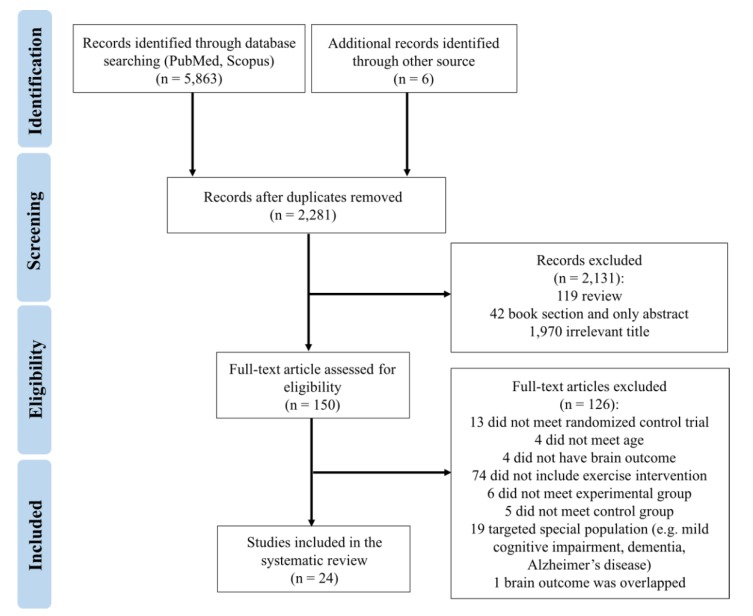
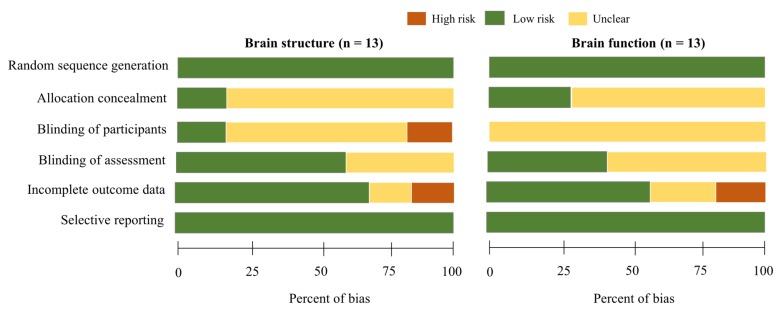
Accumulating evidence suggests that exercise training is associated with improvements in brain health in older adults, yet the extant literature is insufficient in detailing why exercise training facilitates brain structure and function. Specifically, few studies have employed the FITT-VP principle (i.e., Frequency, Intensity, Time, Type, Volume, and Progression) to characterize the exercise exposure, thus research is yet to specify which characteristics of exercise training benefit brain outcomes. To determine whether exercise training is consequential to cognitive and brain outcomes, we conducted a systematic review investigating the effects of exercise training on brain structure and function in older adults. PubMed and Scopus were searched from inception to February 2020, and study quality was assessed using the Cochrane risk-of-bias tool. A total of 24 randomized controlled trials were included. This systematic review indicates that older adults involved in exercise training may derive general benefits to brain health, as reflected by intervention-induced changes in brain structure and function. However, such benefits are dependent upon the dose of the exercise intervention. Importantly, current evidence remains limited for applied exercise prescriptions (e.g., volume, progression) and future research is needed to clarify the effects of exercise training on cognitive and brain outcomes in older adults.
越来越多的证据表明,运动训练与老年人脑健康的改善有关,但现有文献在详细说明运动训练为何能促进脑结构和功能方面并不充分。具体而言,很少有研究采用FITT-VP原则(即频率、强度、时间、类型、运动量和进展)来描述运动暴露情况,因此研究尚未明确运动训练的哪些特征对脑健康有益。为了确定运动训练是否会对认知和脑健康产生影响,我们进行了一项系统综述,调查运动训练对老年人脑结构和功能的影响。检索了PubMed和Scopus数据库从建库至2020年2月的文献,并使用Cochrane偏倚风险工具评估研究质量。共纳入24项随机对照试验。这项系统综述表明,参与运动训练的老年人可能会从脑健康的总体改善中获益,这体现在干预引起的脑结构和功能变化上。然而,这种益处取决于运动干预的剂量。重要的是,目前关于应用运动处方(如运动量、进展)的证据仍然有限,需要未来的研究来阐明运动训练对老年人认知和脑健康的影响。