Di Donato Cristina, Iacovino Rosa, Isernia Carla, Malgieri Gaetano, Varela-Garcia Angela, Concheiro Angel, Alvarez-Lorenzo Carmen
Department of Environmental, Biological and Pharmaceutical Sciences and Technologies, University of Campania Luigi Vanvitelli, Via A. Vivaldi 43, 81100 Caserta, Italy.
Departament of Pharmacology, Pharmacy and Pharmaceutical Technology, I+DFarma (GI-1645), Facultad de Farmacia and Health Research Institute of Santiago de Compostela (IDIS), Universidade de Santiago de Compostela, 15782 Santiago de Compostela, Spain.
Nanomaterials (Basel). 2020 Mar 27;10(4):613. doi: 10.3390/nano10040613.
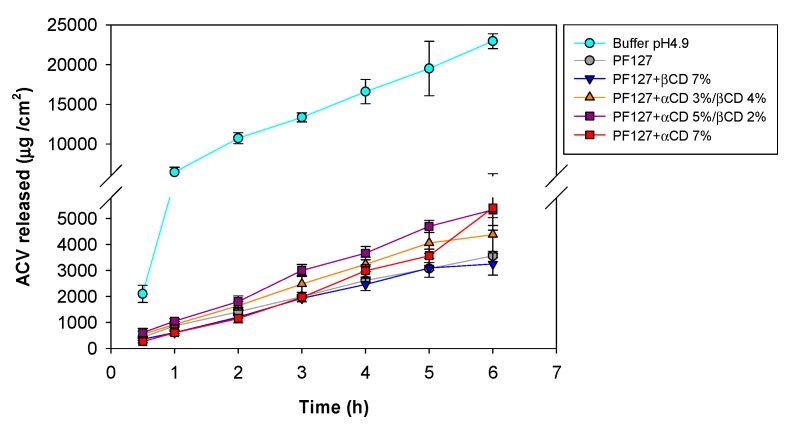
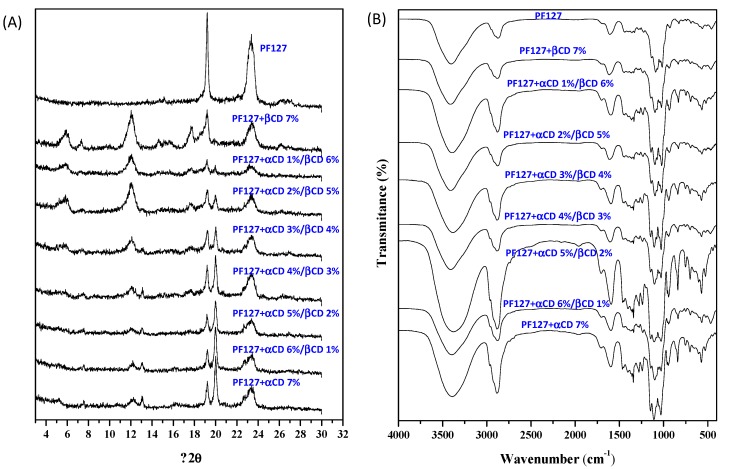
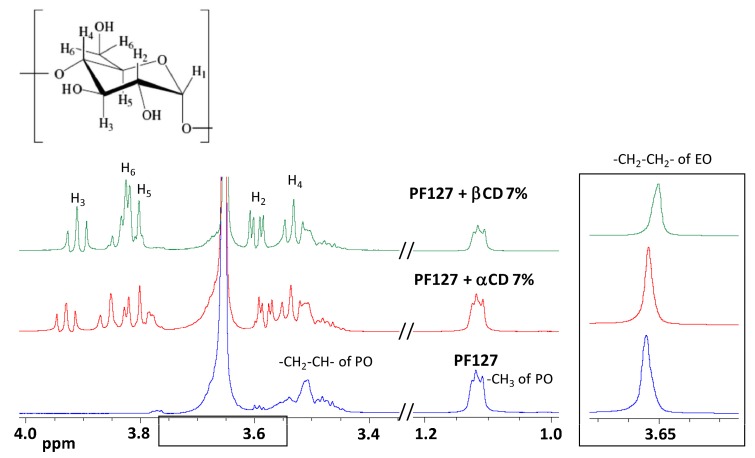
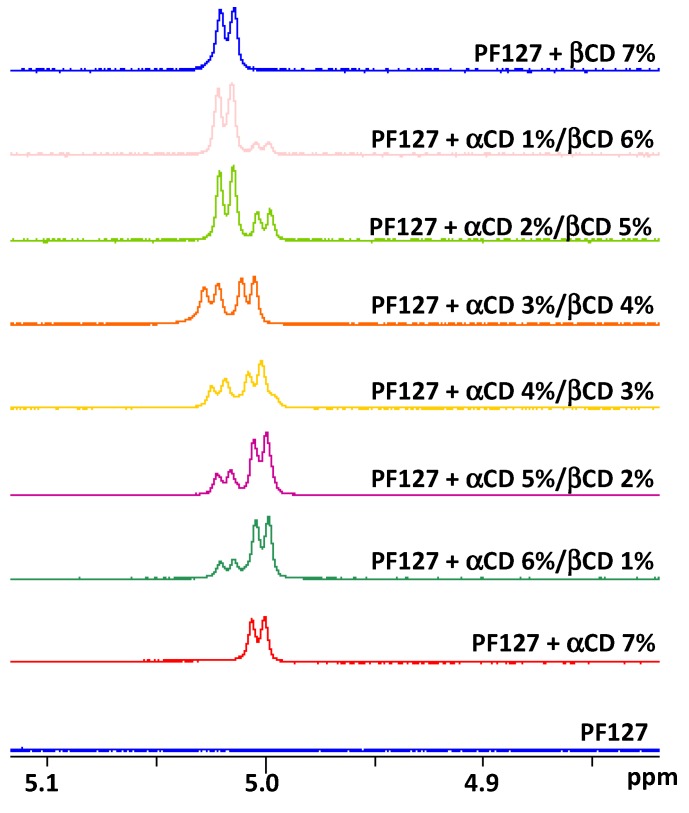
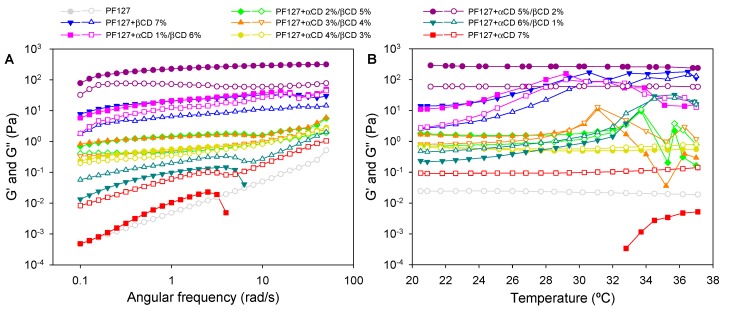
Acyclovir (ACV) is one of the most used antiviral drugs for the treatment of herpes simplex virus infections and other relevant mucosal infections caused by viruses. Nevertheless, the low water solubility of ACV limits both its bioavailability and antiviral performance. The combination of block copolymer micelles and cyclodextrins (CDs) may result in polypseudorotaxanes with tunable drug solubilizing and gelling properties. However, the simultaneous addition of various CDs has barely been investigated yet. The aim of this work was to design and characterize ternary combinations of Pluronic® F127 (PF127), αCD and βCD in terms of polypseudorotaxane formation, rheological behavior, and ACV solubilization ability and controlled release. The formation of polypseudorotaxanes between PF127 and the CDs was confirmed by FT-IR spectroscopy, X-ray diffraction, and NMR spectroscopy. The effects of αCD/βCD concentration range (0-7% /) on copolymer (6.5% /) gel features were evaluated at 20 and 37 °C by rheological studies, resulting in changes of the copolymer gelling properties. PF127 with αCD/βCD improved the solubilization of ACV, maintaining the biocompatibility (hen's egg test on the chorio-allantoic membrane). In addition, the gels were able to sustain acyclovir delivery. The formulation prepared with similar proportions of αCD and βCD provided a slower and more constant release. The results obtained suggest that the combination of Pluronic with αCD/βCD mixtures can be a valuable approach to tune the rheological features and drug release profiles from these supramolecular gels.
阿昔洛韦(ACV)是治疗单纯疱疹病毒感染及其他由病毒引起的相关黏膜感染最常用的抗病毒药物之一。然而,阿昔洛韦的低水溶性限制了其生物利用度和抗病毒性能。嵌段共聚物胶束与环糊精(CDs)的组合可能会形成具有可调药物增溶和胶凝特性的聚准轮烷。然而,同时添加多种环糊精的情况尚未得到充分研究。本研究的目的是设计并表征普朗尼克® F127(PF127)、α-环糊精和β-环糊精的三元组合在聚准轮烷形成、流变行为、阿昔洛韦增溶能力及控释方面的特性。通过傅里叶变换红外光谱(FT-IR)、X射线衍射和核磁共振光谱证实了PF127与环糊精之间形成了聚准轮烷。通过流变学研究评估了α-环糊精/β-环糊精浓度范围(0 - 7% /)对共聚物(6.5% /)凝胶特性在20℃和37℃时的影响,结果导致共聚物胶凝特性发生变化。PF127与α-环糊精/β-环糊精改善了阿昔洛韦的溶解性,同时保持了生物相容性(鸡胚绒毛尿囊膜试验)。此外,这些凝胶能够维持阿昔洛韦的释放。以相似比例的α-环糊精和β-环糊精制备的制剂提供了更缓慢且更恒定的释放。所得结果表明,普朗尼克与α-环糊精/β-环糊精混合物的组合可能是调节这些超分子凝胶流变特性和药物释放曲线的一种有价值的方法。