Hamazaki Nobuaki, Kamiya Kentaro, Yamamoto Shohei, Nozaki Kohei, Ichikawa Takafumi, Matsuzawa Ryota, Tanaka Shinya, Nakamura Takeshi, Yamashita Masashi, Maekawa Emi, Meguro Kentaro, Noda Chiharu, Yamaoka-Tojo Minako, Matsunaga Atsuhiko, Ako Junya
Department of Rehabilitation, Kitasato University Hospital, Sagamihara 252-0375, Japan.
Department of Rehabilitation, Kitasato University School of Allied Health Sciences, Sagamihara 252-0373, Japan.
J Clin Med. 2020 Mar 30;9(4):952. doi: 10.3390/jcm9040952.
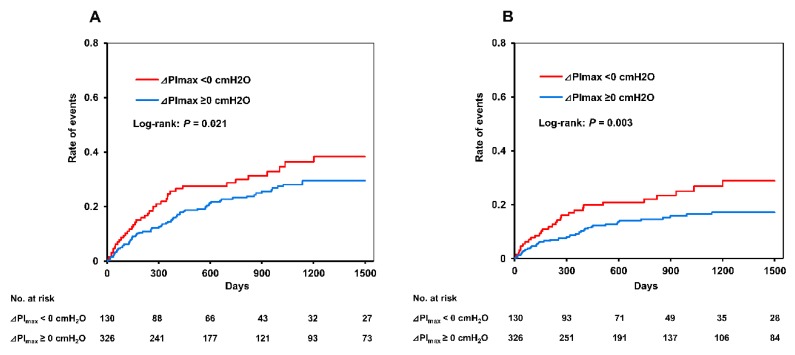
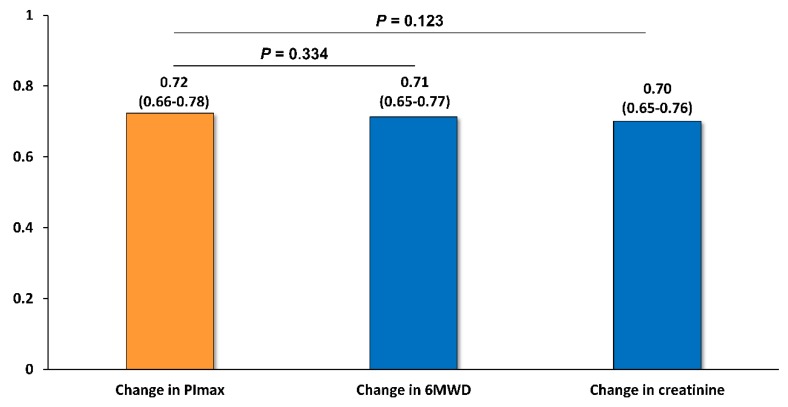
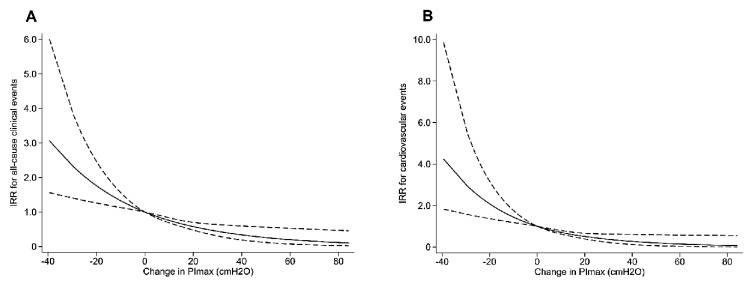
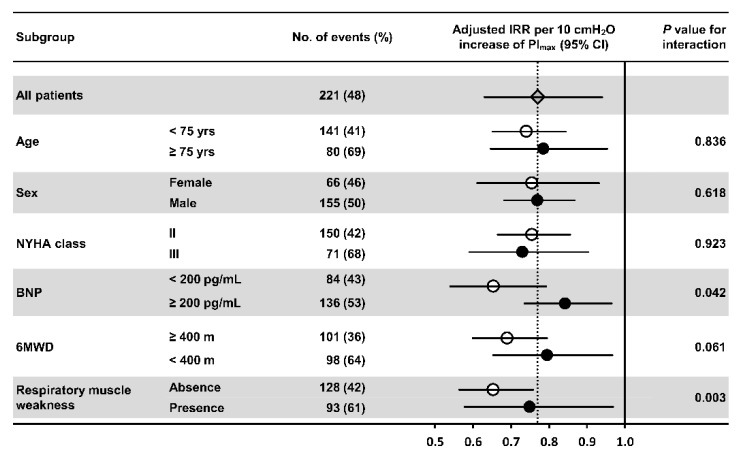
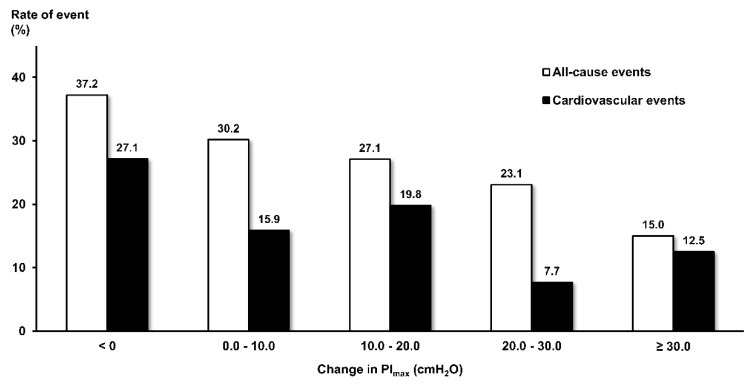
Respiratory muscle weakness, frequently observed in patients with heart failure (HF), is reported as a predictor for poor prognosis. Although increased respiratory muscle strength ameliorates exercise tolerance and quality of life in HF patients, the relationship between changes in respiratory muscle strength and patient prognosis remains unclear. A total of 456 patients with HF who continued a 5-month cardiac rehabilitation (CR) were studied. We measured maximal inspiratory pressure (PI) at hospital discharge as the baseline and five months thereafter to assess the respiratory muscle strength. Changes in PI during the 5-month observation period (⊿PI) were examined. We investigated the composite multiple incidence of all-cause death or unplanned readmission after 5-month CR. The relationship between ⊿PI and the incidence of clinical events was analyzed. Over a median follow-up of 1.8 years, 221 deaths or readmissions occurred, and their rate of incidence was 4.3/100 person-years. The higher ⊿PI was significantly associated with lower incidence of clinical event. In multivariate Poisson regression model after adjustment for clinical confounding factors, ⊿PI remained a significant and independent predictor for all-cause death/readmission (adjusted incident rate ratio for ⊿PI increase of 10 cmHO: 0.77, 95% confidence interval: 0.70-0.86). In conclusion, the changes in respiratory muscle strength independently predict the incidence of clinical events in patients with HF.
呼吸肌无力在心力衰竭(HF)患者中经常可见,据报道是预后不良的一个预测指标。尽管呼吸肌力量增强可改善HF患者的运动耐量和生活质量,但呼吸肌力量变化与患者预后之间的关系仍不明确。本研究共纳入了456例持续进行5个月心脏康复(CR)的HF患者。我们在出院时测量最大吸气压(PI)作为基线值,并在5个月后再次测量以评估呼吸肌力量。观察5个月期间PI的变化(⊿PI)。我们调查了5个月CR后全因死亡或非计划再入院的综合发生率。分析了⊿PI与临床事件发生率之间的关系。在中位随访1.8年期间,发生了221例死亡或再入院事件,其发生率为4.3/100人年。较高的⊿PI与较低的临床事件发生率显著相关。在调整临床混杂因素后的多变量泊松回归模型中,⊿PI仍然是全因死亡/再入院的一个显著且独立的预测指标(⊿PI每增加10 cmH₂O的调整事件发生率比:0.77,95%置信区间:0.70 - 0.86)。总之,呼吸肌力量的变化可独立预测HF患者临床事件的发生率。