Department of Orthopedic Surgery, Ajou University School of Medicine, Suwon, Korea.
Cell Therapy Center, Ajou University Hospital, Suwon, Korea.
Sci Rep. 2020 Mar 31;10(1):5722. doi: 10.1038/s41598-020-62580-0.
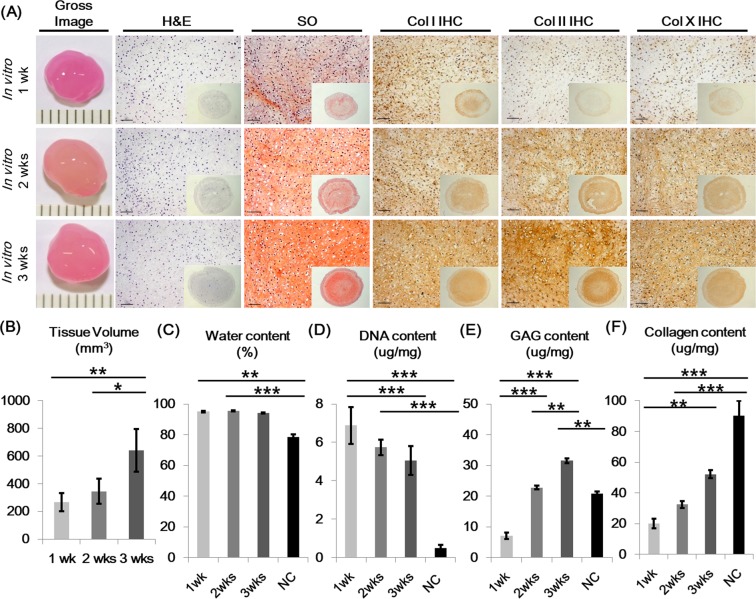
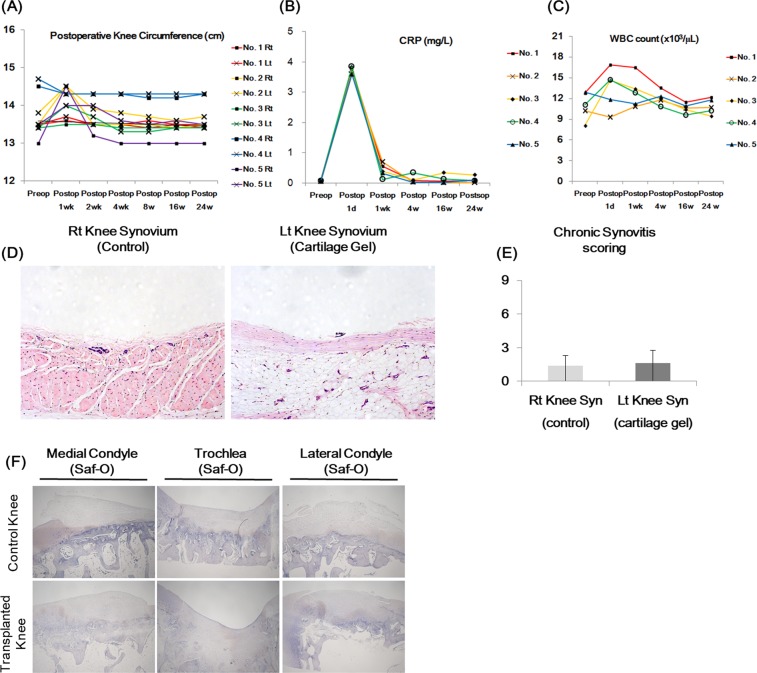
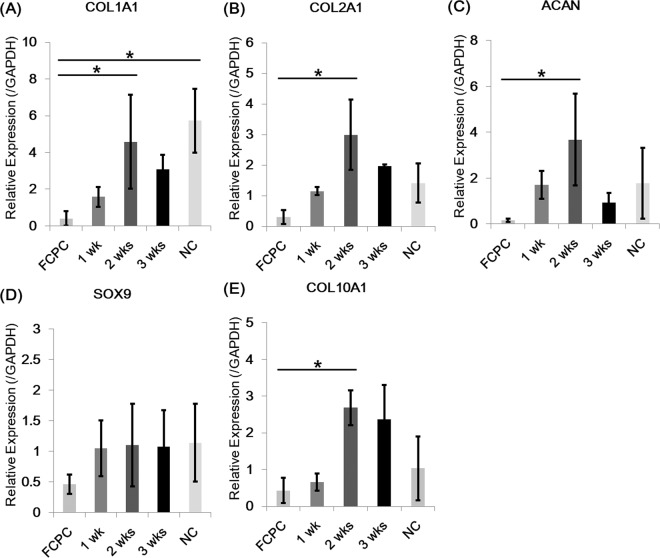
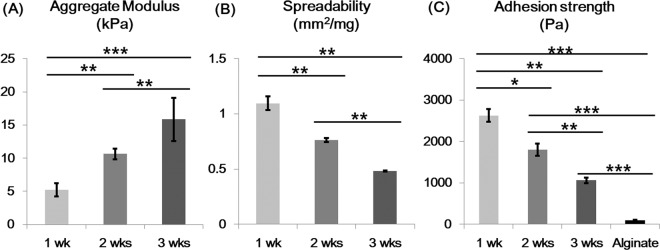
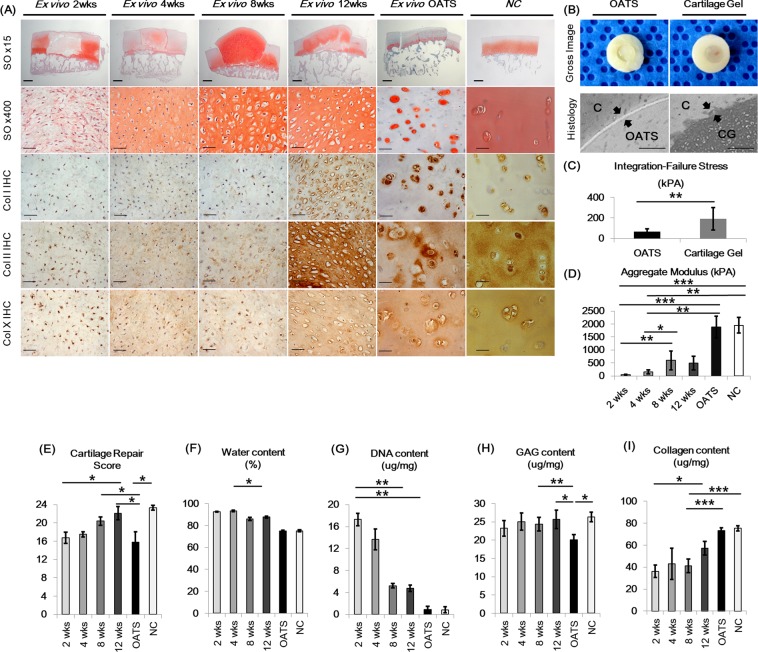
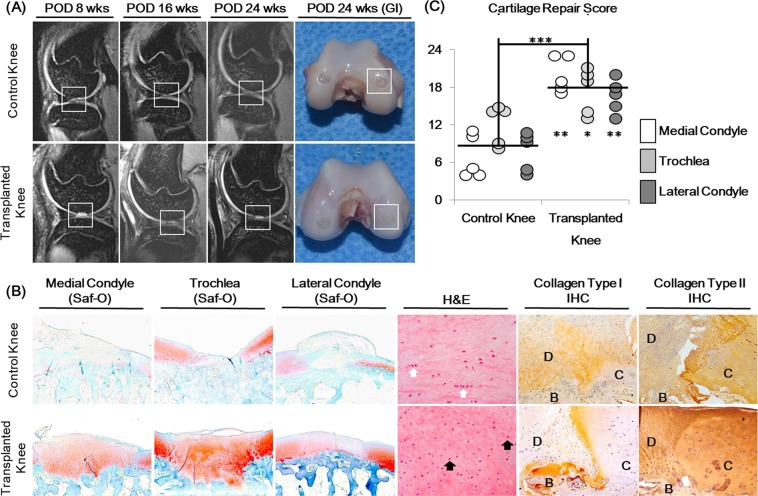
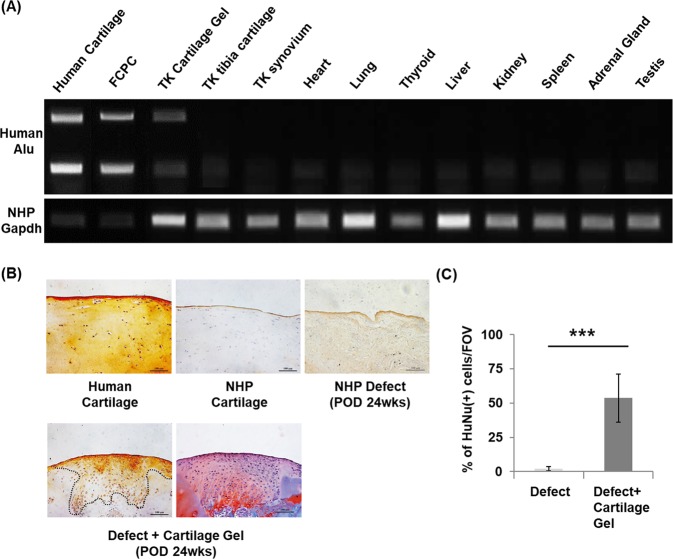
The aim of this study was to develop a fetal cartilage-derived progenitor cell (FCPC) based cartilage gel through self-assembly for cartilage repair surgery, with clinically useful properties including adhesiveness, plasticity, and continued chondrogenic remodeling after transplantation. Characterization of the gels according to in vitro self-assembly period resulted in increased chondrogenic features over time. Adhesion strength of the cartilage gels were significantly higher compared to alginate gel, with the 2-wk group showing a near 20-fold higher strength (1.8 ± 0.15 kPa vs. 0.09 ± 0.01 kPa, p < 0.001). The in vivo remodeling process analysis of the 2 wk cultured gels showed increased cartilage repair characteristics and stiffness over time, with higher integration-failure stress compared to osteochondral autograft controls at 4 weeks (p < 0.01). In the nonhuman primate investigation, cartilage repair scores were significantly better in the gel group compared to defects alone after 24 weeks (p < 0.001). Cell distribution analysis at 24 weeks showed that human cells remained within the transplanted defects only. A self-assembled, FCPC-based cartilage gel showed chondrogenic repair potential as well as adhesive properties, beneficial for cartilage repair.
本研究旨在开发一种基于胎儿软骨衍生祖细胞(FCPC)的软骨胶,通过自组装用于软骨修复手术,具有临床有用的特性,包括黏附性、可塑性和移植后持续的软骨生成重塑。根据体外自组装时间对凝胶进行的特征描述表明,随着时间的推移,软骨生成特性逐渐增加。与藻酸盐凝胶相比,软骨凝胶的黏附强度显著提高,其中 2 周组的黏附强度提高了近 20 倍(1.8±0.15 kPa 比 0.09±0.01 kPa,p<0.001)。对培养 2 周的凝胶进行体内重塑过程分析表明,随着时间的推移,软骨修复特性和硬度逐渐增加,与 4 周时的骨软骨自体移植物对照组相比,整合失败应力更高(p<0.01)。在非人类灵长类动物研究中,与单独缺陷相比,凝胶组在 24 周后的软骨修复评分显著更好(p<0.001)。24 周时的细胞分布分析表明,只有人类细胞仍存在于移植缺陷中。自组装的基于 FCPC 的软骨胶显示出软骨生成修复潜力以及黏附特性,有利于软骨修复。