I. M. Sechenov First Moscow State Medical University (Sechenov University), Moscow, Russian Federation.
Diabetes Research Center, Traditional Chinese Medicine School, Beijing University of Chinese Medicine, Beijing, China.
Pharmacol Res Perspect. 2020 Apr;8(2):e00584. doi: 10.1002/prp2.584.
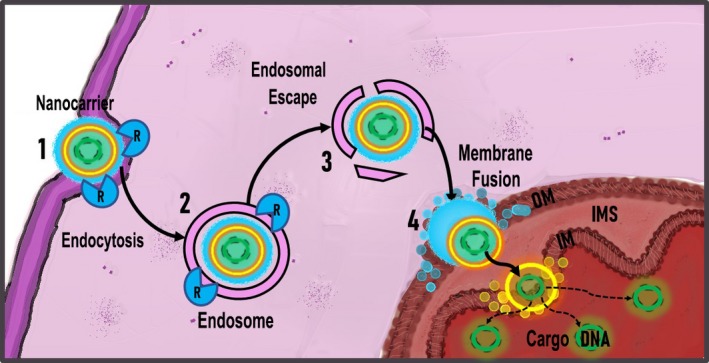
Atherosclerosis with associated cardiovascular diseases remains one of the main causes of disability and death worldwide, requiring development of new solutions for prevention and treatment. Macrophages are the key effectors of a series of events involved in atherogenesis, such as inflammation, plaque formation, and changes in lipid metabolism. Some of these events were shown to be associated with mitochondrial dysfunction and excessive mitochondrial DNA (mtDNA) damage. Moreover, macrophages represent a promising target for novel therapeutic approaches that are based on the expression of various receptors and nanoparticle uptake. Lipid-based gene delivery to mitochondria is considered to be an interesting strategy for mtDNA damage correction. To date, several nanocarriers and their modifications have been developed that demonstrate high transfection efficiency and low cytotoxicity. This review discusses the possibilities of lipid-based gene delivery to macrophage mitochondria for atherosclerosis therapy.
动脉粥样硬化及其相关心血管疾病仍然是全球范围内导致残疾和死亡的主要原因之一,因此需要开发新的预防和治疗方法。巨噬细胞是一系列与动脉粥样硬化发生相关的事件的关键效应物,如炎症、斑块形成和脂质代谢变化。其中一些事件被证明与线粒体功能障碍和过量的线粒体 DNA(mtDNA)损伤有关。此外,巨噬细胞是一种很有前途的治疗靶点,新的治疗方法基于各种受体的表达和纳米颗粒的摄取。将脂质体作为基因载体递送到线粒体被认为是纠正 mtDNA 损伤的一种有趣策略。迄今为止,已经开发出了几种纳米载体及其修饰物,这些载体具有较高的转染效率和较低的细胞毒性。本文综述了脂质体介导的基因递送到巨噬细胞线粒体治疗动脉粥样硬化的可能性。