Department of Anatomy, Donders Institute for Brain, Cognition & Behaviour, Preclinical Imaging Centre PRIME, Radboud University Medical Center, Geert Grooteplein noord 21, 6525 EZ, Nijmegen, The Netherlands.
Department of Cognitive Neuroscience, Donders Institute for Brain, Cognition and Behaviour, Radboud University Medical Center, 6525 EN, Nijmegen, The Netherlands.
Microbiome. 2020 Apr 1;8(1):44. doi: 10.1186/s40168-020-00816-x.
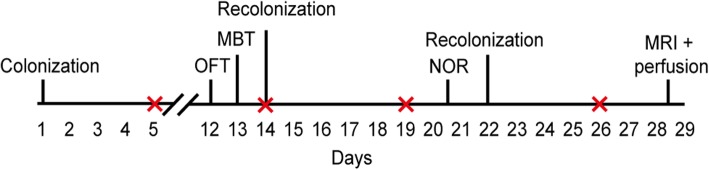
The impact of the gut microbiota on host physiology and behavior has been relatively well established. Whether changes in microbial composition affect brain structure and function is largely elusive, however. This is important as altered brain structure and function have been implicated in various neurodevelopmental disorders, like attention-deficit/hyperactivity disorder (ADHD). We hypothesized that gut microbiota of persons with and without ADHD, when transplanted into mice, would differentially modify brain function and/or structure. We investigated this by colonizing young, male, germ-free C57BL/6JOlaHsd mice with microbiota from individuals with and without ADHD. We generated and analyzed microbiome data, assessed brain structure and function by magnetic resonance imaging (MRI), and studied mouse behavior in a behavioral test battery.
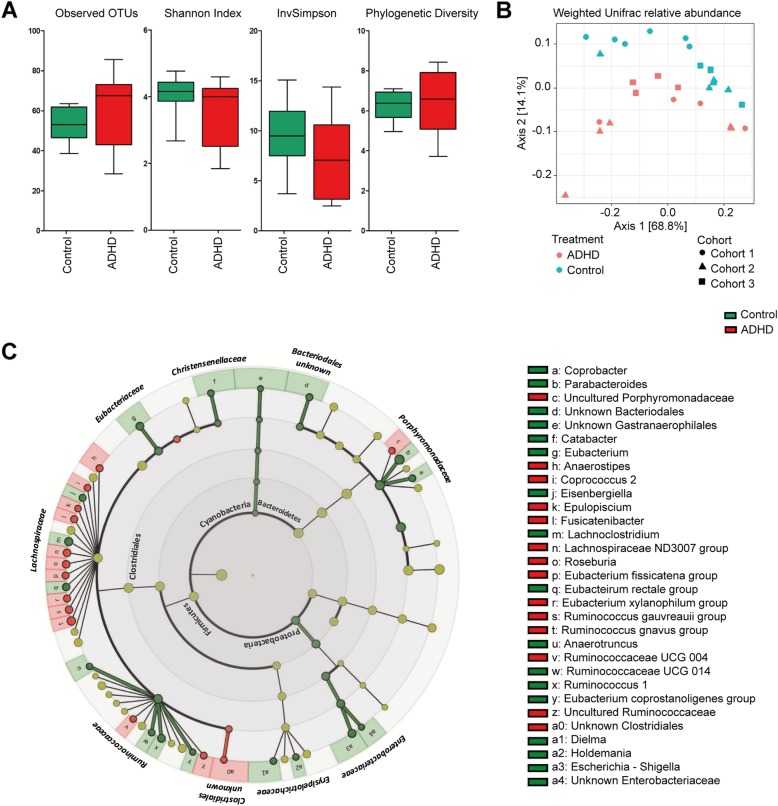
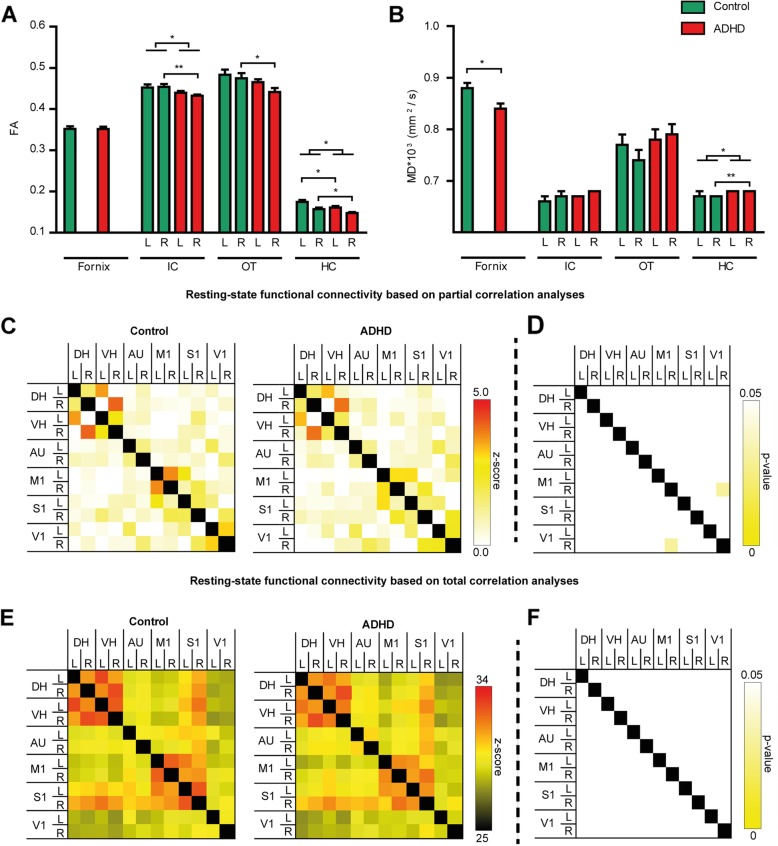
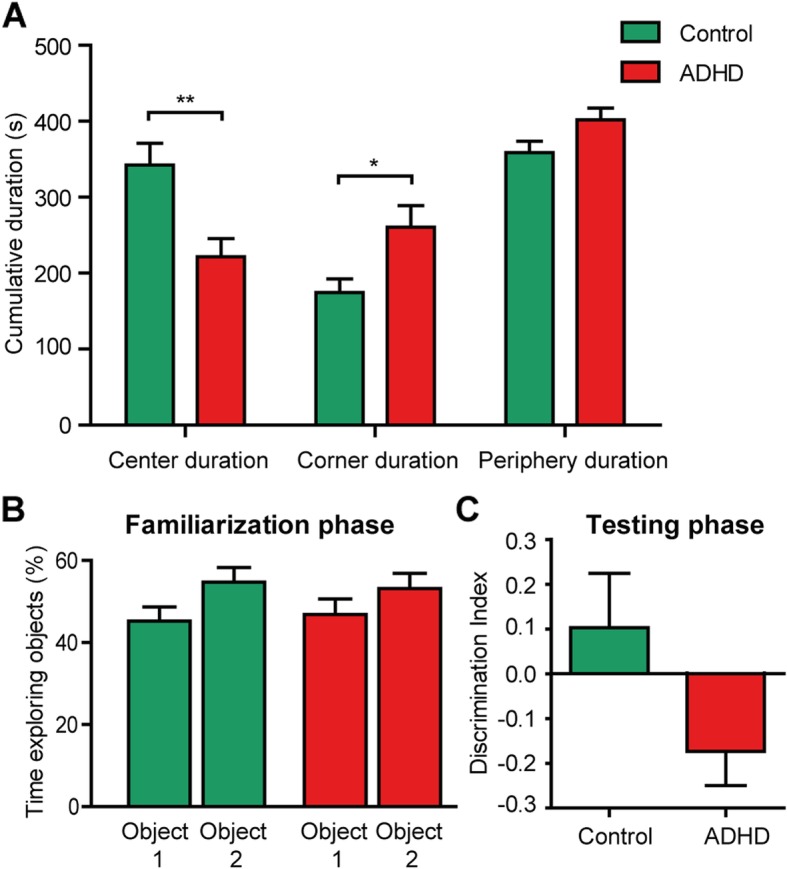
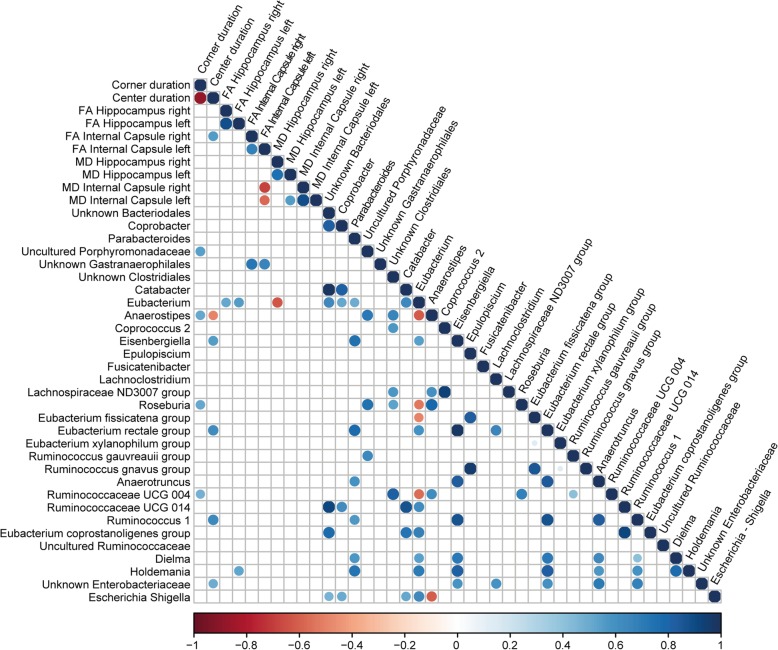
Principal coordinate analysis showed a clear separation of fecal microbiota of mice colonized with ADHD and control microbiota. With diffusion tensor imaging, we observed a decreased structural integrity of both white and gray matter regions (i.e., internal capsule, hippocampus) in mice that were colonized with ADHD microbiota. We also found significant correlations between white matter integrity and the differentially expressed microbiota. Mice colonized with ADHD microbiota additionally showed decreased resting-state functional MRI-based connectivity between right motor and right visual cortices. These regions, as well as the hippocampus and internal capsule, have previously been reported to be altered in several neurodevelopmental disorders. Furthermore, we also show that mice colonized with ADHD microbiota were more anxious in the open-field test.
Taken together, we demonstrate that altered microbial composition could be a driver of altered brain structure and function and concomitant changes in the animals' behavior. These findings may help to understand the mechanisms through which the gut microbiota contributes to the pathobiology of neurodevelopmental disorders. Video abstract.
肠道微生物群对宿主生理和行为的影响已经得到了相对较好的确立。然而,微生物组成的变化是否会影响大脑结构和功能在很大程度上还不得而知。这一点很重要,因为大脑结构和功能的改变与各种神经发育障碍有关,如注意力缺陷多动障碍(ADHD)。我们假设,患有和不患有 ADHD 的人的肠道微生物群移植到老鼠体内后,会对大脑功能和/或结构产生不同的影响。我们通过用患有和不患有 ADHD 的人的微生物群定植年轻、雄性、无菌 C57BL/6JOlaHsd 小鼠来研究这一点。我们生成并分析了微生物组数据,通过磁共振成像(MRI)评估了大脑结构和功能,并在行为测试中研究了小鼠的行为。
主坐标分析显示,用 ADHD 和对照微生物群定植的小鼠的粪便微生物群有明显的分离。通过弥散张量成像,我们观察到用 ADHD 微生物群定植的小鼠的白质和灰质区域(即内囊、海马体)的结构完整性降低。我们还发现了白质完整性与差异表达的微生物群之间的显著相关性。用 ADHD 微生物群定植的小鼠还表现出右运动皮层和右视觉皮层之间静息状态功能磁共振成像(rs-fMRI)连接的减少。这些区域,以及海马体和内囊,在几种神经发育障碍中已经被报道过有改变。此外,我们还发现用 ADHD 微生物群定植的小鼠在旷场测试中更加焦虑。
总的来说,我们证明了改变的微生物组成可能是大脑结构和功能改变以及动物行为改变的驱动因素。这些发现可能有助于理解肠道微生物群对神经发育障碍的病理生物学的贡献机制。视频摘要。