Université Bourgogne Franche-Comté, INRA, AgroSup Dijon, Agroécologie, 21000, Dijon, France.
Departamento de Bioquímica, Instituto de Química, Universidade de São Paulo, São Paulo, Brazil.
Microbiome. 2020 Apr 6;8(1):52. doi: 10.1186/s40168-020-00822-z.
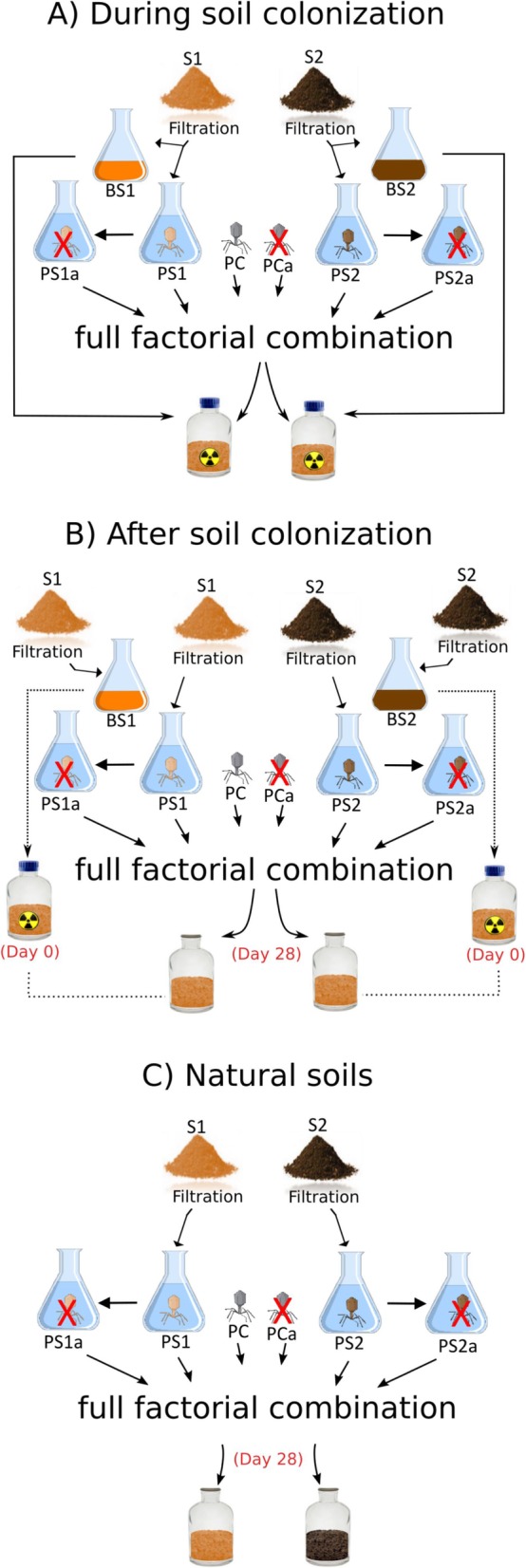
Bacteriophages, the viruses infecting bacteria, are biological entities that can control their host populations. The ecological relevance of phages for microbial systems has been widely explored in aquatic environments, but the current understanding of the role of phages in terrestrial ecosystems remains limited. Here, our objective was to quantify the extent to which phages drive the assembly and functioning of soil bacterial communities. We performed a reciprocal transplant experiment using natural and sterilized soil incubated with different combinations of two soil microbial communities, challenged against native and non-native phage suspensions as well as against a cocktail of phage isolates. We tested three different community assembly scenarios by adding phages: (a) during soil colonization, (b) after colonization, and (c) in natural soil communities. One month after inoculation with phage suspensions, bacterial communities were assessed by 16S rRNA amplicon gene sequencing.
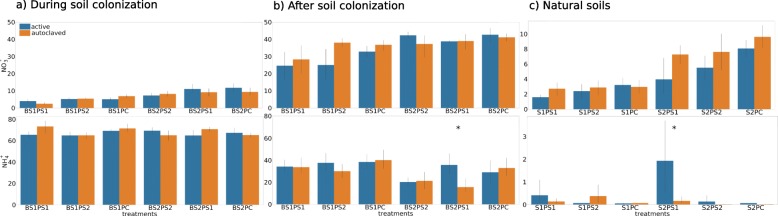
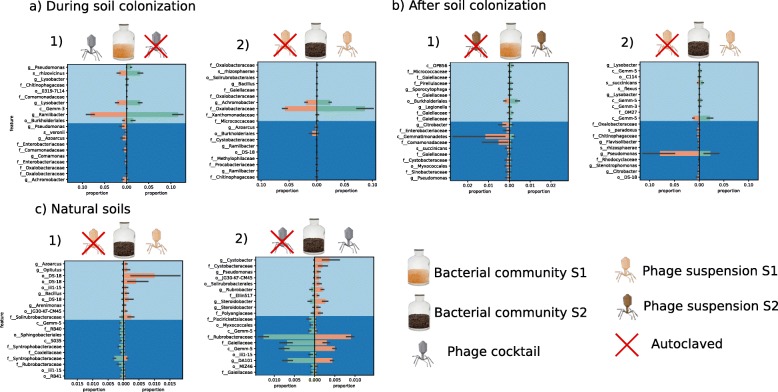
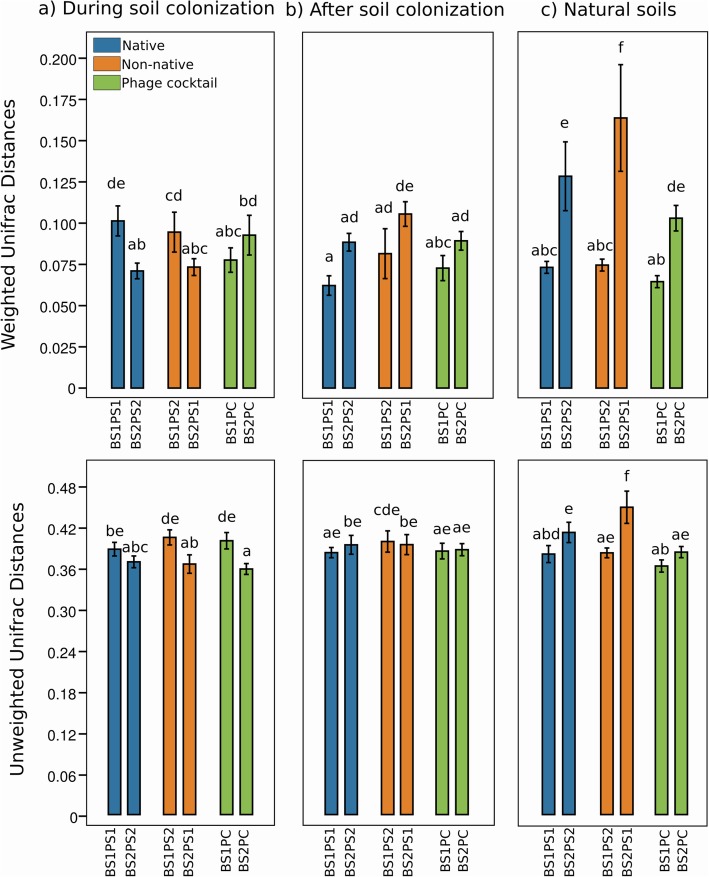
By comparing the treatments inoculated with active versus autoclaved phages, our results show that changes in phage pressure have the potential to impact soil bacterial community composition and diversity. We also found a positive effect of active phages on the soil ammonium concentration in a few treatments, which indicates that increased phage pressure may also be important for soil functions.
Overall, the present work contributes to expand the current knowledge about soil phages and provide some empirical evidence supporting their relevance for soil bacterial community assembly and functioning. Video Abstract.
噬菌体是感染细菌的病毒,是能够控制其宿主种群的生物实体。噬菌体对微生物系统的生态相关性已在水生环境中得到广泛研究,但目前对噬菌体在陆地生态系统中的作用的认识仍然有限。在这里,我们的目的是量化噬菌体在多大程度上驱动土壤细菌群落的组装和功能。我们使用自然和灭菌土壤进行了一项互惠移植实验,用两种土壤微生物群落的不同组合进行培养,同时用原生和非原生噬菌体悬浮液以及噬菌体分离物的混合物进行挑战。我们通过添加噬菌体测试了三种不同的群落组装场景:(a) 在土壤定植期间,(b) 在定植后,以及 (c) 在自然土壤群落中。在接种噬菌体悬浮液一个月后,通过 16S rRNA 扩增子基因测序评估细菌群落。
通过比较接种有活性噬菌体和高压灭菌噬菌体的处理,我们的结果表明,噬菌体压力的变化有可能影响土壤细菌群落的组成和多样性。我们还发现活性噬菌体对一些处理中的土壤铵浓度有积极影响,这表明增加噬菌体压力也可能对土壤功能很重要。
总的来说,本工作有助于扩展目前关于土壤噬菌体的知识,并提供一些支持噬菌体对土壤细菌群落组装和功能具有相关性的经验证据。