MOE Laboratory of Biosystems Homeostasis & Protection, Institute of Microbiology, College of Life Sciences, Zhejiang University, Hangzhou, Zhejiang, China.
College of Agricultural and Food Science, Zhejiang A and F University, Lin'an, Zhejiang, China.
Virulence. 2020 Dec;11(1):365-380. doi: 10.1080/21505594.2020.1749487.
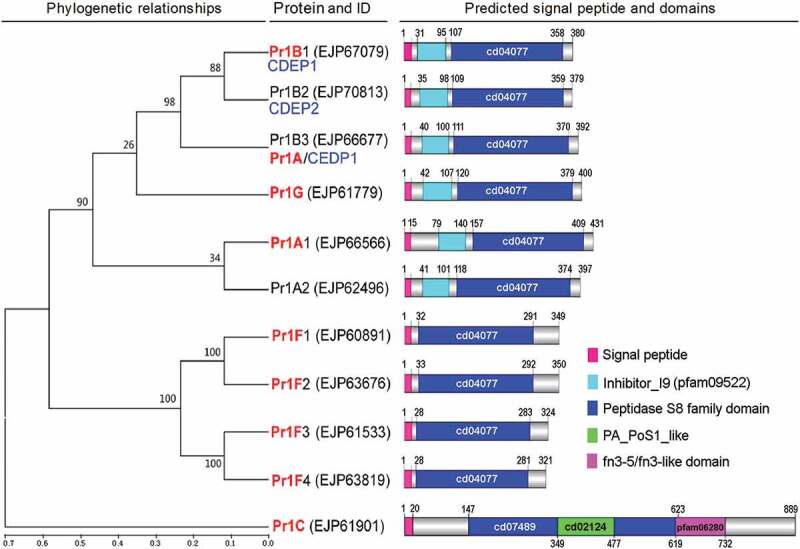
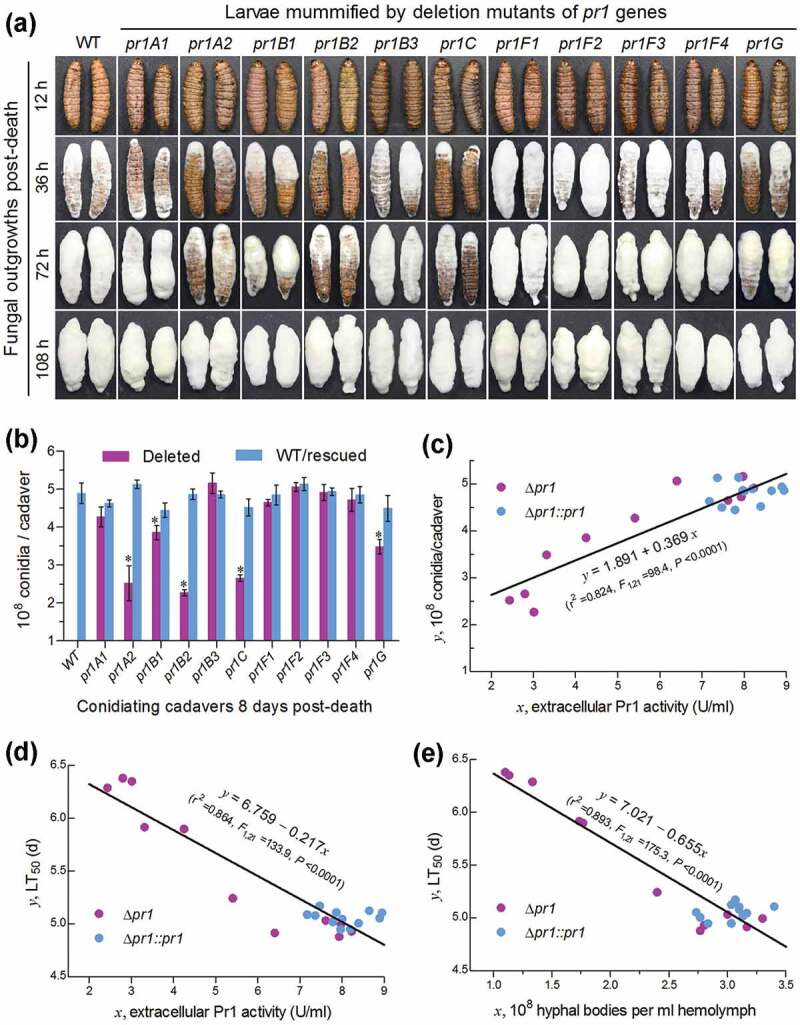
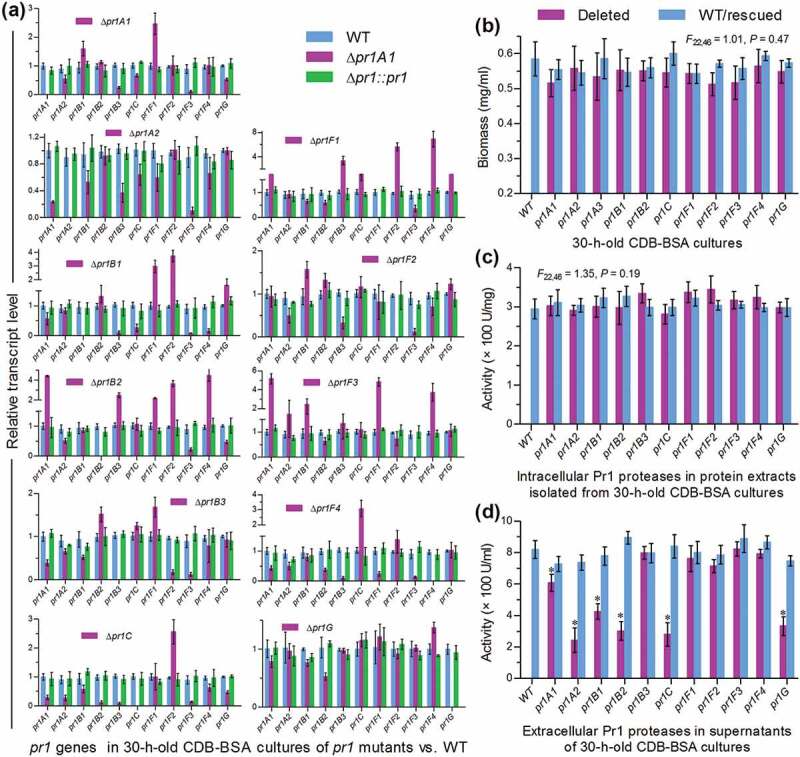
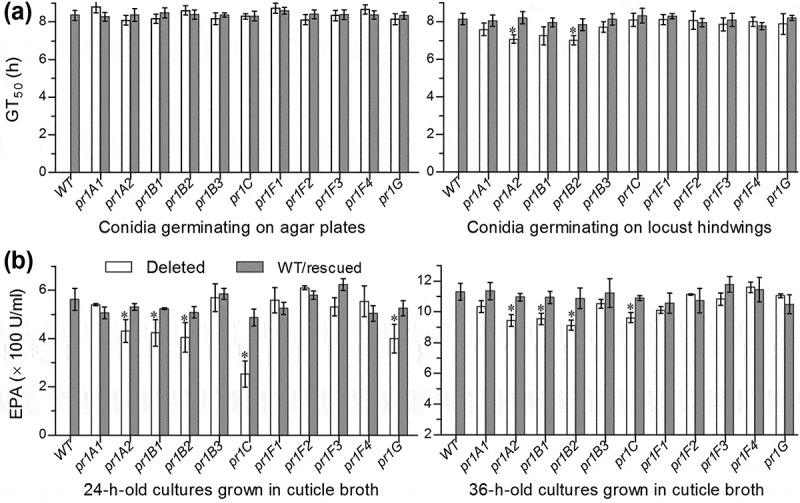
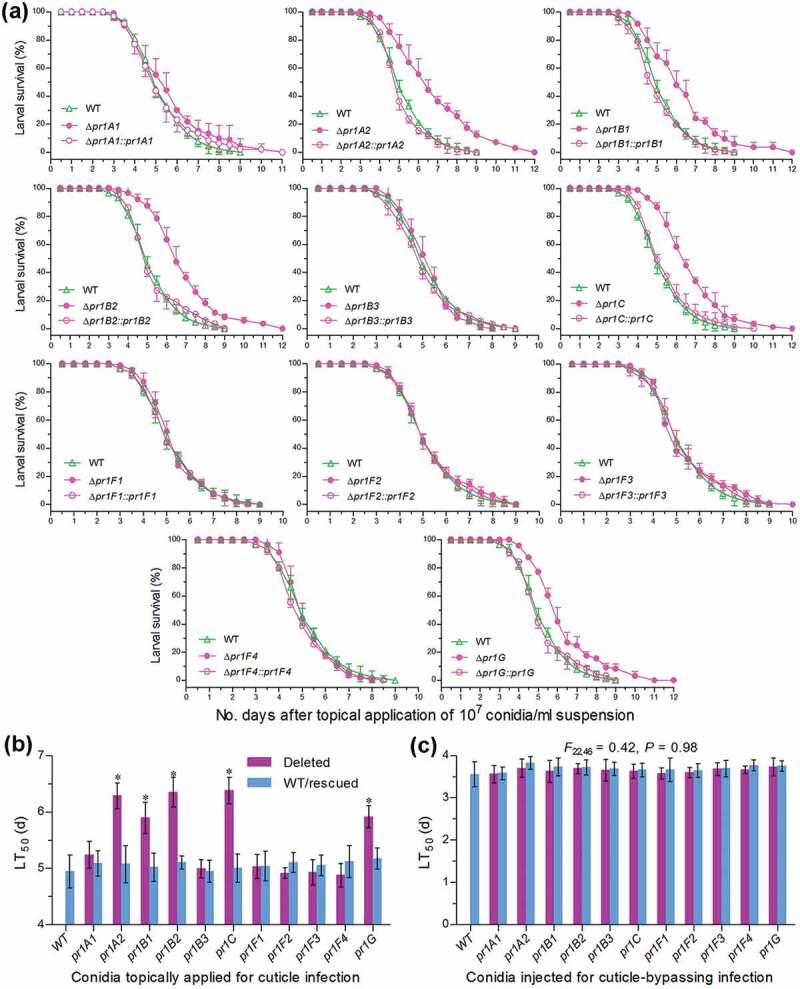
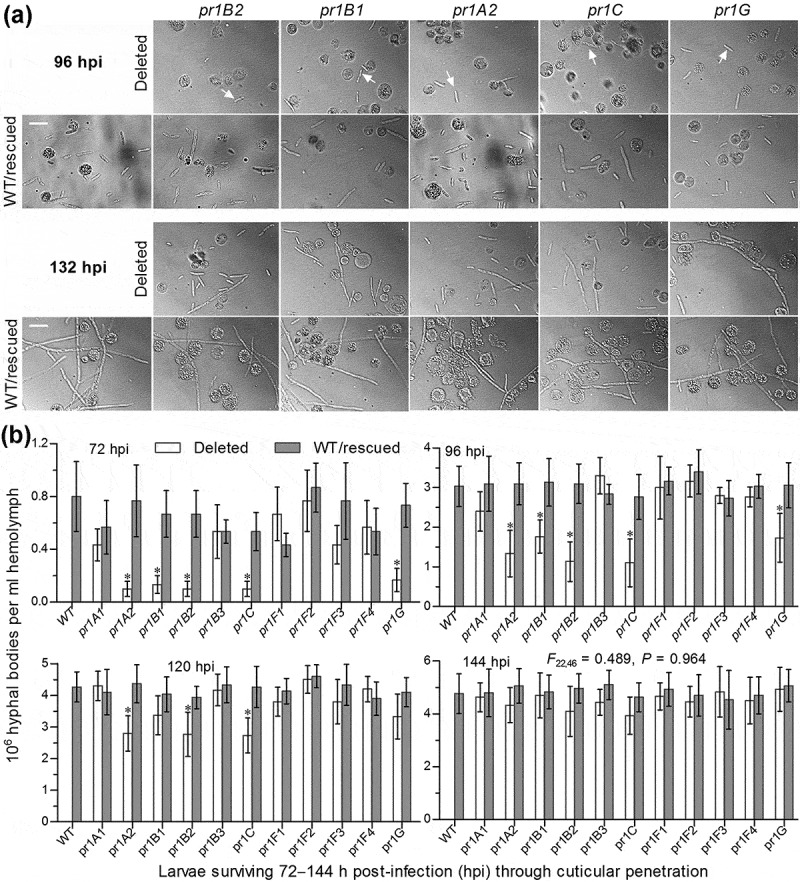
Subtilisin-like Pr1 proteases of insect-pathogenic fungi are a large family of extracellular cuticle-degrading enzymes that presumably determine a capability of hyphal invasion into insect hemocoel through normal cuticle infection, but remain poorly understood although often considered as virulence factors for genetic improvement of fungal potential against pests. Here, we report that not all of 11 Pr1 family members necessarily function in , an ancient wide-spectrum pathogen evolved insect pathogenicity ~200 million years ago. These Pr1 proteases are phylogenetically similar to or distinct from 11 homologues (Pr1A-K) early named in complex, a young entomopathogen lineage undergoing molecular evolution toward Pr1 diversification, and hence renamed Pr1A1/A2, Pr1B1-B3, Pr1 C, Pr1F1-F4,4 and Pr1 G, respectively. Multiple analyses of all single gene-deleted and rescued mutants led to the recognition of five conserved members (Pr1C, Pr1G, Pr1A2, Pr1B1, and Pr1B2) contributing significantly to the fungal pathogenicity to insect. The conserved Pr1 proteases were proven to function only in cuticle degradation, individually contribute 19-29% to virulence, but play no role in post-infection cellular events critical for fungal killing action. Six other Pr1 proteases were not functional at all in either cuticle degradation during host infection or virulence-related cellular events post-infection. Therefore, only the five conserved proteases are collectively required for, and hence mark evolution of, insect pathogenicity in . These findings provide the first referable base for insight into the evolution of Pr1 family members in different lineages of fungal insect pathogens.
昆虫病原真菌的枯草溶菌素样蛋白酶 Pr1 家族是一大类细胞外角质层降解酶,推测它们决定了菌丝通过正常的角质层感染侵入昆虫血腔的能力,但尽管它们通常被认为是真菌对害虫潜在遗传改良的毒力因子,但仍知之甚少。在这里,我们报告并非所有 11 个 Pr1 家族成员都在 中发挥作用, 是一种古老的广谱病原体,大约在 2 亿年前进化为昆虫病原性。这些 Pr1 蛋白酶在系统发育上与 11 个同源物(Pr1A-K)相似或不同, 11 个同源物在 复合体中早期命名, 复合体是一个年轻的昆虫病原谱系,正在向 Pr1 多样化的分子进化,因此分别重新命名为 Pr1A1/A2、Pr1B1-B3、Pr1C、Pr1F1-F4 和 Pr1G。对所有单个基因缺失和拯救突变体的多次分析导致识别出五个保守成员(Pr1C、Pr1G、Pr1A2、Pr1B1 和 Pr1B2)对真菌对昆虫的致病性有重要贡献。保守的 Pr1 蛋白酶仅被证明在角质层降解中起作用,单独对毒力的贡献为 19-29%,但在感染后对真菌杀伤作用至关重要的细胞事件中不起作用。另外 6 个 Pr1 蛋白酶在宿主感染期间的角质层降解或感染后与毒力相关的细胞事件中均无功能。因此,只有这五个保守的蛋白酶在 中共同需要,并且因此标志着昆虫病原性的进化。这些发现为深入了解不同真菌昆虫病原体谱系中 Pr1 家族成员的进化提供了第一个可参考的基础。