Kwan Suet Ying, Jiao Jingjing, Qi Jonathan, Wang Ying, Wei Peng, McCormick Joseph B, Fisher-Hoch Susan P, Beretta Laura
Department of Molecular and Cellular Oncology University of Texas MD Anderson Cancer Center Houston TX.
Department of Bioinformatics and Computational Biology University of Texas MD Anderson Cancer Center Houston TX.
Hepatol Commun. 2020 Mar 19;4(4):555-568. doi: 10.1002/hep4.1490. eCollection 2020 Apr.
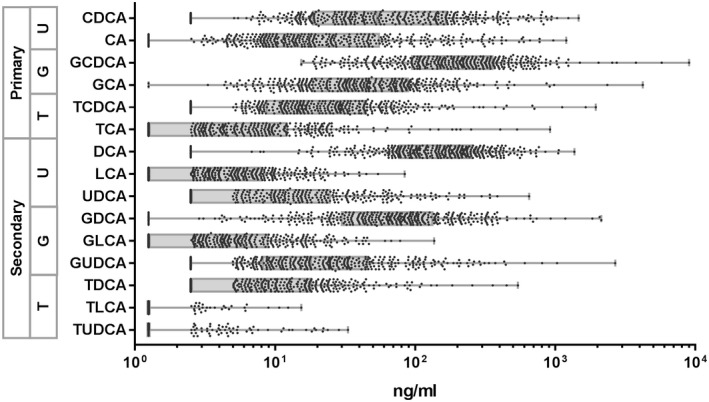
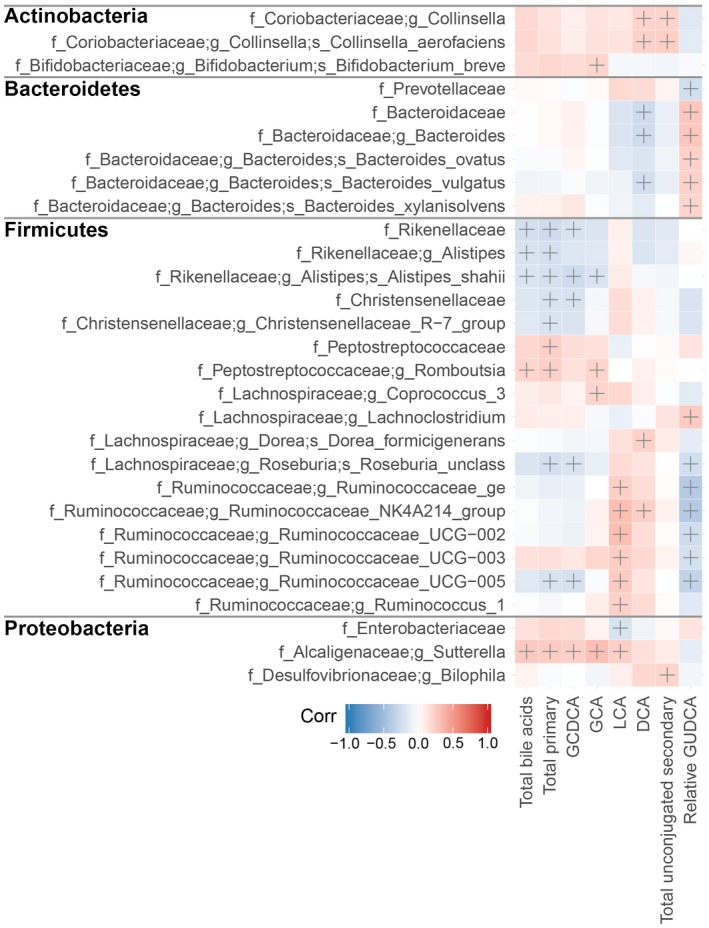
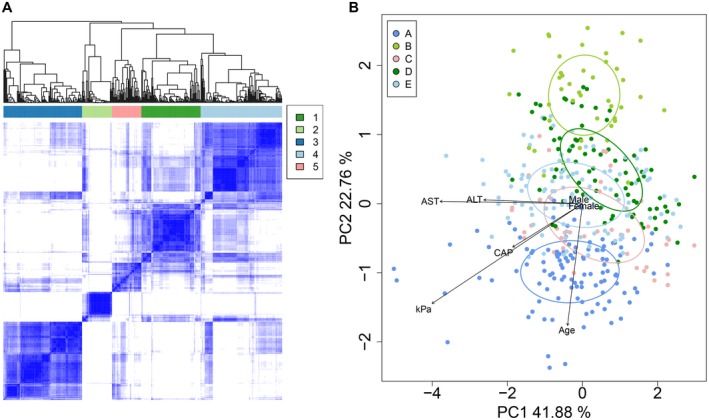
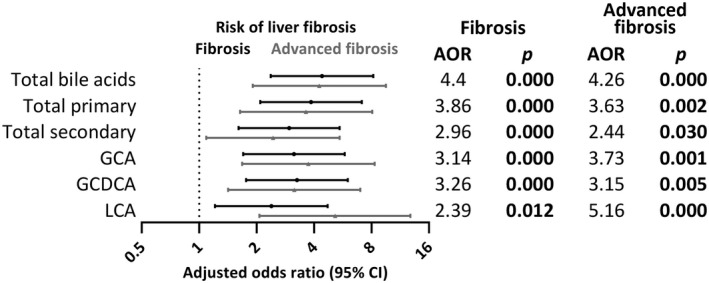
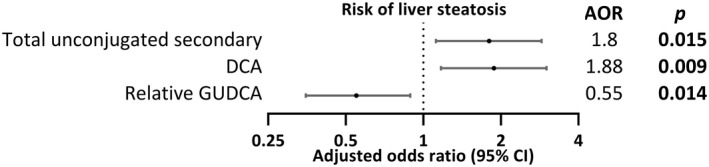
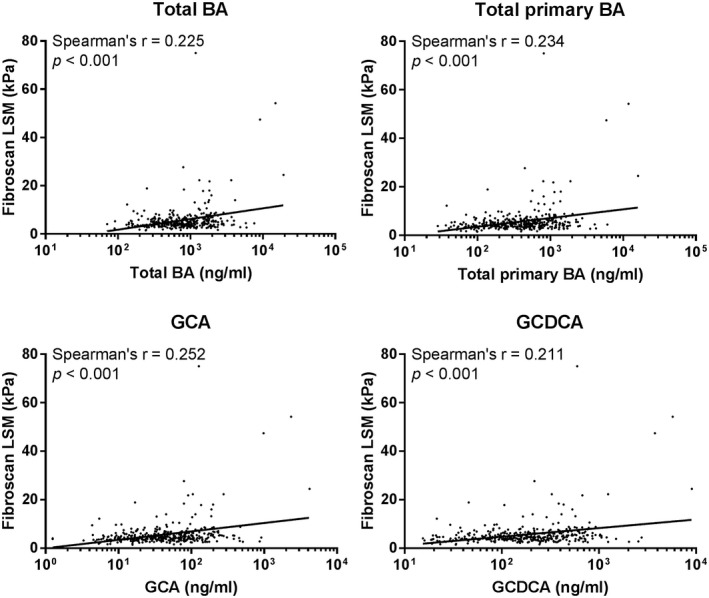
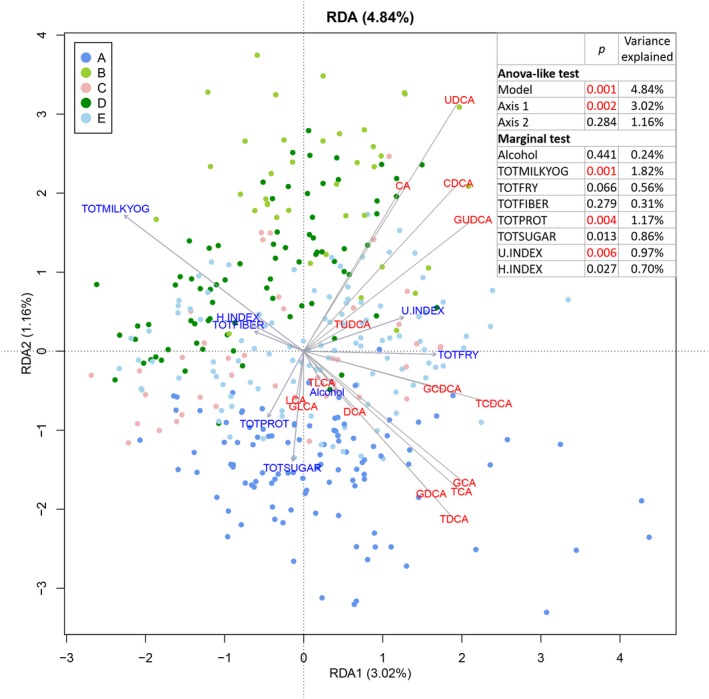
Biomarkers to predict risk of liver fibrosis in subjects with nonalcoholic fatty liver disease, a common risk factor for hepatocellular carcinoma, would allow for early preventive interventions. We sought to characterize bile acid profiles associated with liver fibrosis in subjects from the community-based Cameron County Hispanic Cohort, a population in South Texas with high rates of nonalcoholic fatty liver disease, liver fibrosis and hepatocellular carcinoma. Plasma bile acid levels were measured in 390 subjects. These subjects were screened with liver elastography, detecting significant liver fibrosis in 58 subjects and steatosis in 186 subjects. Unsupervised clustering of the bile acid profiles revealed five clusters that differed by liver fibrosis, liver steatosis, liver injury, age and gender, identifying these parameters as major determinants of circulating bile acid changes. Total bile acid levels were significantly higher in subjects with fibrosis, with chenodeoxycholic acid displaying the greatest increase among individual bile acids. The primary conjugated bile acids, glycocholic and glycochenodeoxycholic acids, displayed the strongest association with fibrosis by logistic regression. High lithocholic acid levels were strongly associated with advanced fibrosis. In contrast, deoxycholic acid and total unconjugated secondary bile acids were positively associated with steatosis, whereas relative glycoursodeoxycholic acid abundance was negatively associated. Milk and yogurt intake notably contributed to fibrosis-associated bile acid changes. In addition, multiple families within the Firmicutes phylum, Prevotellaceae, and species in stool significantly correlated with fibrosis-associated and steatosis-associated bile acid parameters, suggesting that the gut microbiome contributes to bile acid changes in the context of liver disease. Circulating bile acid levels were markedly but differently changed in liver fibrosis and steatosis in a high-risk Mexican-American population.
生物标志物可预测非酒精性脂肪性肝病患者的肝纤维化风险,而非酒精性脂肪性肝病是肝细胞癌的常见危险因素,这将有助于早期预防性干预。我们试图在基于社区的卡梅伦县西班牙裔队列研究中,对与肝纤维化相关的胆汁酸谱进行特征分析,该队列研究来自得克萨斯州南部,非酒精性脂肪性肝病、肝纤维化和肝细胞癌发病率很高。对390名受试者的血浆胆汁酸水平进行了测量。这些受试者接受了肝脏弹性成像检查,发现58名受试者有明显肝纤维化,186名受试者有脂肪变性。胆汁酸谱的无监督聚类显示出五个聚类,它们在肝纤维化、肝脂肪变性、肝损伤、年龄和性别方面存在差异,表明这些参数是循环胆汁酸变化的主要决定因素。纤维化患者的总胆汁酸水平显著更高,鹅去氧胆酸在个体胆汁酸中升高幅度最大。通过逻辑回归分析,主要结合胆汁酸甘胆酸和甘氨鹅去氧胆酸与纤维化的相关性最强。高石胆酸水平与晚期纤维化密切相关。相比之下,脱氧胆酸和总未结合次级胆汁酸与脂肪变性呈正相关,而相对甘氨熊去氧胆酸丰度与脂肪变性呈负相关。牛奶和酸奶摄入量对与纤维化相关的胆汁酸变化有显著影响。此外,厚壁菌门、普雷沃氏菌科中的多个家族以及粪便中的物种与纤维化相关和脂肪变性相关的胆汁酸参数显著相关,这表明肠道微生物群在肝脏疾病背景下促成了胆汁酸变化。在一个高危墨西哥裔美国人人群中,肝纤维化和脂肪变性时循环胆汁酸水平有显著但不同的变化。