Department of Pharmacy, Health and Nutritional Sciences, Via P Bucci, University of Calabria, 87036 Arcavacata di Rende (CS), Italy.
Laboratory of Molecular Medicine and Genomics, Department of Medicine, Surgery and Dentistry "Scuola Medica Salernitana", University of Salerno, 84081 Baronissi (SA), Italy.
Biomolecules. 2020 Apr 3;10(4):543. doi: 10.3390/biom10040543.
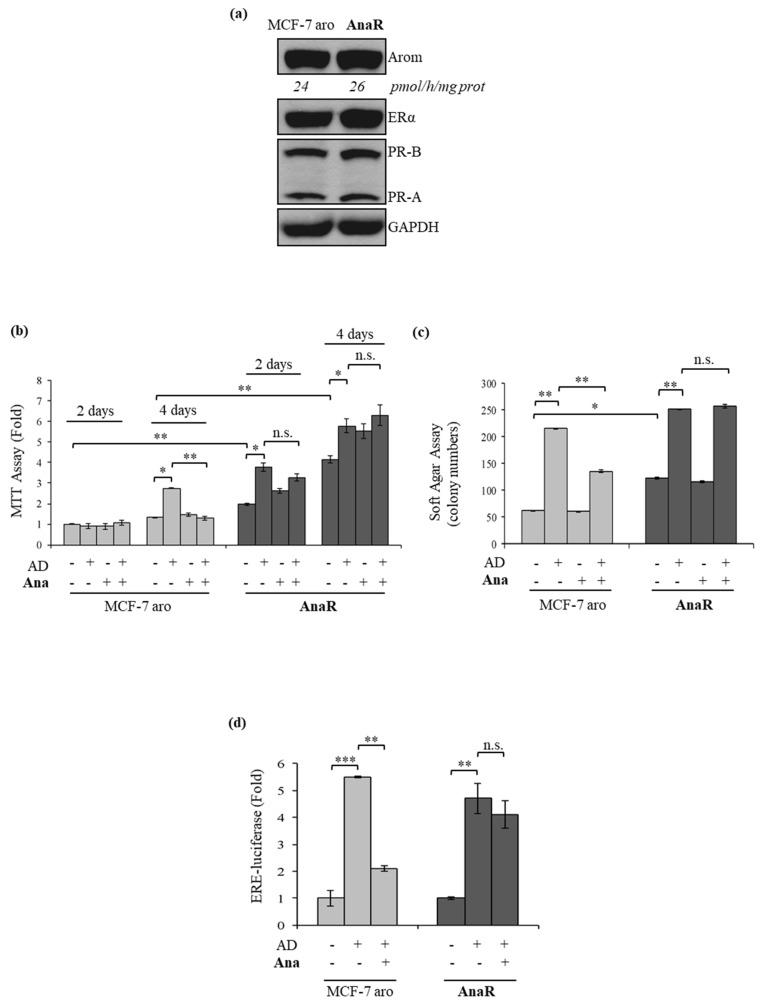
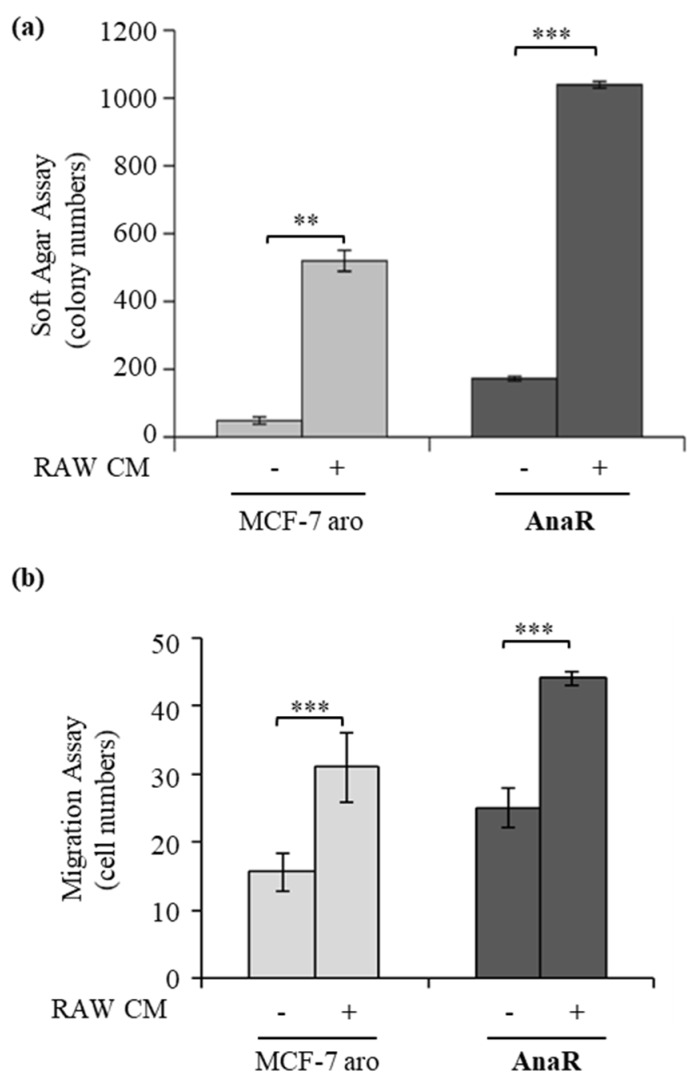
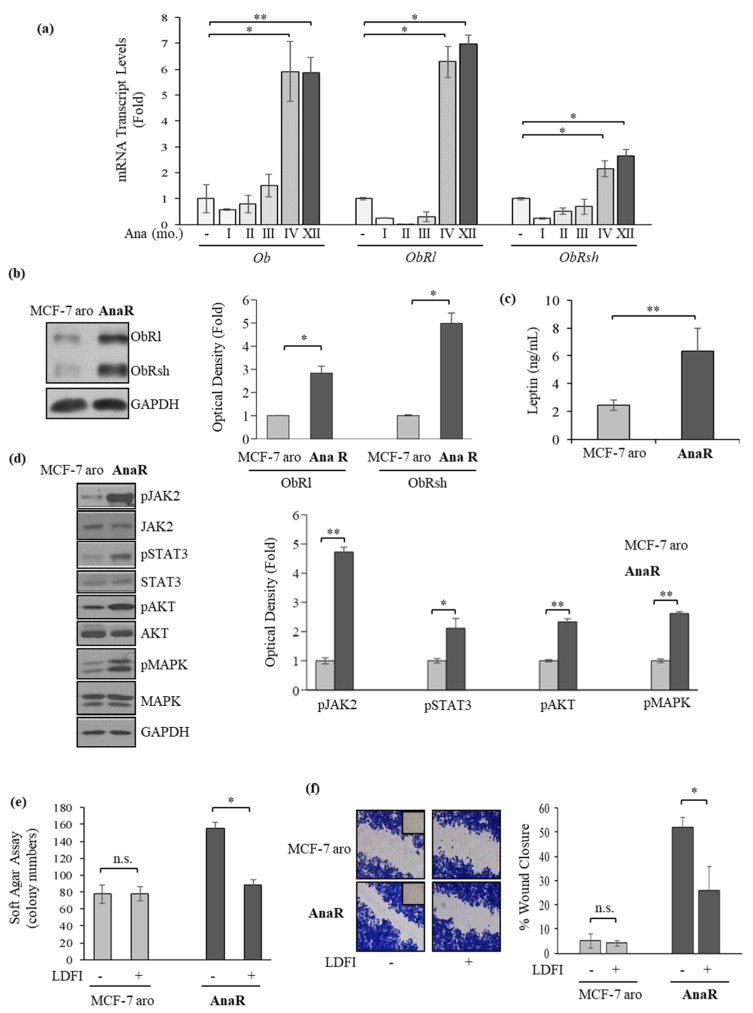
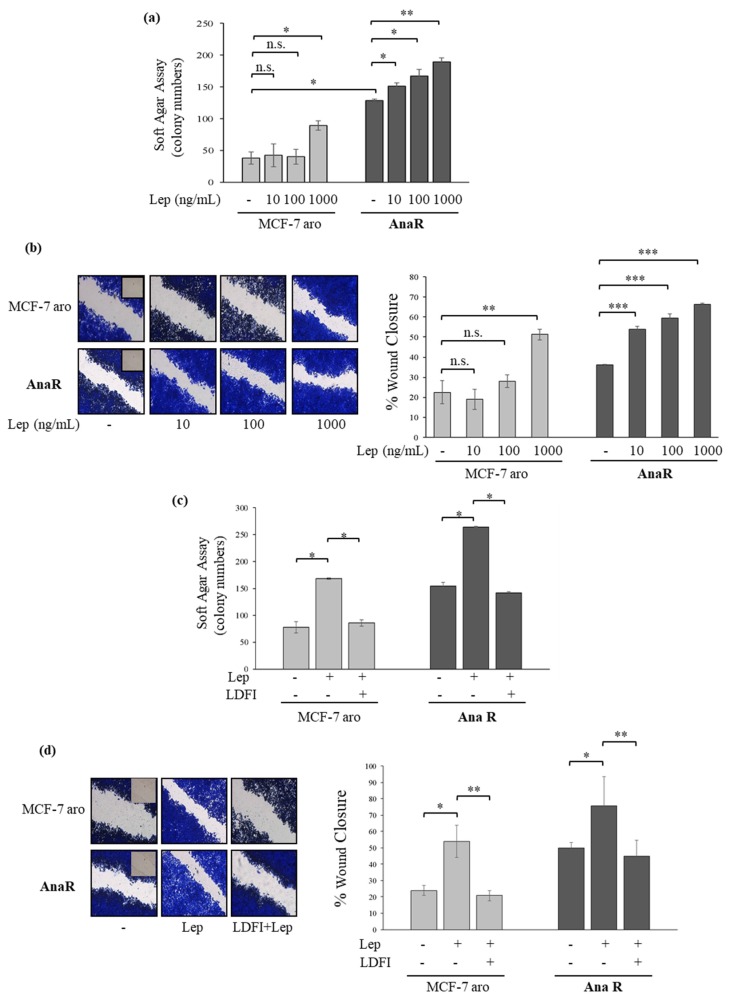
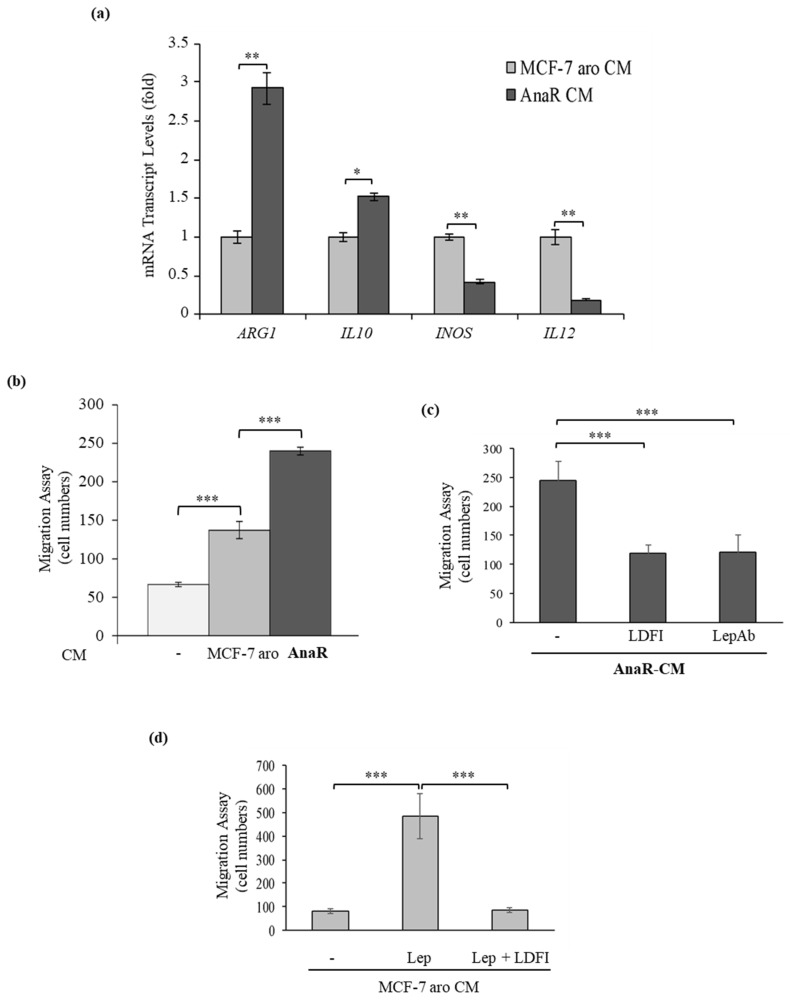
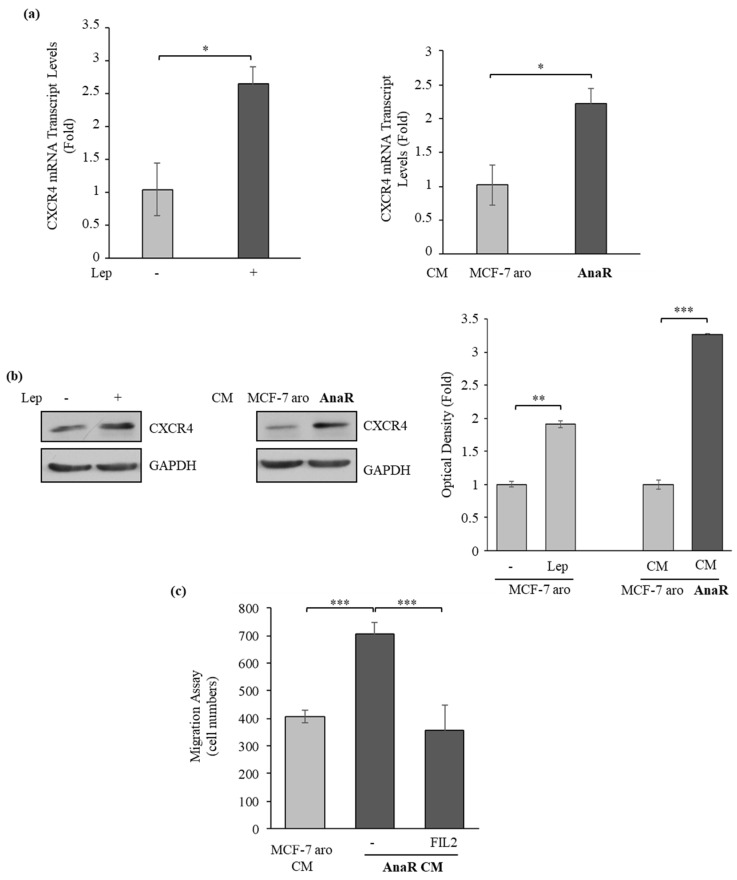
Obesity represents a risk factor for breast cancer development and therapy resistance, but the molecular players underling these links are unclear. Here, we identify a role for the obesity-cytokine leptin in sustaining aromatase inhibitor (AI) resistant growth and progression in breast cancer. Using as experimental models MCF-7 breast cancer cells surviving long-term treatment with the AI anastrozole (AnaR) and Ana-sensitive counterparts, we found that AnaR cells expressed higher levels of leptin and its receptors (ObR) along with a constitutive activation of downstream effectors. Accordingly, leptin signaling inhibition reduced only AnaR cell growth and motility, highlighting the existence of an autocrine loop in mechanisms governing drug-resistant phenotypes. In agreement with ObR overexpression, increasing doses of leptin were able to stimulate to a greater extent growth and migration in AnaR than sensitive cells. Moreover, leptin contributed to enhanced crosstalk between AnaR cells and macrophages within the tumor microenvironment. Indeed, AnaR, through leptin secretion, modulated macrophage profiles and increased macrophage motility through CXCR4 signaling, as evidenced by RNA-sequencing, real-time PCR, and immunoblotting. Reciprocally, activated macrophages increased AnaR cell growth and motility in coculture systems. In conclusion, acquired AI resistance is accompanied by the development of a leptin-driven phenotype, highlighting the potential clinical benefit of targeting this cytokine network in hormone-resistant breast cancers, especially in obese women.
肥胖代表了乳腺癌发生和治疗耐药的一个风险因素,但这些联系背后的分子机制尚不清楚。在这里,我们确定了肥胖细胞因子瘦素在维持乳腺癌芳香酶抑制剂(AI)耐药生长和进展中的作用。我们使用经过长期 AI 治疗(阿那曲唑)的 MCF-7 乳腺癌细胞和 Ana 敏感对照作为实验模型,发现 AnaR 细胞表达更高水平的瘦素及其受体(ObR),同时下游效应器持续激活。因此,瘦素信号抑制仅减少了 AnaR 细胞的生长和迁移,突出了在调节耐药表型的机制中存在自分泌环。与 ObR 过表达一致的是,增加瘦素剂量能够更大程度地刺激 AnaR 细胞而非敏感细胞的生长和迁移。此外,瘦素有助于增强 AnaR 细胞与肿瘤微环境中的巨噬细胞之间的串扰。事实上,AnaR 通过瘦素分泌,通过 CXCR4 信号调节巨噬细胞表型并增加巨噬细胞迁移,这一点得到了 RNA 测序、实时 PCR 和免疫印迹的证实。反过来,激活的巨噬细胞在共培养系统中增加了 AnaR 细胞的生长和迁移。总之,获得的 AI 耐药性伴随着瘦素驱动表型的发展,这突出了靶向这种细胞因子网络治疗激素耐药性乳腺癌的潜在临床益处,尤其是在肥胖女性中。