Center for Bioinformatics and Genome Biology, Fundación Ciencia & Vida, Santiago 7780272, Chile.
Centro de Genómica y Bioinformática, Facultad de Ciencias, Universidad Mayor, Santiago 8580745, Chile.
Genes (Basel). 2020 Apr 3;11(4):389. doi: 10.3390/genes11040389.
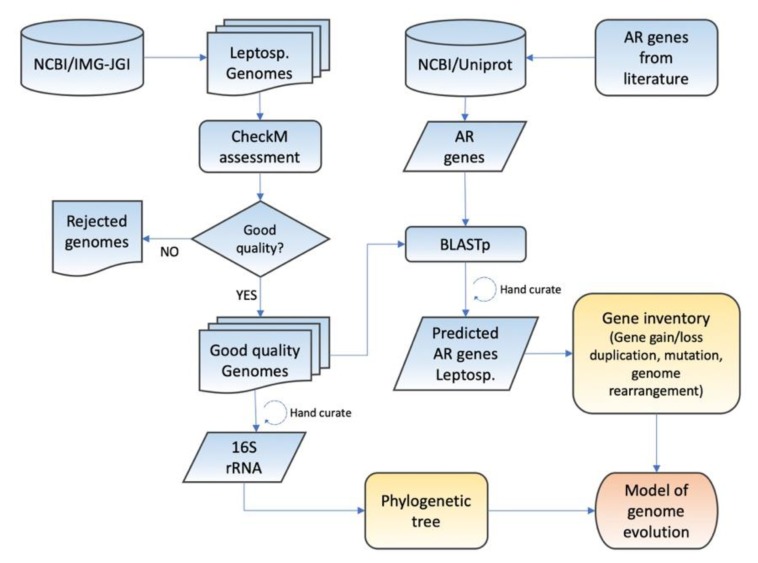
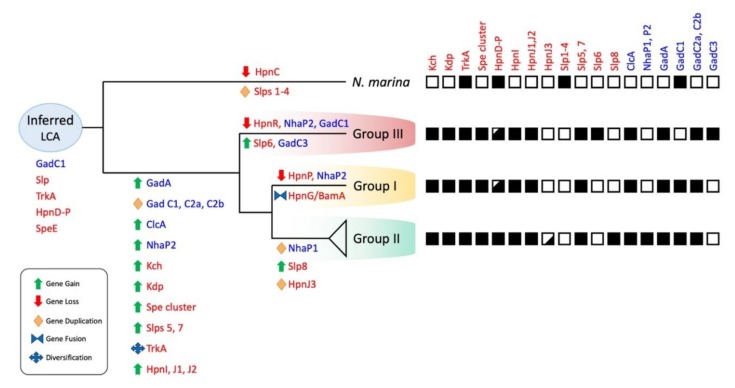
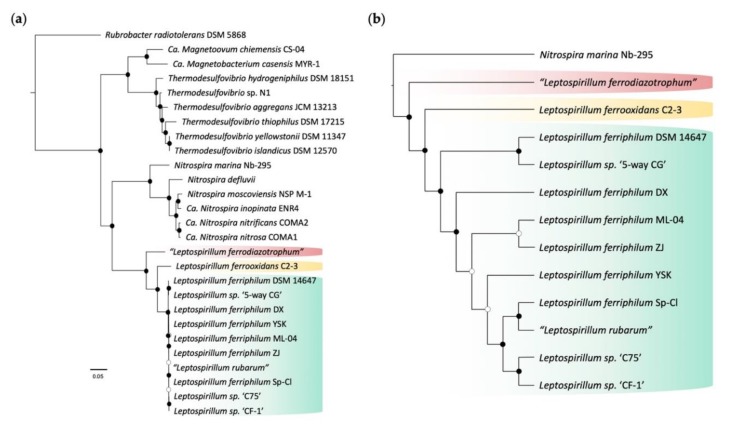
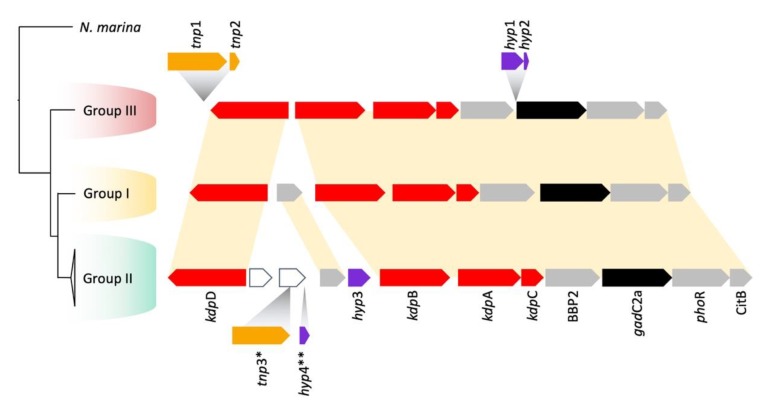
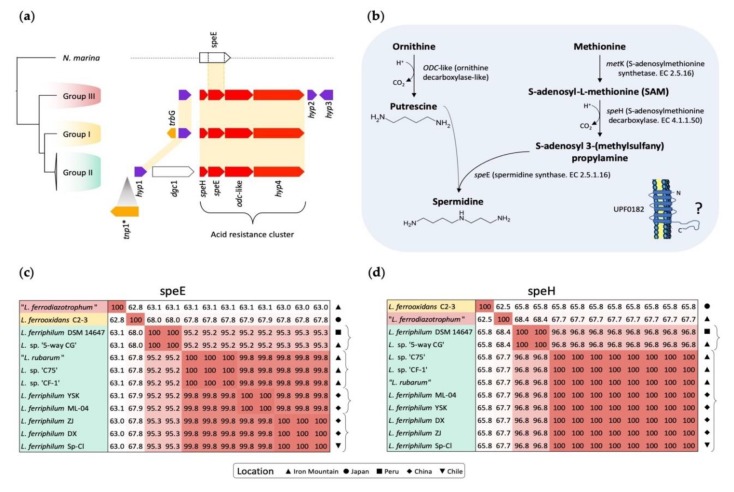
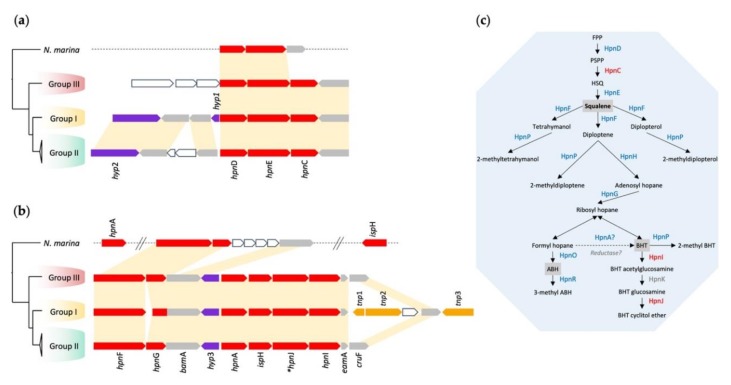
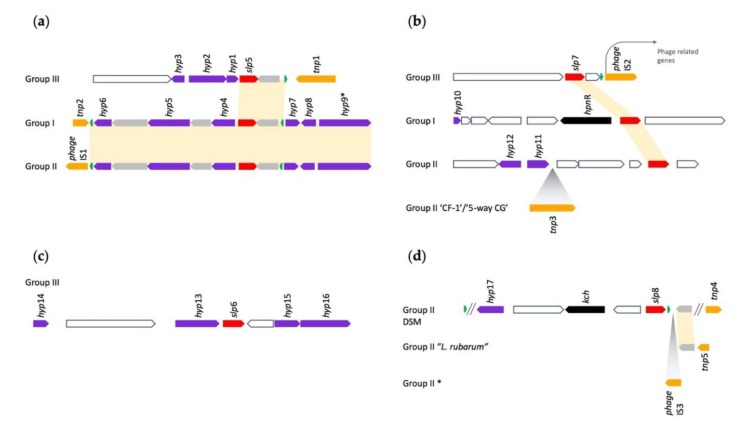
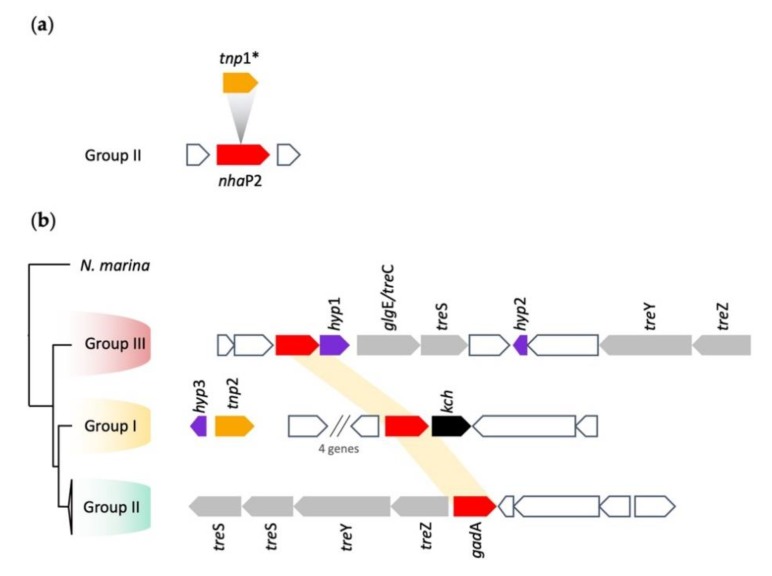
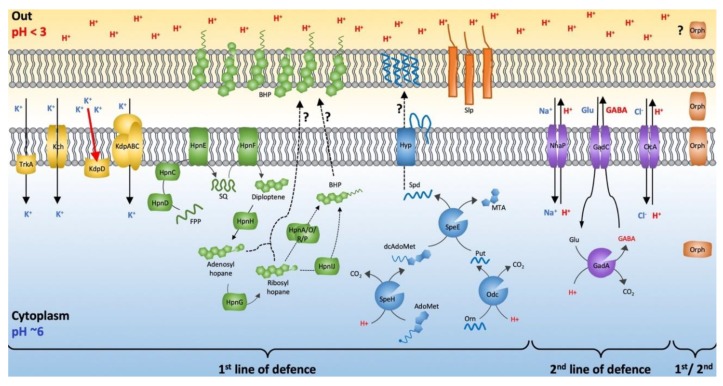
Organisms that thrive in extremely acidic environments (≤pH 3.5) are of widespread importance in industrial applications, environmental issues, and evolutionary studies. spp. constitute the only extremely acidophilic microbes in the phylogenetically deep-rooted bacterial phylum Nitrospirae. Leptospirilli are Gram-negative, obligatory chemolithoautotrophic, aerobic, ferrous iron oxidizers. This paper predicts genes that Leptospirilli use to survive at low pH and infers their evolutionary trajectory. Phylogenetic and other bioinformatic approaches suggest that these genes can be classified into (i) "first line of defense", involved in the prevention of the entry of protons into the cell, and (ii) neutralization or expulsion of protons that enter the cell. The first line of defense includes potassium transporters, predicted to form an inside positive membrane potential, spermidines, hopanoids, and Slps (starvation-inducible outer membrane proteins). The "second line of defense" includes proton pumps and enzymes that consume protons. Maximum parsimony, clustering methods, and gene alignments are used to infer the evolutionary trajectory that potentially enabled the ancestral to transition from a postulated circum-neutral pH environment to an extremely acidic one. The hypothesized trajectory includes gene gains/loss events driven extensively by horizontal gene transfer, gene duplications, gene mutations, and genomic rearrangements.
在极度酸性环境(pH 值≤3.5)中茁壮成长的生物在工业应用、环境问题和进化研究中具有广泛的重要性。 spp. 是在系统发育上根深蒂固的硝化螺旋菌门中唯一的极端嗜酸微生物。Leptospirilli 是革兰氏阴性、需氧、化能自养、亚铁氧化菌。本文预测了 Leptospirilli 用于在低 pH 值下生存的基因,并推断了它们的进化轨迹。系统发育和其他生物信息学方法表明,这些基因可以分为 (i)“第一道防线”,涉及防止质子进入细胞,和 (ii) 中和或排出进入细胞的质子。第一道防线包括钾转运体,预计会形成内部正膜电位、亚精胺、藿烷和 Slps(饥饿诱导的外膜蛋白)。“第二道防线”包括质子泵和消耗质子的酶。最大简约法、聚类方法和基因比对用于推断潜在使祖先从假定的近中性 pH 环境过渡到极度酸性环境的进化轨迹。假设的轨迹包括广泛由水平基因转移、基因重复、基因突变和基因组重排驱动的基因获得/缺失事件。