Yang Sihui Z, Wildonger Jill
Cellular and Molecular Biology Graduate Program, University of Wisconsin-Madison, Wisconsin 53706.
Department of Biochemistry, University of Wisconsin-Madison, Wisconsin 53706.
Genetics. 2020 Jun;215(2):435-447. doi: 10.1534/genetics.119.302979. Epub 2020 Apr 7.
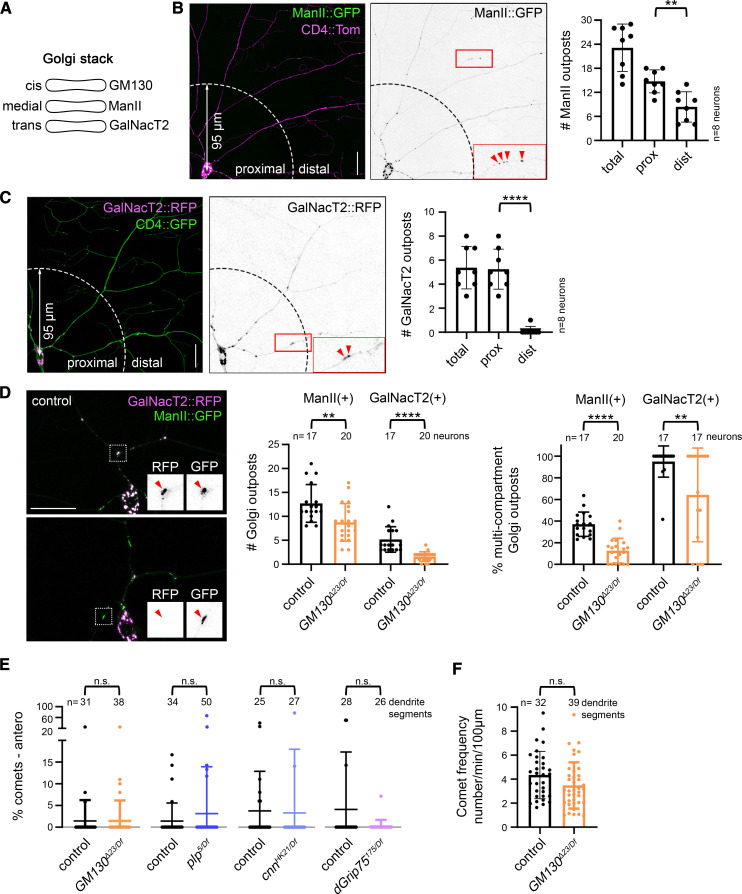
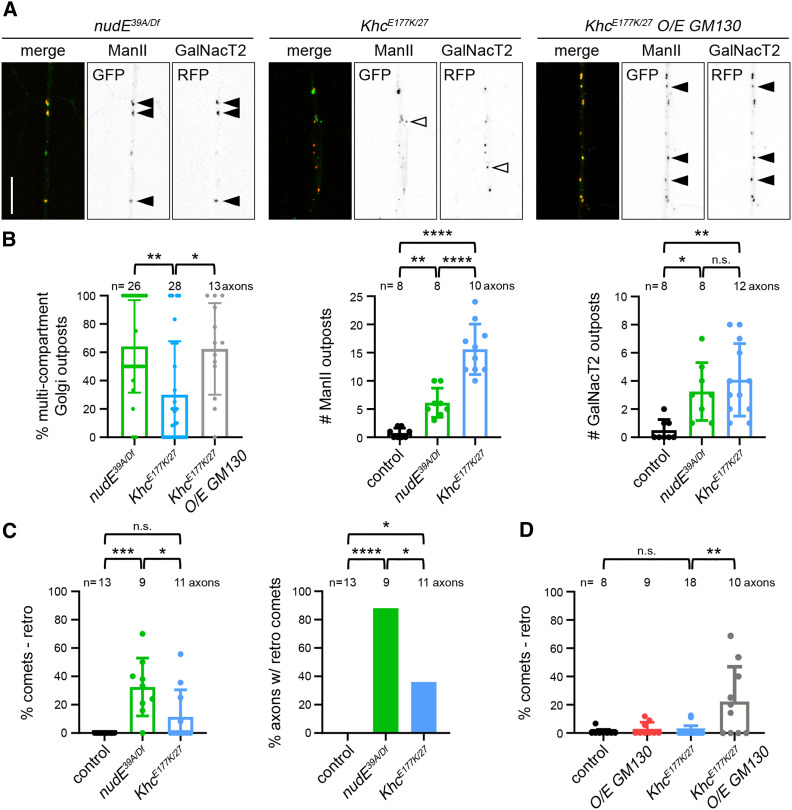
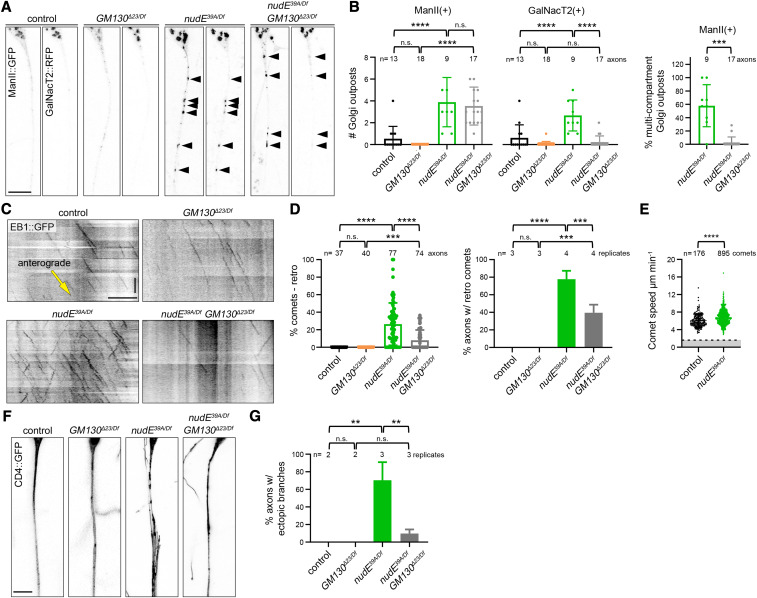
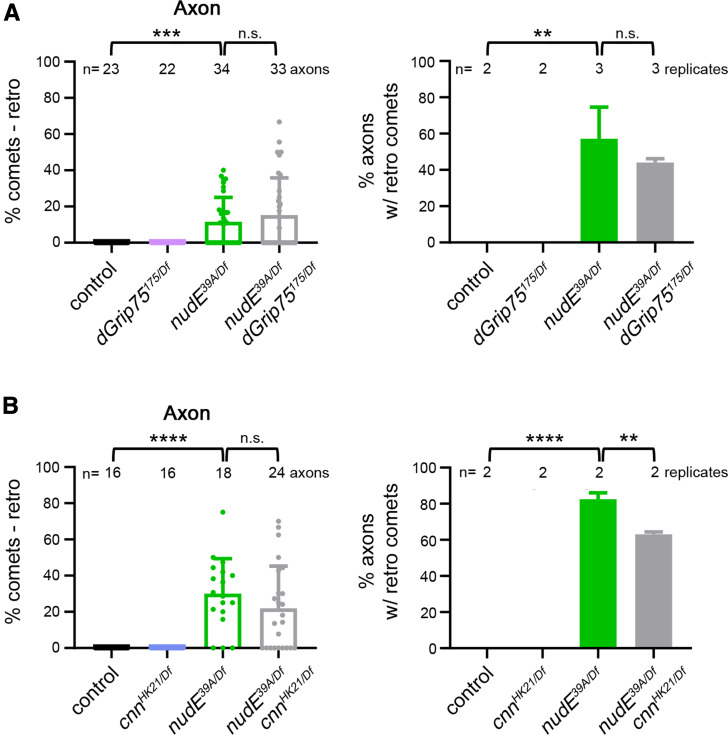
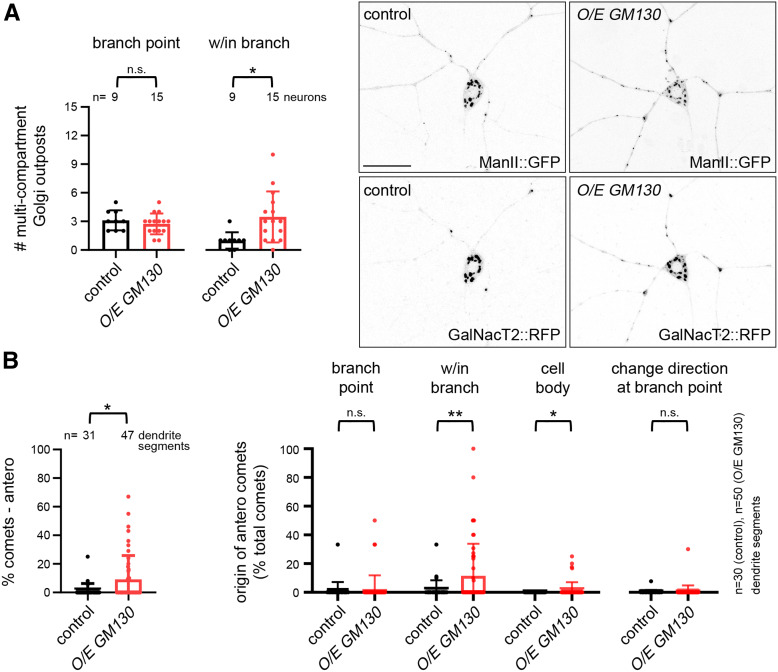
Microtubule-organizing centers often play a central role in organizing the cellular microtubule networks that underlie cell function. In neurons, microtubules in axons and dendrites have distinct polarities. Dendrite-specific Golgi "outposts," in particular multicompartment outposts, have emerged as regulators of acentrosomal microtubule growth, raising the question of whether outposts contribute to establishing or maintaining the overall polarity of the dendritic microtubule cytoskeleton. Using a combination of genetic approaches and live imaging in a model, we found that dendritic microtubule polarity is unaffected by eliminating known regulators of Golgi-dependent microtubule organization including the -Golgi matrix protein GM130, the fly AKAP450 ortholog pericentrin-like protein, and centrosomin. This indicates that Golgi outposts are not essential for the formation or maintenance of a dendrite-specific cytoskeleton. However, the overexpression of GM130, which promotes the formation of ectopic multicompartment units, is sufficient to alter dendritic microtubule polarity. Axonal microtubule polarity is similarly disrupted by the presence of ectopic multicompartment Golgi outposts. Notably, multicompartment outposts alter microtubule polarity independently of microtubule nucleation mediated by the γ-tubulin ring complex. Thus, although Golgi outposts are not essential to dendritic microtubule polarity, altering their organization correlates with changes to microtubule polarity. Based on these data, we propose that the organization of Golgi outposts is carefully regulated to ensure proper dendritic microtubule polarity.
微管组织中心在构建细胞功能所依赖的细胞微管网络中往往发挥着核心作用。在神经元中,轴突和树突中的微管具有不同的极性。树突特异性高尔基体“前哨”,尤其是多隔室前哨,已成为无中心体微管生长的调节因子,这就引发了一个问题,即这些前哨是否有助于建立或维持树突微管细胞骨架的整体极性。通过在一个模型中结合遗传方法和实时成像,我们发现,消除已知的高尔基体依赖性微管组织调节因子,包括高尔基体基质蛋白GM130、果蝇AKAP450的直系同源物中心体蛋白样蛋白和中心体蛋白,树突微管极性不受影响。这表明高尔基体前哨对于树突特异性细胞骨架的形成或维持并非必不可少。然而,促进异位多隔室单元形成的GM130的过表达足以改变树突微管极性。异位多隔室高尔基体前哨的存在同样会破坏轴突微管极性。值得注意的是,多隔室前哨独立于由γ-微管蛋白环复合物介导的微管成核作用来改变微管极性。因此,尽管高尔基体前哨对于树突微管极性并非必不可少,但改变它们的组织与微管极性的变化相关。基于这些数据,我们提出,高尔基体前哨的组织受到严格调控,以确保树突微管极性正常。