Ghouse Shanawaz M, Nguyen Hong-My, Bommareddy Praveen K, Guz-Montgomery Kirsten, Saha Dipongkor
Department of Immunotherapeutics and Biotechnology, School of Pharmacy, Texas Tech University Health Sciences Center, Abilene, TX, United States.
School of Graduate Studies, Rutgers University, New Brunswick, NJ, United States.
Front Oncol. 2020 Mar 24;10:384. doi: 10.3389/fonc.2020.00384. eCollection 2020.
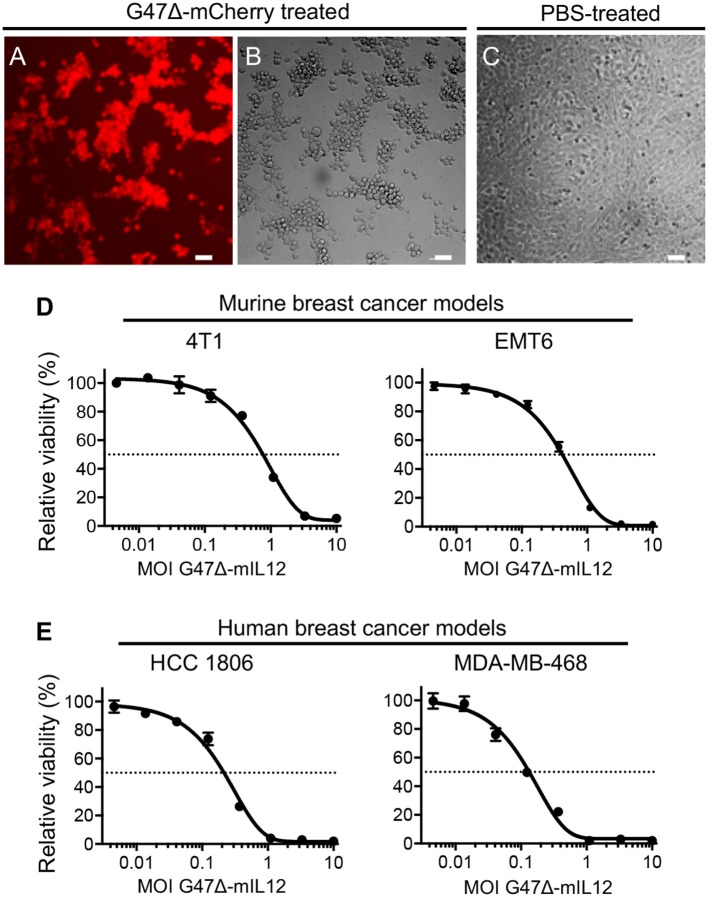
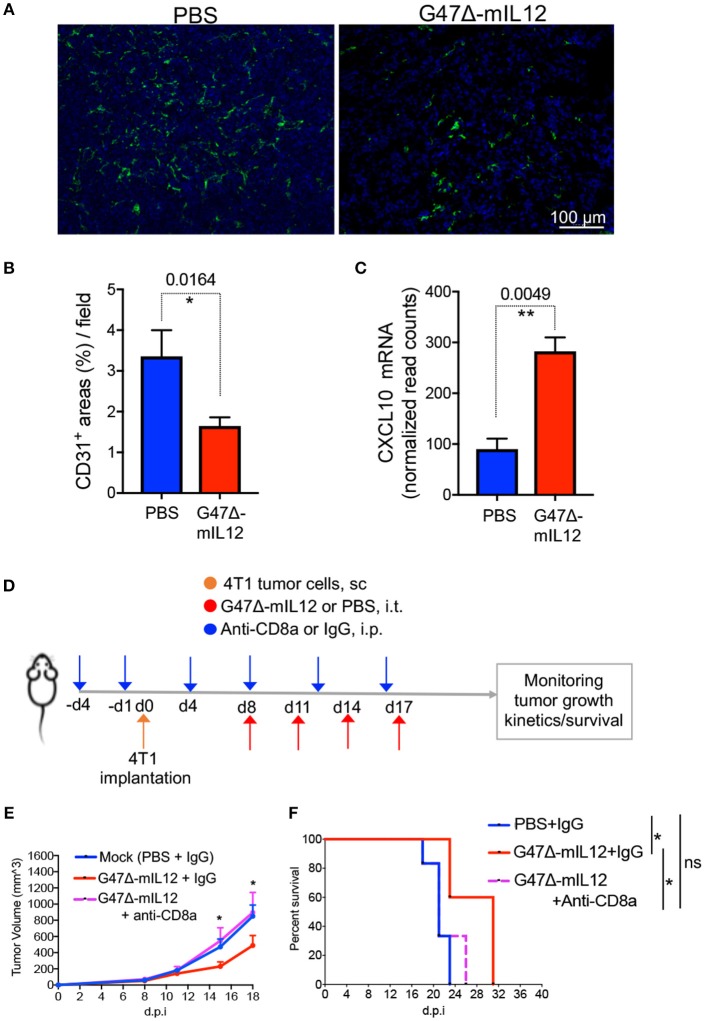
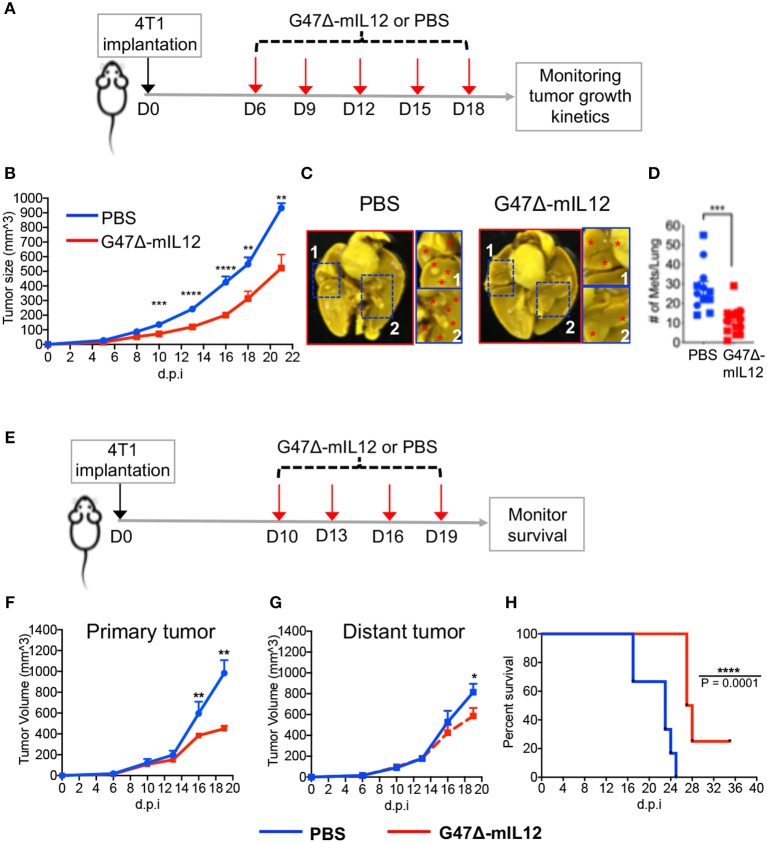
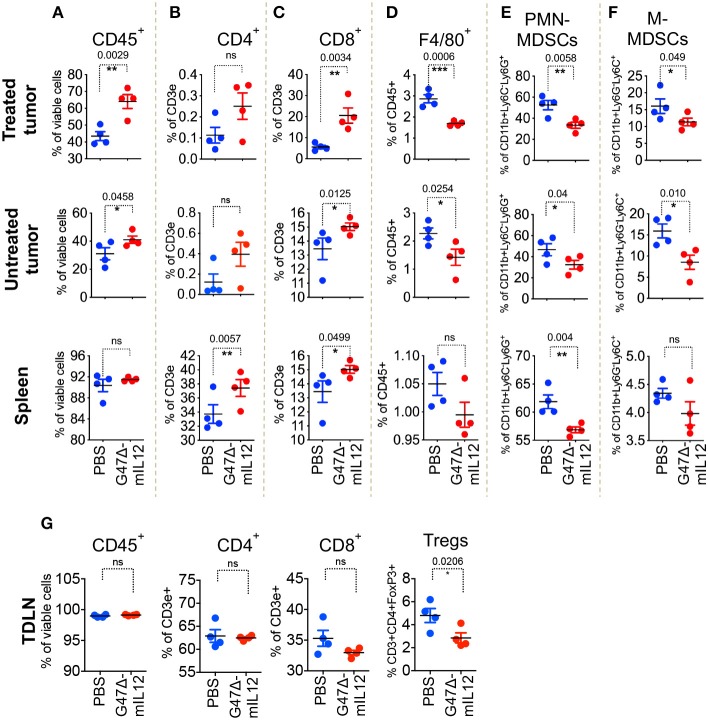
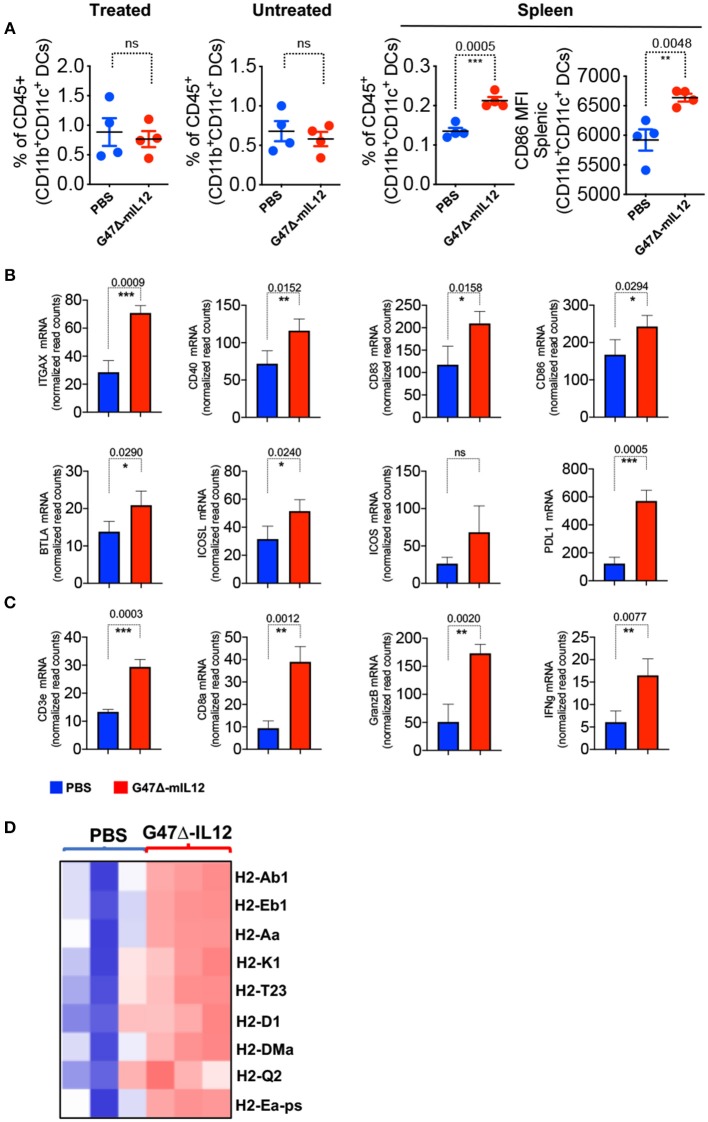
Triple-negative breast cancer (TNBC) is a difficult-to-treat disease with high rates of local recurrence, distant metastasis, and poor overall survival with existing therapies. Thus, there is an unmet medical need to develop new treatment regimen(s) for TNBC patients. An oncolytic herpes simplex virus encoding a master anti-tumor cytokine, interleukin 12, (designated G47Δ-mIL12) selectively kills cancer cells while inducing anti-tumor immunity. G47Δ-mIL12 efficiently infected and killed murine (4T1 and EMT6) and human (HCC1806 and MDA-MB-468) mammary tumor cells . in the 4T1 syngeneic TNBC model, it significantly reduced primary tumor burden and metastasis, both at early and late stages of tumor development. The virus-induced local and abscopal effects were confirmed by significantly increased infiltration of CD45 leukocytes and CD8 T cells, and reduction of granulocytic and monocytic MDSCs in tumors, both treated and untreated contralateral, and in the spleen. Significant trafficking of dendritic cells (DCs) were only observed in spleens of virus-treatment group, indicating that DCs are primed and activated in the tumor-microenvironment following virotherapy, and trafficked to lymphoid organs for activation of immune cells, such as CD8 T cells. DC priming/activation could be associated with virally enhanced expression of several antigen processing/presentation genes in the tumor microenvironment, as confirmed by NanoString gene expression analysis. Besides DC activation/priming, G47Δ-mIL12 treatment led to up-regulation of CD8 T cell activation markers in the tumor microenvironment and inhibition of tumor angiogenesis. The anti-tumor effects of G47Δ-mIL12 treatment were CD8-dependent. These studies illustrate the ability of G47Δ-mIL12 to immunotherapeutically treat TNBC.
三阴性乳腺癌(TNBC)是一种难以治疗的疾病,现有疗法的局部复发率、远处转移率高,总体生存率低。因此,开发针对TNBC患者的新治疗方案存在未满足的医疗需求。一种编码主要抗肿瘤细胞因子白细胞介素12的溶瘤单纯疱疹病毒(命名为G47Δ-mIL12)在诱导抗肿瘤免疫的同时能选择性杀死癌细胞。G47Δ-mIL12能有效感染并杀死鼠源(4T1和EMT6)和人源(HCC1806和MDA-MB-468)乳腺肿瘤细胞。在4T1同基因TNBC模型中,它在肿瘤发展的早期和晚期均显著降低了原发性肿瘤负担和转移。病毒诱导的局部和远隔效应通过以下方面得到证实:在治疗侧和未治疗的对侧肿瘤以及脾脏中,CD45白细胞和CD8 T细胞浸润显著增加,粒细胞和单核细胞来源的髓系抑制细胞减少。仅在病毒治疗组的脾脏中观察到树突状细胞(DC)的显著迁移,这表明在病毒治疗后,DC在肿瘤微环境中被启动和激活,并迁移至淋巴器官以激活免疫细胞,如CD8 T细胞。如通过NanoString基因表达分析所证实,DC的启动/激活可能与肿瘤微环境中几种抗原加工/呈递基因的病毒增强表达有关。除了DC激活/启动外,G47Δ-mIL12治疗还导致肿瘤微环境中CD8 T细胞激活标志物上调并抑制肿瘤血管生成。G47Δ-mIL12治疗的抗肿瘤作用依赖于CD8。这些研究表明了G47Δ-mIL12免疫治疗TNBC的能力。