Duhart Juan Carlos, Raftery Laurel A
School of Life Sciences, University of Nevada, Las Vegas, Las Vegas, NV, United States.
Front Cell Dev Biol. 2020 Mar 19;8:161. doi: 10.3389/fcell.2020.00161. eCollection 2020.
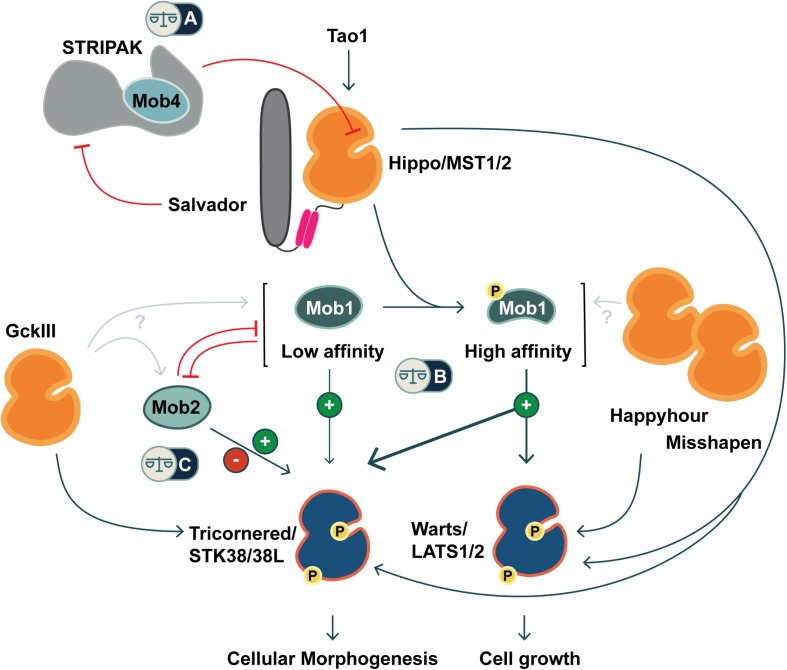
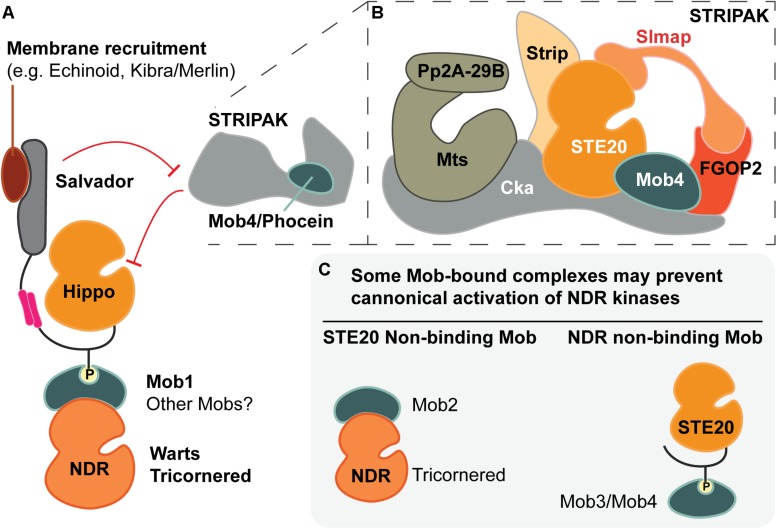
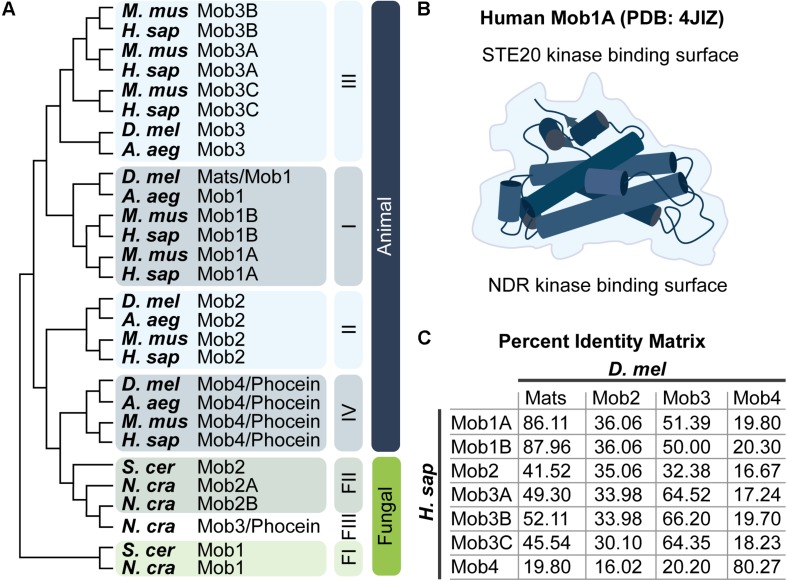
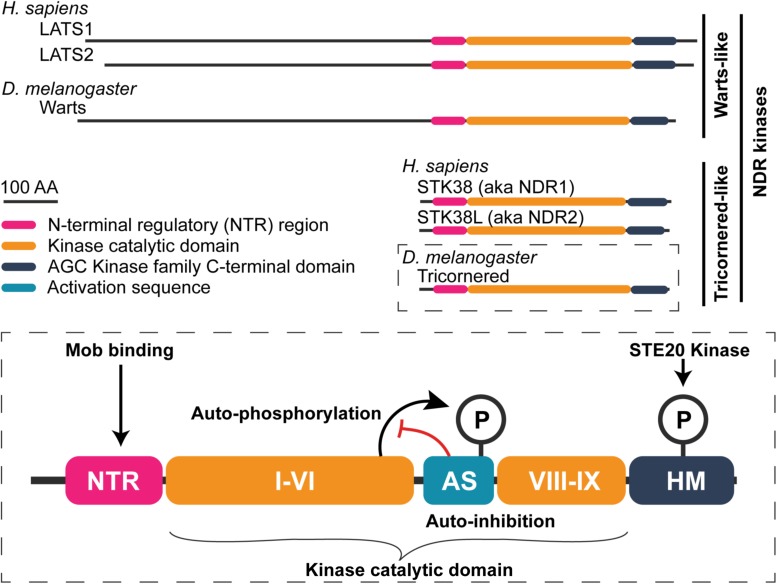
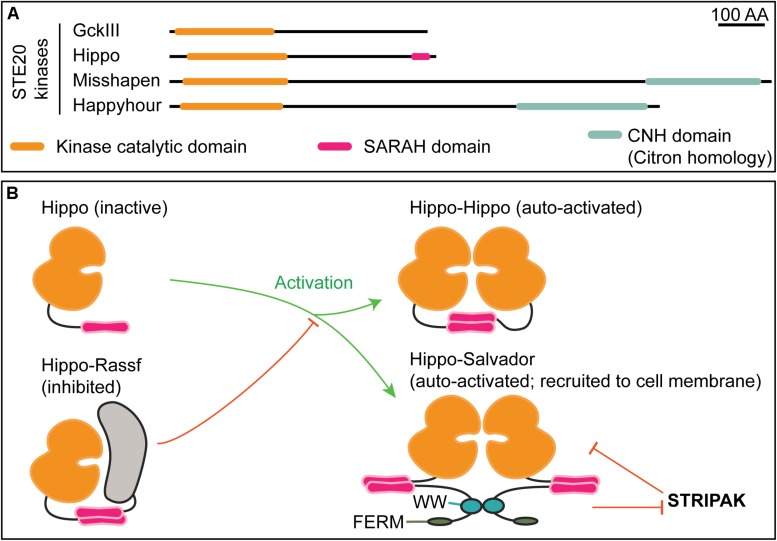
Studies in yeast first delineated the function of Mob proteins in kinase pathways that regulate cell division and shape; in multicellular eukaryotes Mobs regulate tissue growth and morphogenesis. In animals, Mobs are adaptors in Hippo signaling, an intracellular signal-transduction pathway that restricts growth, impacting the development and homeostasis of animal organs. Central to Hippo signaling are the Nuclear Dbf2-Related (NDR) kinases, Warts and LATS1 and LATS2, in flies and mammals, respectively. A second Hippo-like signaling pathway has been uncovered in animals, which regulates cell and tissue morphogenesis. Central to this emergent pathway are the NDR kinases, Tricornered, STK38, and STK38L. In Hippo signaling, NDR kinase activation is controlled by three activating interactions with a conserved set of proteins. This review focuses on one co-activator family, the highly conserved, non-catalytic Mps1-binder-related (Mob) proteins. In this context, Mobs are allosteric activators of NDR kinases and adaptors that contribute to assembly of multiprotein NDR kinase activation complexes. In multicellular eukaryotes, the Mob family has expanded relative to model unicellular yeasts; accumulating evidence points to Mob functional diversification. A striking example comes from the most sequence-divergent class of Mobs, which are components of the highly conserved Striatin Interacting Phosphatase and Kinase (STRIPAK) complex, that antagonizes Hippo signaling. Mobs stand out for their potential to modulate the output from Hippo and Hippo-like kinases, through their roles both in activating NDR kinases and in antagonizing upstream Hippo or Hippo-like kinase activity. These opposing Mob functions suggest that they coordinate the relative activities of the Tricornered/STK38/STK38L and Warts/LATS kinases, and thus have potential to assemble nodes for pathway signaling output. We survey the different facets of Mob-dependent regulation of Hippo and Hippo-like signaling and highlight open questions that hinge on unresolved aspects of Mob functions.
对酵母的研究首次阐明了Mob蛋白在调节细胞分裂和形态的激酶途径中的功能;在多细胞真核生物中,Mob蛋白调节组织生长和形态发生。在动物中,Mob蛋白是Hippo信号通路中的衔接蛋白,这是一种细胞内信号转导途径,可限制生长,影响动物器官的发育和体内平衡。Hippo信号通路的核心是核Dbf2相关(NDR)激酶,在果蝇和哺乳动物中分别为Warts以及LATS1和LATS2。在动物中还发现了第二条类似Hippo的信号通路,该通路调节细胞和组织形态发生。这条新出现的信号通路的核心是NDR激酶,即三角激酶、STK38和STK38L。在Hippo信号通路中,NDR激酶的激活由与一组保守蛋白质的三种激活相互作用控制。本综述聚焦于一个共激活因子家族,即高度保守的、非催化性的与Mps1结合蛋白相关(Mob)的蛋白质。在这种情况下,Mob蛋白是NDR激酶的变构激活剂和衔接蛋白,有助于多蛋白NDR激酶激活复合物的组装。在多细胞真核生物中,Mob家族相对于模式单细胞酵母有所扩展;越来越多的证据表明Mob功能具有多样性。一个显著的例子来自于序列差异最大的一类Mob蛋白,它们是高度保守的条纹蛋白相互作用磷酸酶和激酶(STRIPAK)复合物的组成部分,该复合物拮抗Hippo信号通路。Mob蛋白因其在激活NDR激酶以及拮抗上游Hippo或类似Hippo激酶活性方面的作用,而具有调节Hippo和类似Hippo激酶输出的潜力,这一点十分突出。这些相反的Mob功能表明它们协调了三角激酶/STK38/STK38L和Warts/LATS激酶的相对活性,因此有可能组装信号通路信号输出的节点。我们综述了Mob蛋白依赖性调节Hippo和类似Hippo信号通路的不同方面,并强调了取决于Mob功能未解决方面的悬而未决的问题。