Department of Dermatology, Leiden University Medical Center, Leiden, The Netherlands.
Department of Ophthalmology, Leiden University Medical Center, Leiden, The Netherlands.
PLoS One. 2020 Apr 8;15(4):e0231418. doi: 10.1371/journal.pone.0231418. eCollection 2020.
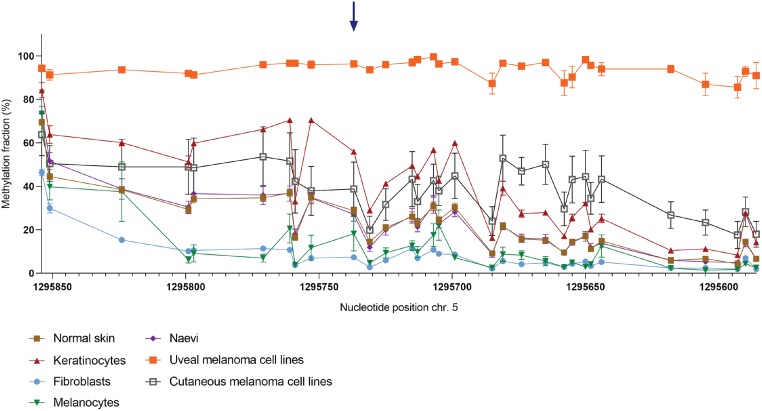
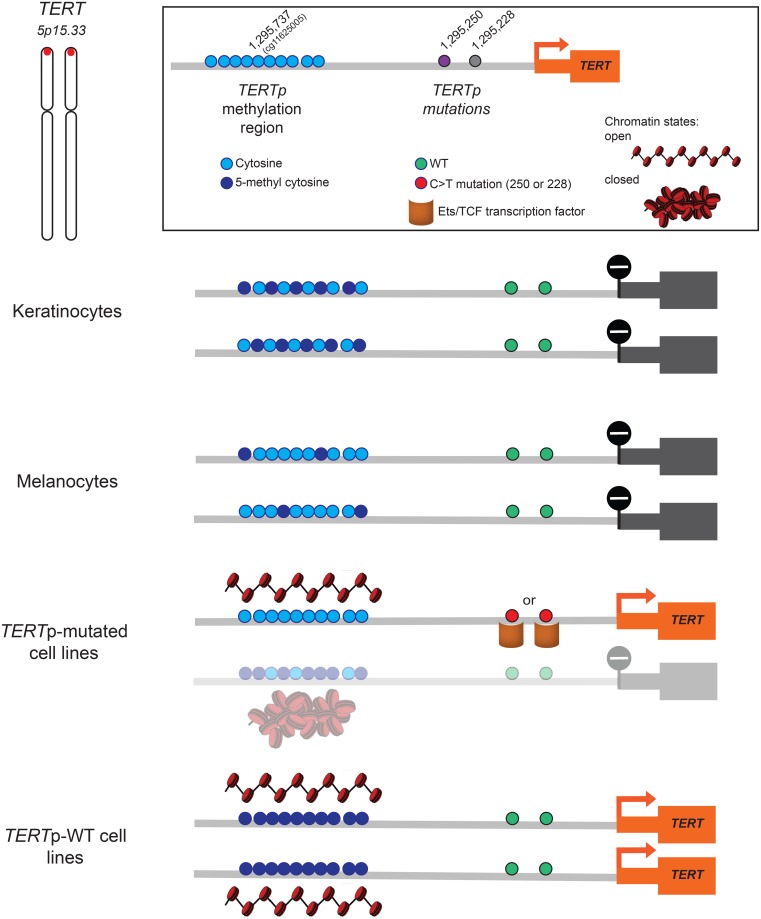
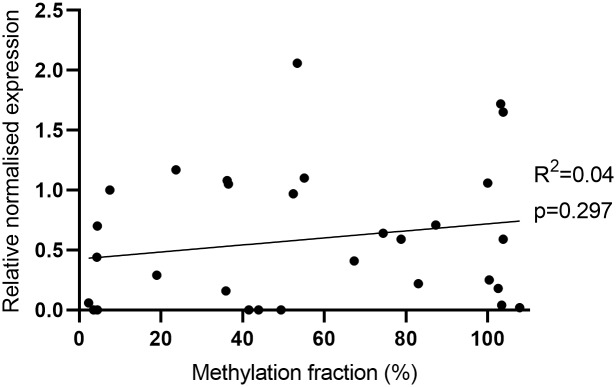
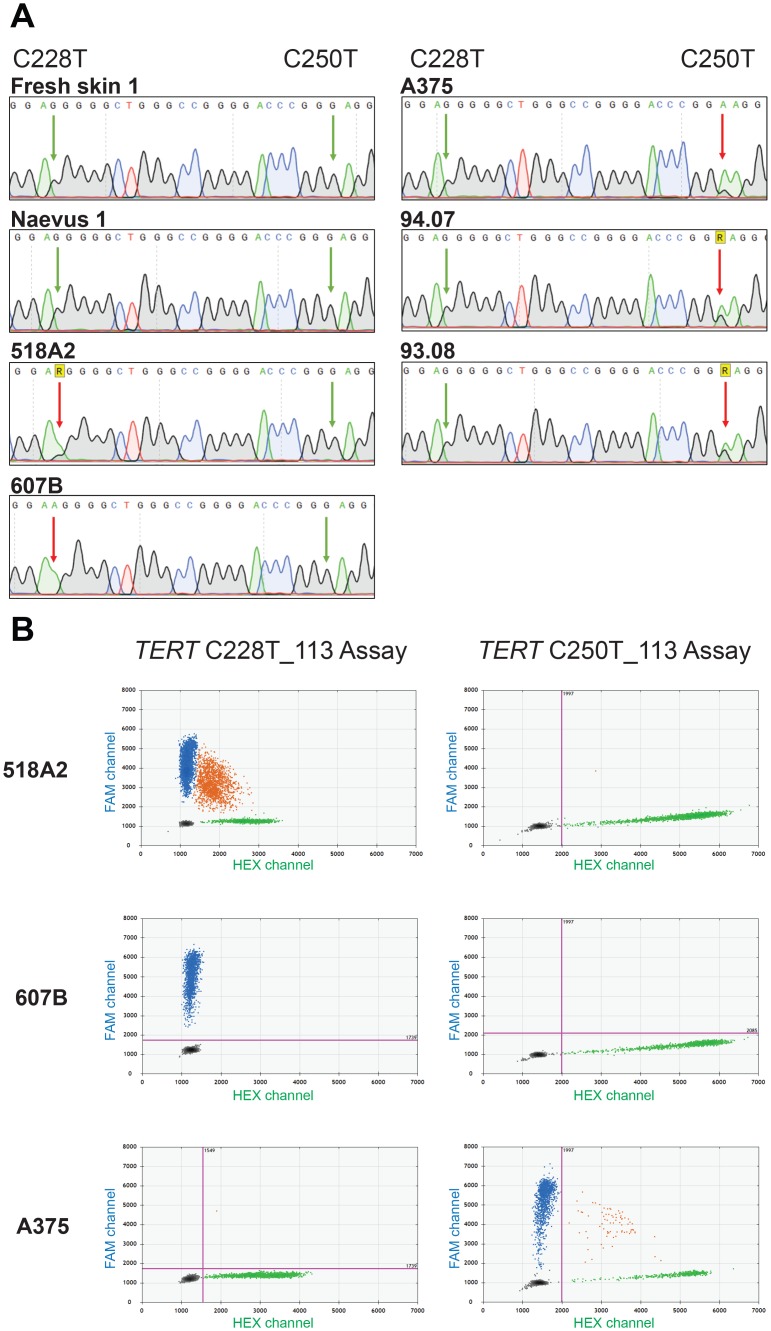
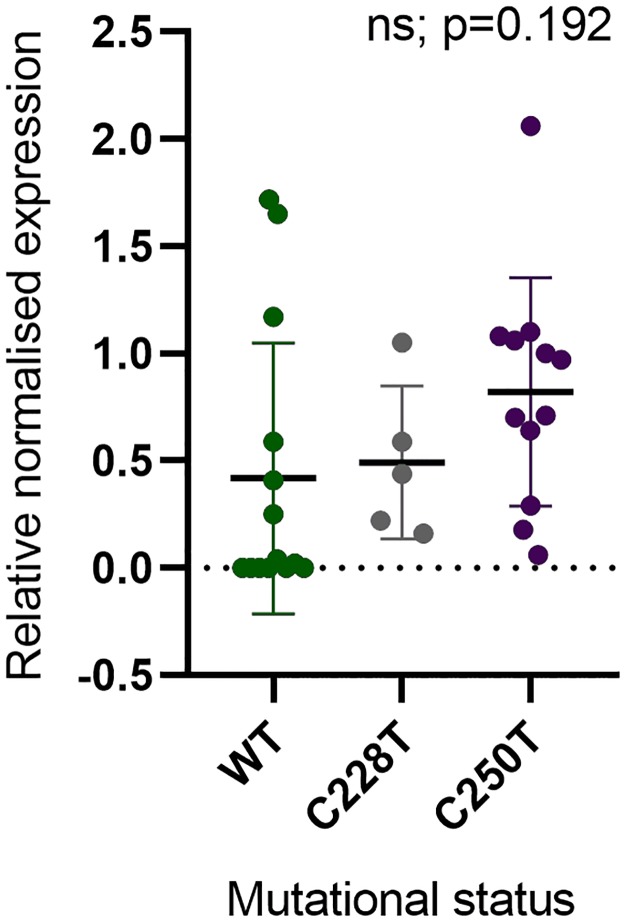
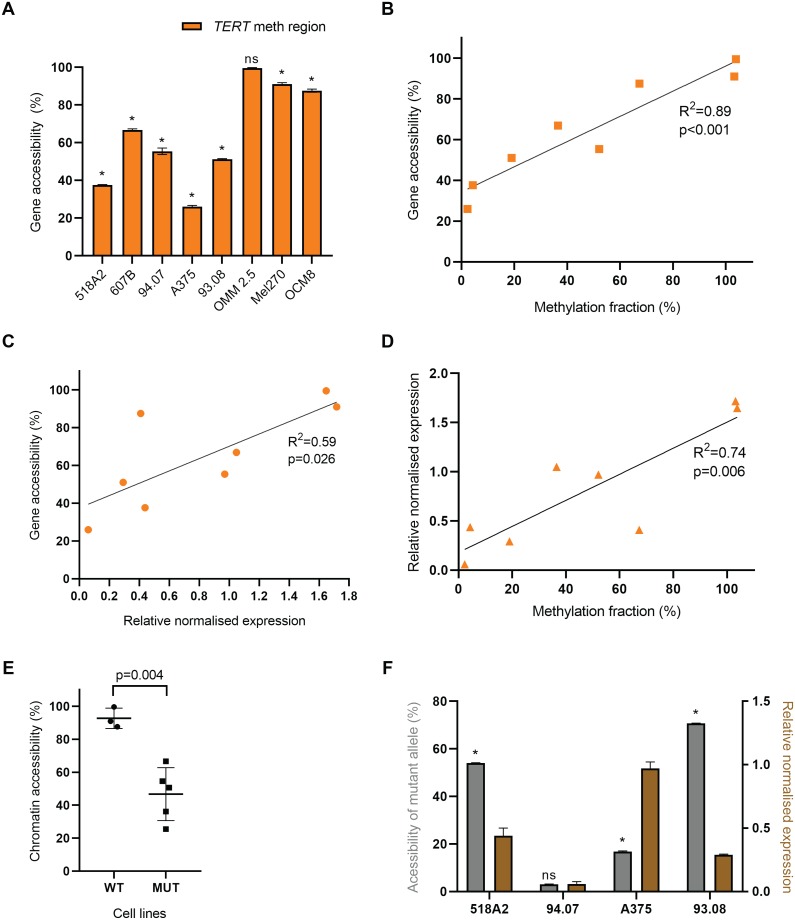
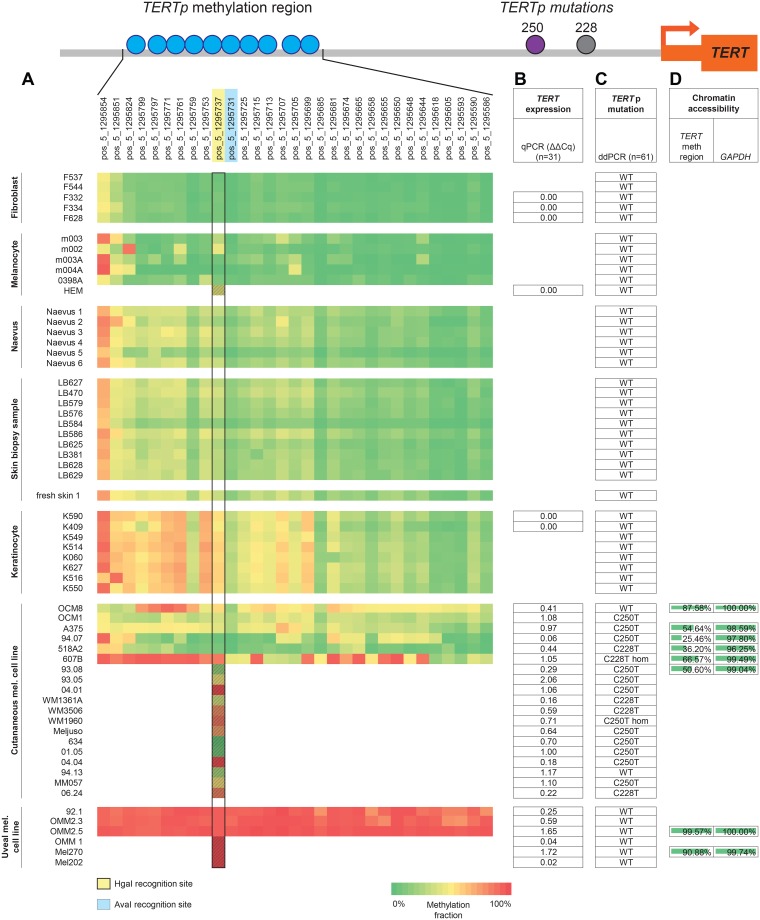
The telomerase reverse transcriptase (TERT) gene is responsible for telomere maintenance in germline and stem cells, and is re-expressed in 90% of human cancers. CpG methylation in the TERT promoter (TERTp) was correlated with TERT mRNA expression. Furthermore, two hotspot mutations in TERTp, dubbed C228T and C250T, have been revealed to facilitate binding of transcription factor ETS/TCF and subsequent TERT expression. This study aimed to elucidate the combined contribution of epigenetic (promoter methylation and chromatin accessibility) and genetic (promoter mutations) mechanisms in regulating TERT gene expression in healthy skin samples and in melanoma cell lines (n = 61). We unexpectedly observed that the methylation of TERTp was as high in a subset of healthy skin cells, mainly keratinocytes, as in cutaneous melanoma cell lines. In spite of the high promoter methylation fraction in wild-type (WT) samples, TERT mRNA was only expressed in the melanoma cell lines with either high methylation or intermediate methylation in combination with TERT mutations. TERTp methylation was positively correlated with chromatin accessibility and TERT mRNA expression in 8 melanoma cell lines. Cooperation between epigenetic and genetic mechanisms were best observed in heterozygous mutant cell lines as chromosome accessibility preferentially concerned the mutant allele. Combined, these results suggest a complex model in which TERT expression requires either a widely open chromatin state in TERTp-WT samples due to high methylation throughout the promoter or a combination of moderate methylation fraction/chromatin accessibility in the presence of the C228T or C250T mutations.
端粒酶逆转录酶(TERT)基因负责生殖细胞和干细胞中的端粒维持,并且在 90%的人类癌症中重新表达。TERT 启动子(TERTp)中的 CpG 甲基化与 TERT mRNA 表达相关。此外,TERTp 中的两个热点突变,即 C228T 和 C250T,已被揭示有助于转录因子 ETS/TCF 的结合,从而随后促进 TERT 表达。本研究旨在阐明表观遗传(启动子甲基化和染色质可及性)和遗传(启动子突变)机制在调节健康皮肤样本和黑色素瘤细胞系(n=61)中 TERT 基因表达中的综合作用。我们出乎意料地观察到,TERTp 在健康皮肤细胞的亚群中,主要是角质形成细胞,其甲基化程度与皮肤黑色素瘤细胞系一样高。尽管 WT 样本中的启动子甲基化分数很高,但只有在高甲基化或中等甲基化与 TERT 突变相结合的黑色素瘤细胞系中才表达 TERT mRNA。在 8 个黑色素瘤细胞系中,TERTp 甲基化与染色质可及性和 TERT mRNA 表达呈正相关。在杂合突变细胞系中,表观遗传和遗传机制的合作最好观察到,因为染色体可及性优先涉及突变等位基因。综合这些结果表明,在 TERTp-WT 样本中,由于启动子整个区域的高甲基化,需要广泛开放的染色质状态才能表达 TERT,或者在存在 C228T 或 C250T 突变的情况下,需要中等甲基化分数/染色质可及性的组合才能表达 TERT。