IEEE Trans Biomed Eng. 2020 Nov;67(11):3125-3133. doi: 10.1109/TBME.2020.2976924. Epub 2020 Apr 3.
Interstitial fibrosis is a pathological expansion of the heart's inter-cellular collagen matrix. It is a potential complication of nonischemic cardiomyopathy (NICM), a class of diseases involving electrical and or mechanical dysfunction of cardiac tissue not caused by atherosclerosis. Patients with NICM and interstitial fibrosis often suffer from life threatening arrhythmias, which we aim to simulate in this study.
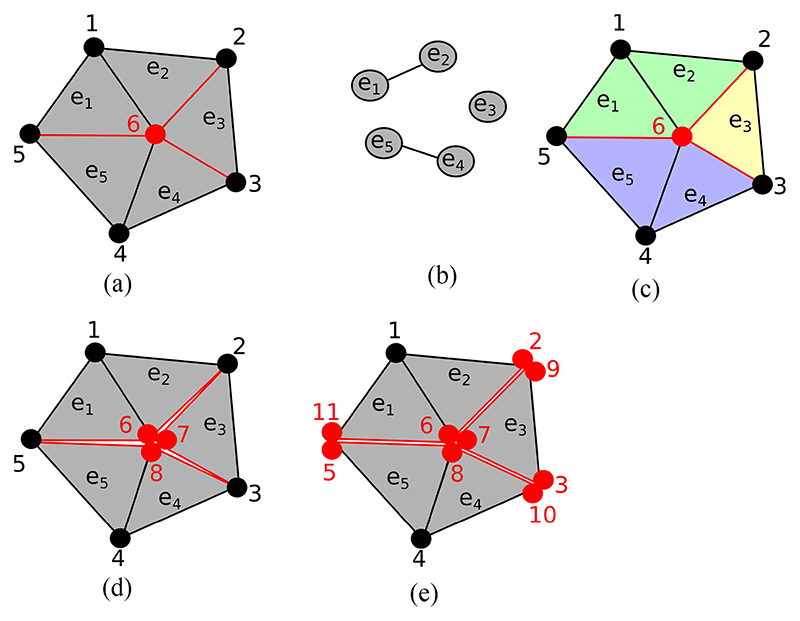
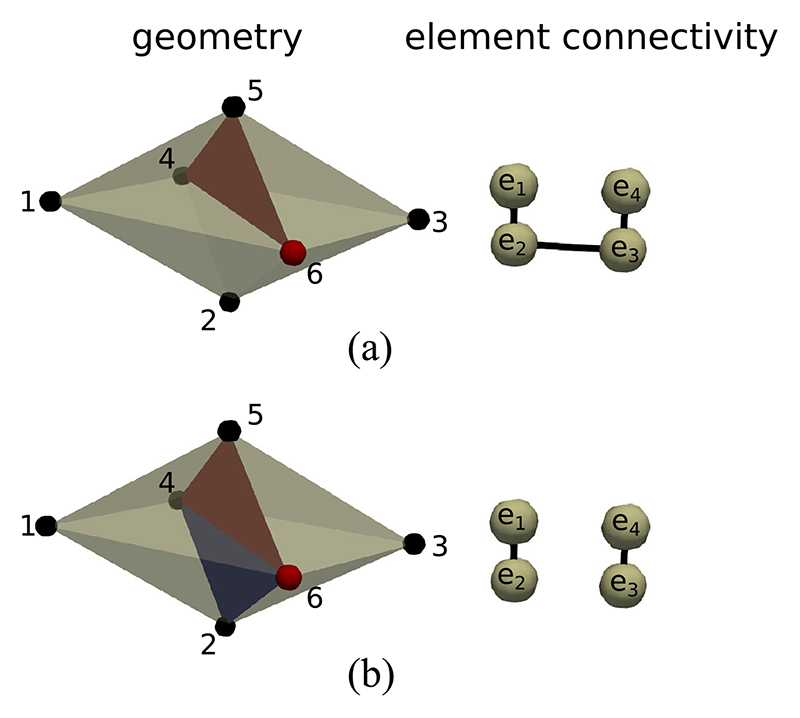
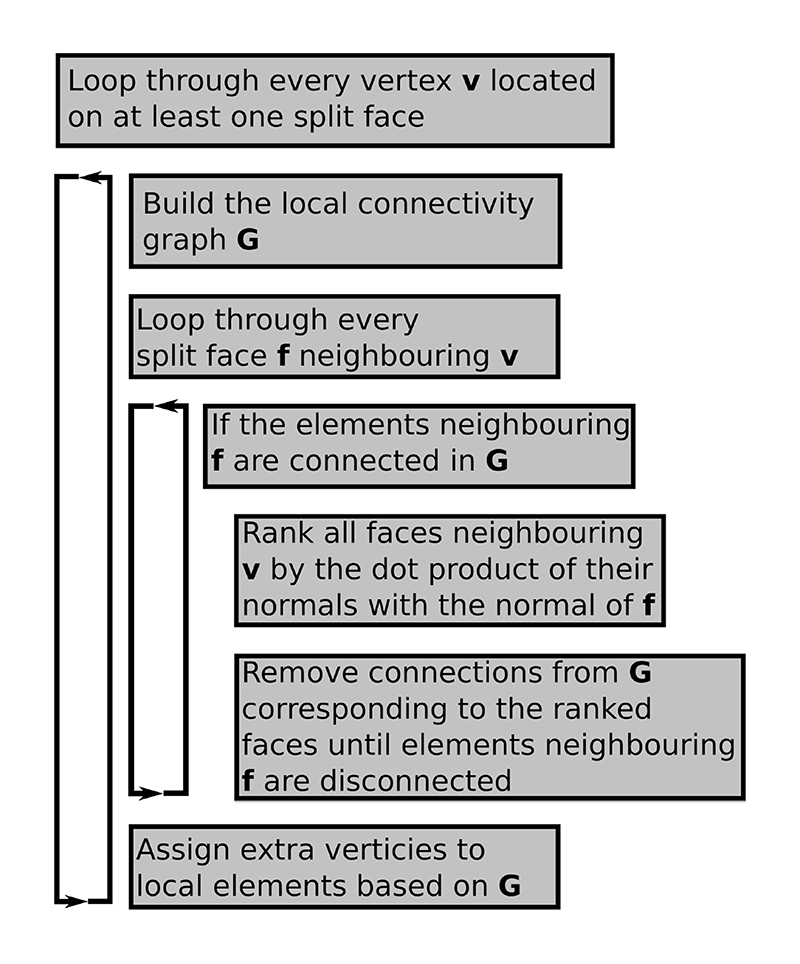
Our methodology builds on an efficient discrete finite element (DFE) method which allows for the representation of fibrosis as infinitesimal splits in a mesh. We update the DFE method with a local connectivity analysis which creates a consistent topology in the fibrosis network. This is particularly important in nonischemic disease due to the potential presence of large and contiguous fibrotic regions and therefore potentially complex fibrosis networks.
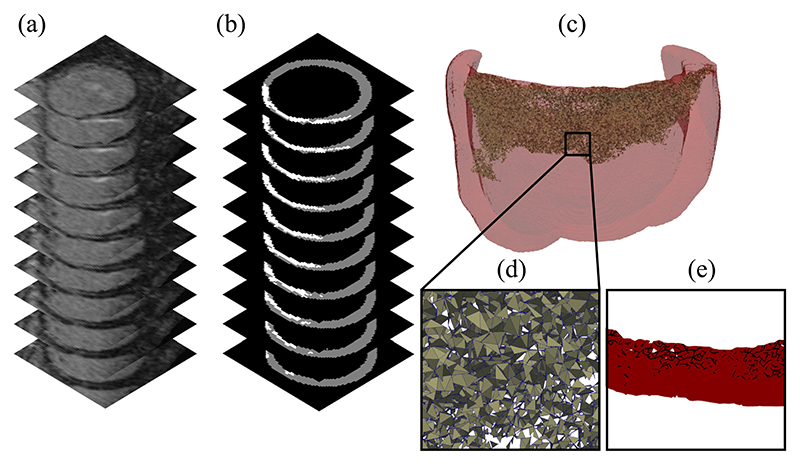
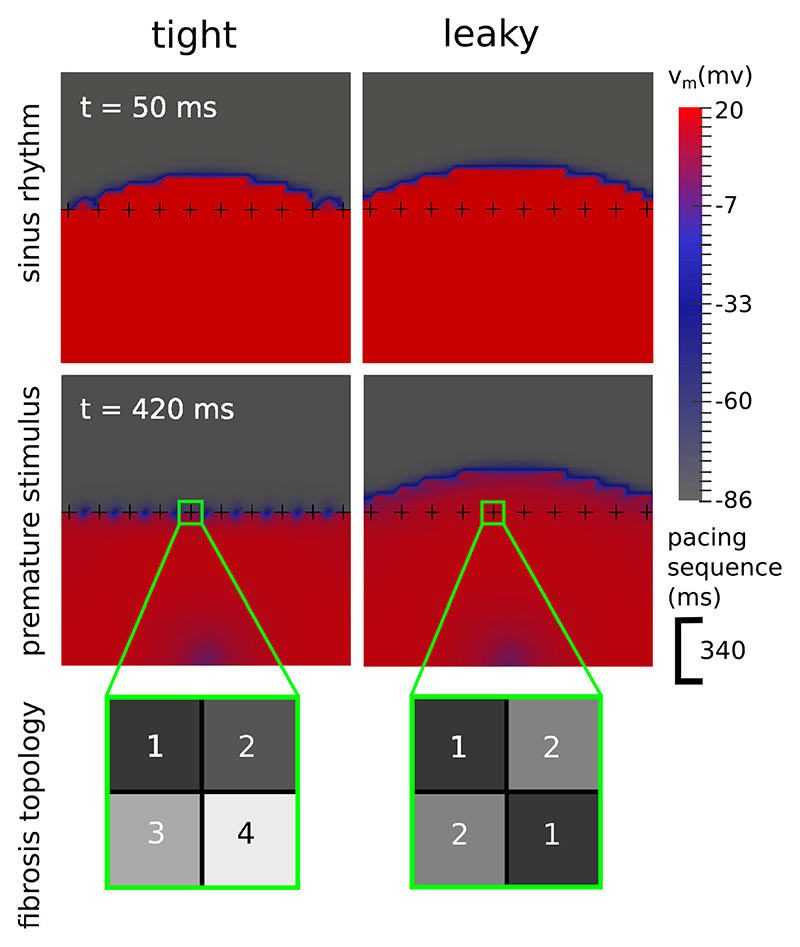
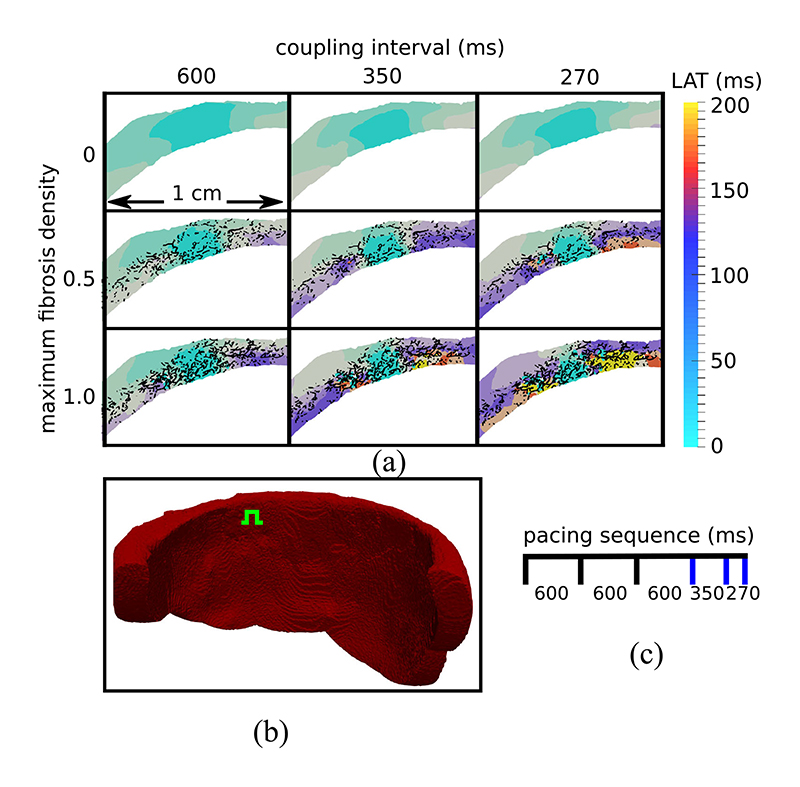
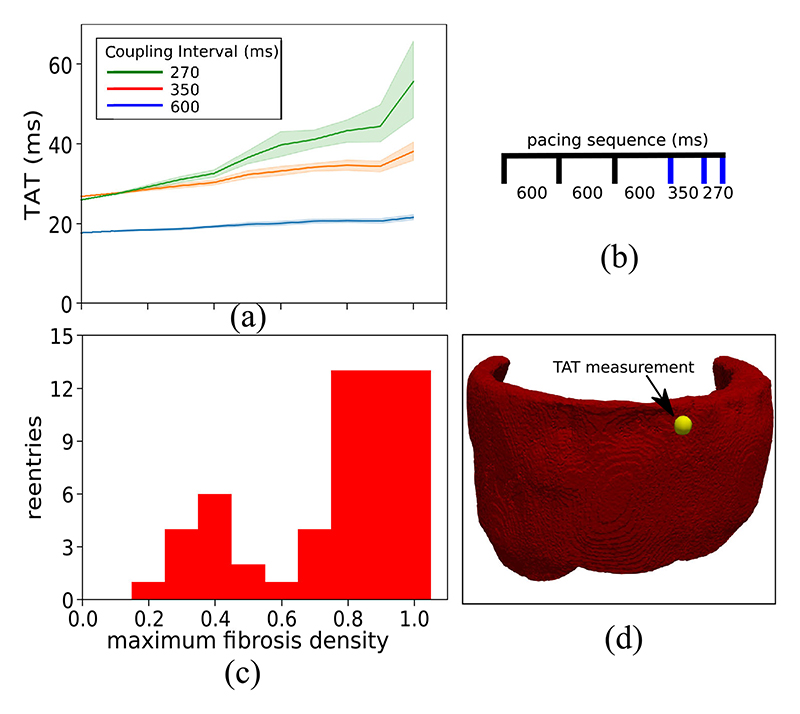
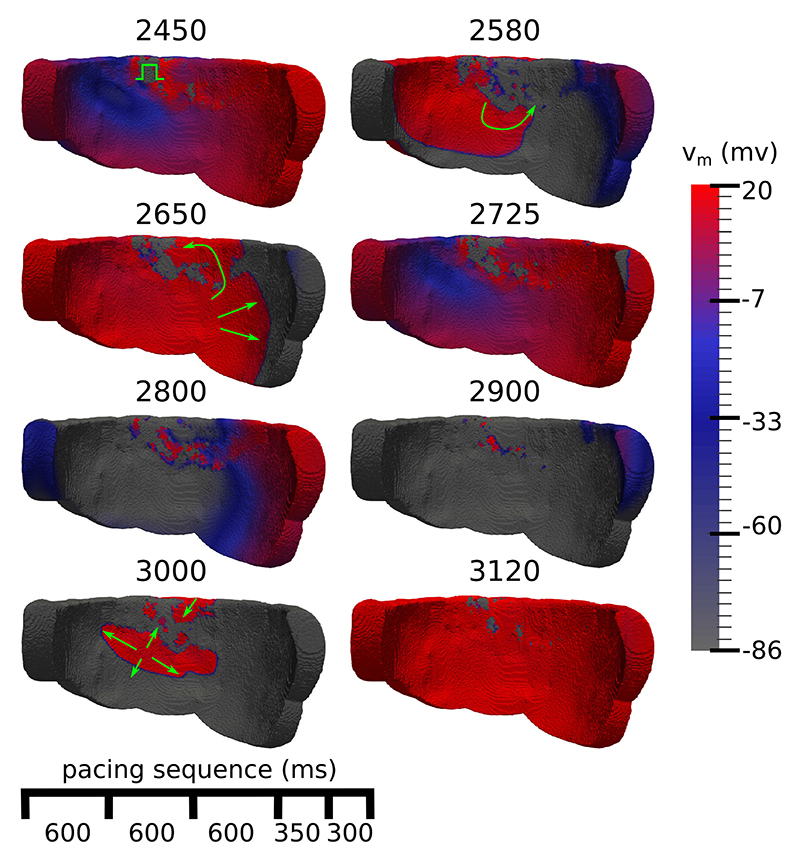
In experiments with an image-based model, we demonstrate that our methodology is able to simulate reentrant electrical events associated with cardiac arrhythmias. These reentries depended crucially upon sufficient fibrosis density, which was marked by conduction slowing at high pacing rates. We also created a 2D test-case which demonstrated that fibrosis topologies can modulate transient conduction block, and thereby reentrant activations.
Ventricular arrhythmias due to interstitial fibrosis in NICM can be efficiently simulated using our methods in medical image based geometries. Furthermore, fibrosis topology modulates transient conduction block, and should be accounted for in electrophysiological simulations with interstitial fibrosis.
Our study provides methodology which has the potential to predict arrhythmias and to optimize treatments non-invasively for nonischemic cardiomyopathies.
间质纤维化是心脏细胞间胶原基质的病理性扩张。它是一种非缺血性心肌病(NICM)的潜在并发症,NICM 是一类涉及心脏组织电或机械功能障碍的疾病,不是由动脉粥样硬化引起的。患有 NICM 和间质纤维化的患者常患有危及生命的心律失常,我们旨在本研究中模拟这些心律失常。
我们的方法基于一种高效的离散有限元(DFE)方法,该方法允许将纤维化表示为网格中的微小分裂。我们使用局部连通性分析更新 DFE 方法,该分析在纤维化网络中创建一致的拓扑结构。由于非缺血性疾病中可能存在大的连续纤维化区域,因此潜在的纤维化网络可能非常复杂,因此这一点尤其重要。
在基于图像的模型实验中,我们证明了我们的方法能够模拟与心律失常相关的折返性电事件。这些折返取决于足够的纤维化密度,在高起搏率下表现为传导减慢。我们还创建了一个 2D 测试案例,该案例表明纤维化拓扑可以调节瞬时传导阻滞,从而调节折返激活。
使用我们的基于医学图像的方法,在 NICM 中的间质纤维化可以有效地模拟心室性心律失常。此外,纤维化拓扑可以调节瞬时传导阻滞,并且应该在有间质纤维化的电生理模拟中加以考虑。
我们的研究提供了一种方法,有潜力预测心律失常,并对非缺血性心肌病进行非侵入性治疗优化。