School of Optometry and Vision Sciences, The University of Auckland, Auckland, New Zealand.
School of Computer Sciences, The University of Auckland, Auckland, New Zealand.
PLoS One. 2020 Apr 10;15(4):e0225015. doi: 10.1371/journal.pone.0225015. eCollection 2020.
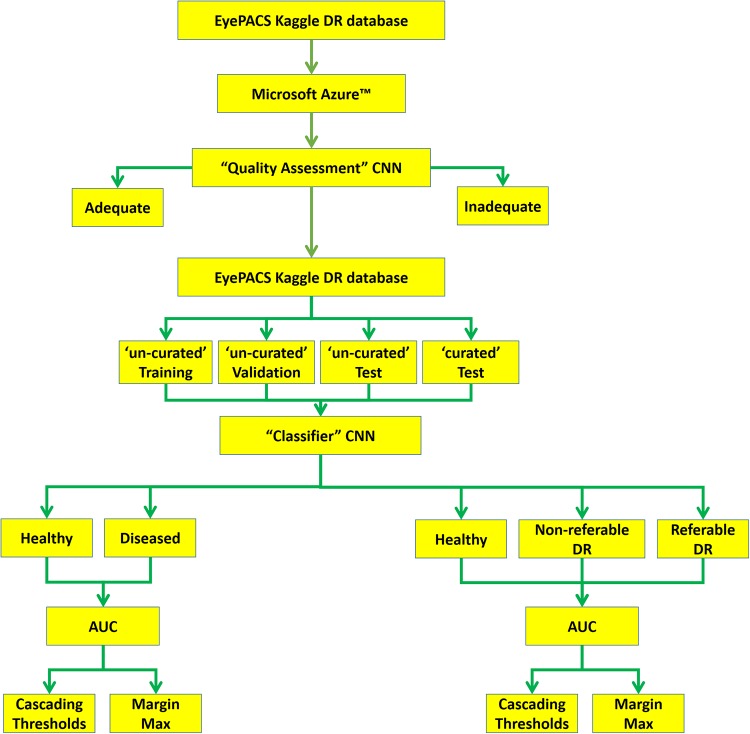
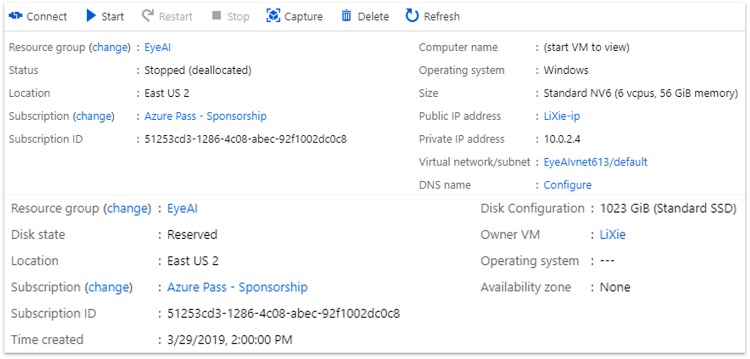
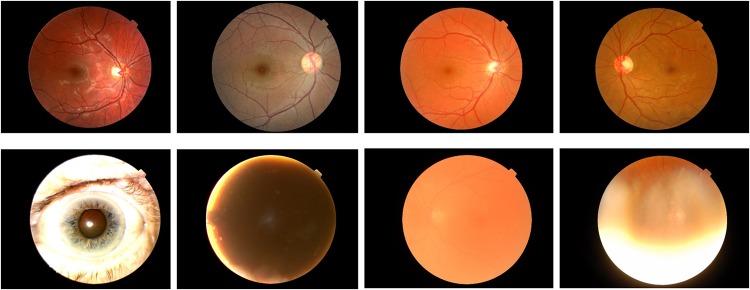
Convolutional Neural Networks (CNNs) have become a prominent method of AI implementation in medical classification tasks. Grading Diabetic Retinopathy (DR) has been at the forefront of the development of AI for ophthalmology. However, major obstacles remain in the generalization of these CNNs onto real-world DR screening programs. We believe these difficulties are due to use of 1) small training datasets (<5,000 images), 2) private and 'curated' repositories, 3) locally implemented CNN implementation methods, while 4) relying on measured Area Under the Curve (AUC) as the sole measure of CNN performance. To address these issues, the public EyePACS Kaggle Diabetic Retinopathy dataset was uploaded onto Microsoft Azure™ cloud platform. Two CNNs were trained; 1 a "Quality Assurance", and 2. a "Classifier". The Diabetic Retinopathy classifier CNN (DRCNN) performance was then tested both on 'un-curated' as well as the 'curated' test set created by the "Quality Assessment" CNN model. Finally, the sensitivity of the DRCNNs was boosted using two post-training techniques. Our DRCNN proved to be robust, as its performance was similar on 'curated' and 'un-curated' test sets. The implementation of 'cascading thresholds' and 'max margin' techniques led to significant improvements in the DRCNN's sensitivity, while also enhancing the specificity of other grades.
卷积神经网络(CNNs)已成为医学分类任务中人工智能实现的突出方法。糖尿病视网膜病变(DR)的分级一直是眼科人工智能发展的前沿。然而,这些 CNN 在实际 DR 筛查项目中的推广仍存在重大障碍。我们认为这些困难是由于 1)使用了小的训练数据集(<5000 张图像),2)私有和“精选”的存储库,3)本地实施的 CNN 实施方法,以及 4)仅依赖测量曲线下面积(AUC)作为 CNN 性能的唯一衡量标准。为了解决这些问题,公共 EyePACS Kaggle 糖尿病视网膜病变数据集被上传到 Microsoft Azure™云平台上。我们训练了两个 CNN;1 个是“质量保证”,2 个是“分类器”。然后,我们使用“质量评估”CNN 模型创建的“未精选”和“精选”测试集来测试糖尿病视网膜病变分类器 CNN(DRCNN)的性能。最后,使用两种后训练技术来提高 DRCNN 的敏感性。我们的 DRCNN 被证明是稳健的,因为它在“精选”和“未精选”测试集上的性能相似。级联阈值”和“最大边距”技术的实现显著提高了 DRCNN 的敏感性,同时也提高了其他等级的特异性。