Department of Clinical Sciences, FARAH, Faculty of Veterinary Medicine, University of Liège, Liège, Belgium.
Department of Food Sciences - Microbiology, FARAH, Faculty of Veterinary Medicine, University of Liège, Liège, Belgium.
BMC Microbiol. 2020 Apr 10;20(1):84. doi: 10.1186/s12866-020-01784-w.
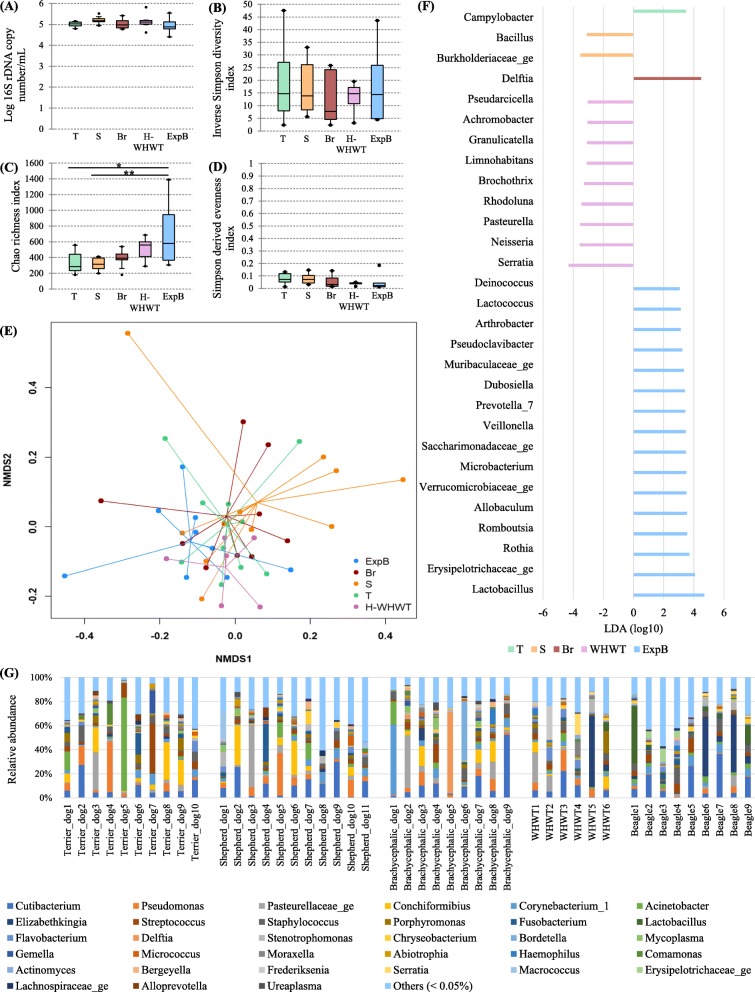
Literature about the lung microbiota (LM) in dogs is sparse. Influence of breed and living conditions on the LM in healthy dogs is currently unknown, as well as the influence of chronic respiratory diseases such as canine idiopathic pulmonary fibrosis (CIPF) in West highland white terriers (WHWTs). Aims of this study were (1) to assess the characteristics of the healthy LM according to breed and living conditions, and (2) to study LM changes associated with CIPF in WHWTs. Forty-five healthy dogs divided into 5 groups: domestic terriers (n = 10), domestic shepherds (n = 11), domestic brachycephalic dogs (n = 9), domestic WHWTs (n = 6) (H-WHWTs) and experimental beagles (n = 9) and 11 diseased WHWTs affected with CIPF (D-WHWTs) were included in the study to achieve those objectives.
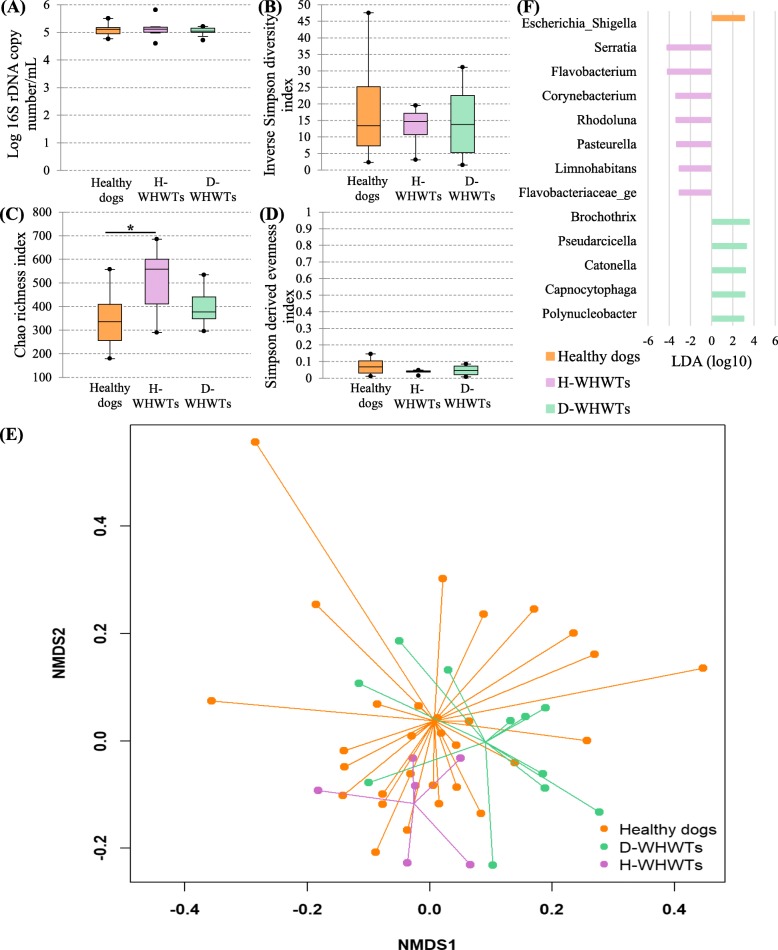
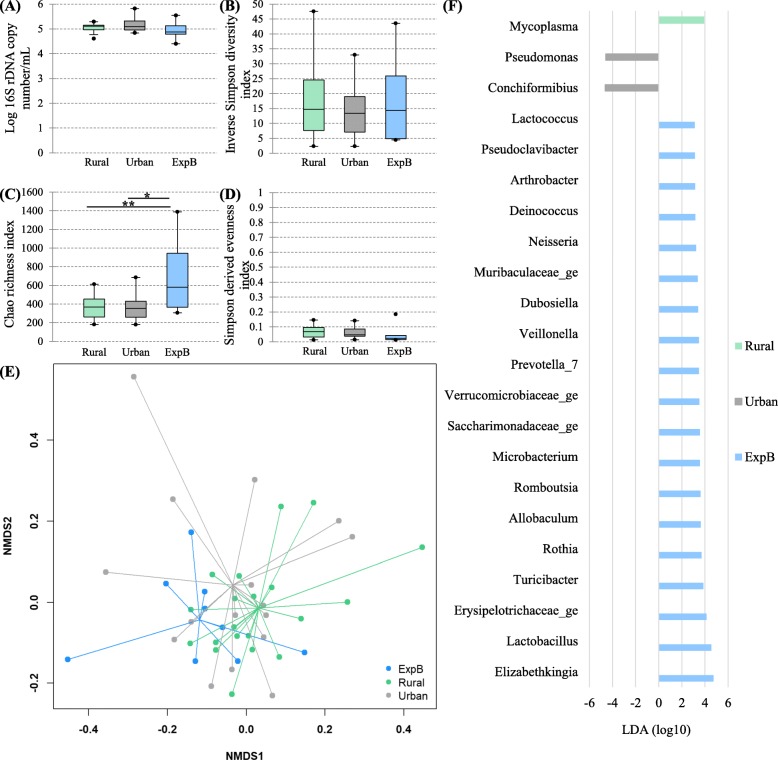
In healthy domestic dogs, except in H-WHWTs, the presence of few discriminant genera in each type of breed was the only LM modification. LM of experimental dogs displayed a change in b-diversity and an increased richness compared with domestic dogs. Moreover, Prevotella_7 and Dubosiella genera were more abundant and 19 genera were discriminant in experimental dogs. LM of both H-WHWTs and D-WHWTs revealed increased abundance of 6 genera (Brochothrix, Curvibacter, Pseudarcicella, Flavobacteriaceae genus, Rhodoluna and Limnohabitans) compared with other healthy domestic dogs. Brochothrix and Pseudarcicella were also discriminant in D-WHWTs compared with H-WHWTs and other healthy domestic dogs.
In domestic conditions, except for H-WHWT, the breed appears to have minor influence on the LM. LM modifications were found in experimental compared with domestic living conditions. LM modifications in H-WHWTs and D-WHWTs compared with other healthy domestic dogs were similar and seemed to be linked to the breed. Whether this breed difference might be related with the high susceptibility of WHWTs for CIPF requires further studies.
有关犬肺部微生物组(LM)的文献很少。目前尚不清楚品种和生活条件对健康犬 LM 的影响,也不清楚西高地白梗犬(WHWT)特发性肺纤维化(CIPF)等慢性呼吸道疾病对 LM 的影响。本研究的目的是(1)根据品种和生活条件评估健康 LM 的特征,(2)研究与 CIPF 相关的 WHWT 中 LM 的变化。将 45 只健康犬分为 5 组:家养梗犬(n=10)、家养牧羊犬(n=11)、家养短头犬(n=9)、家养 WHWT(n=6)(HWHT)和实验比格犬(n=9),并纳入 11 只患有 CIPF 的患病 WHWT(DWHT),以实现这些目标。
在健康的家养犬中,除了 HWHT 外,每种类型的品种中存在少数鉴别属是唯一的 LM 修饰。实验犬的 LM 显示出 b 多样性的变化和丰富度的增加,与家养犬相比。此外,普雷沃特氏菌属和 Dubosiella 属更为丰富,实验犬中有 19 个属具有鉴别性。HWHT 和 DWHT 的 LM 与其他健康的家养犬相比,发现 6 个属(Brochothrix、Curvibacter、Pseudarcicella、Flavobacteriaceae 属、Rhodoluna 和 Limnohabitans)的丰度增加。Brochothrix 和 Pseudarcicella 在 DWHT 中也与 HWHT 和其他健康的家养犬相比具有鉴别性。
在家庭条件下,除了 HWHT 外,品种对 LM 的影响似乎很小。与家庭生活条件相比,实验条件下发现了 LM 的修饰。HWHT 和 DWHT 与其他健康的家养犬相比,LM 的修饰相似,似乎与品种有关。WHWT 对 CIPF 的高易感性是否与这种品种差异有关,需要进一步研究。