Cotovio João P, Fernandes Tiago G
iBB-Institute for Bioengineering and Biosciences and Department of Bioengineering, Instituto Superior Técnico, Universidade de Lisboa, Av. Rovisco Pais, 1049-001 Lisbon, Portugal.
Bioengineering (Basel). 2020 Apr 9;7(2):36. doi: 10.3390/bioengineering7020036.
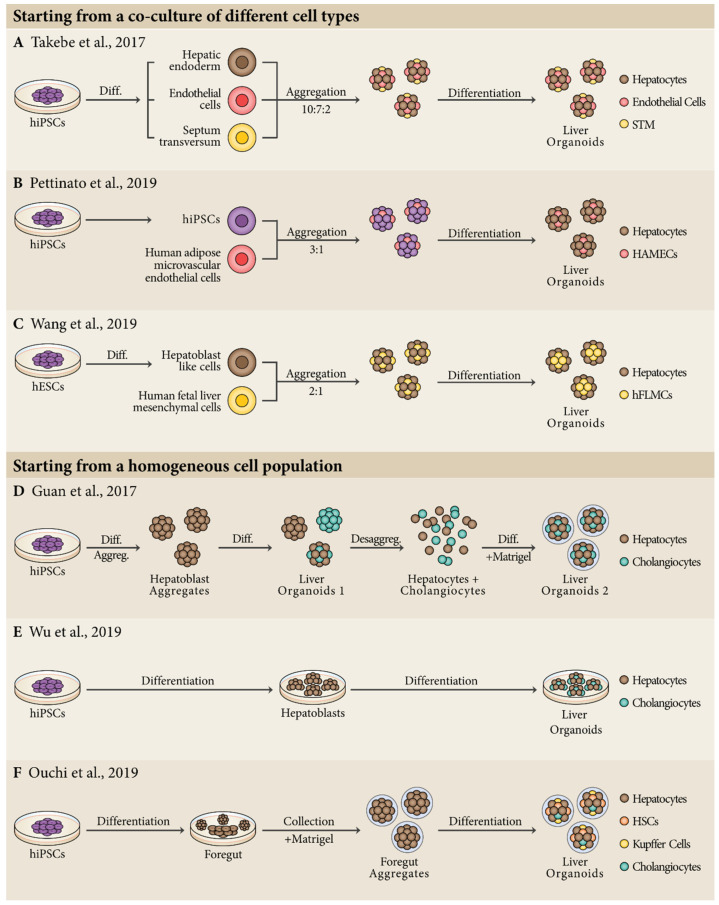
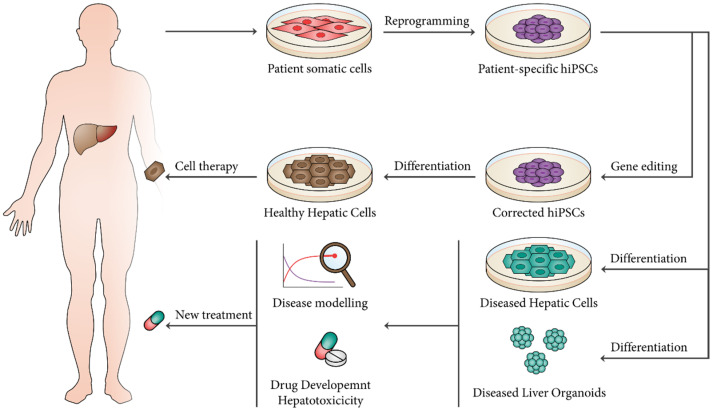
Liver disease is one of the leading causes of death worldwide, leading to the death of approximately 2 million people per year. Current therapies include orthotopic liver transplantation, however, donor organ shortage remains a great challenge. In addition, the development of novel therapeutics has been limited due to the lack of in vitro models that mimic in vivo liver physiology. Accordingly, hepatic cell lineages derived from human pluripotent stem cells (hPSCs) represent a promising cell source for liver cell therapy, disease modelling, and drug discovery. Moreover, the development of new culture systems bringing together the multiple liver-specific hepatic cell types triggered the development of hPSC-derived liver organoids. Therefore, these human liver-based platforms hold great potential for clinical applications. In this review, the production of the different hepatic cell lineages from hPSCs, including hepatocytes, as well as the emerging strategies to generate hPSC-derived liver organoids will be assessed, while current biomedical applications will be highlighted.
肝脏疾病是全球主要死因之一,每年导致约200万人死亡。目前的治疗方法包括原位肝移植,然而,供体器官短缺仍然是一个巨大挑战。此外,由于缺乏模拟体内肝脏生理学的体外模型,新型疗法的开发受到限制。因此,源自人类多能干细胞(hPSC)的肝细胞谱系是肝细胞治疗、疾病建模和药物发现的有前景的细胞来源。此外,将多种肝脏特异性肝细胞类型聚集在一起的新培养系统的开发引发了hPSC衍生肝类器官的发展。因此,这些基于人类肝脏的平台在临床应用中具有巨大潜力。在这篇综述中,将评估从hPSC产生不同肝细胞谱系(包括肝细胞)的方法,以及生成hPSC衍生肝类器官的新兴策略,同时突出当前的生物医学应用。