Ranucci Marco, Baryshnikova Ekaterina
Department of Cardiothoracic, Vascular Anesthesia and Intensive Care, IRCCS Policlinico San Donato, 20097 Milan, Italy.
J Clin Med. 2020 Jan 10;9(1):189. doi: 10.3390/jcm9010189.
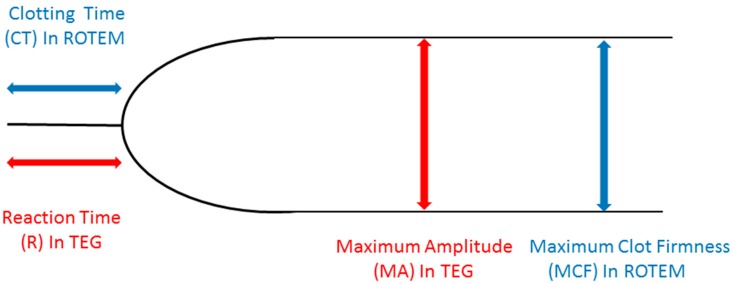
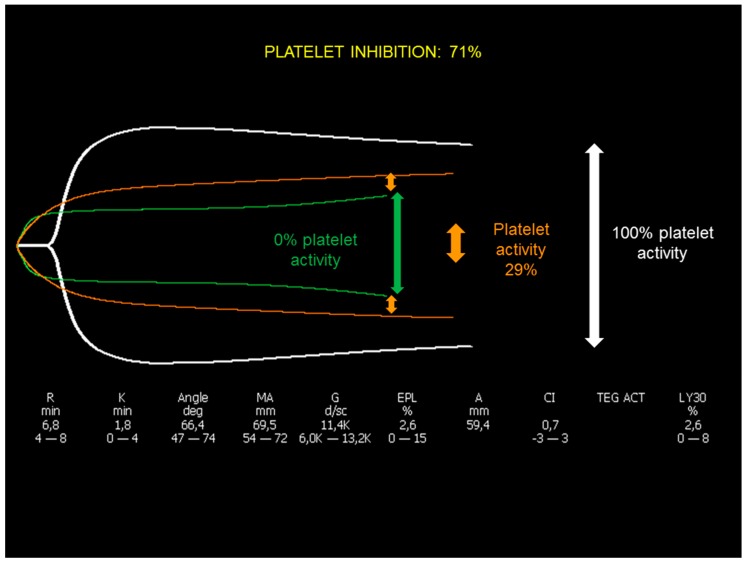
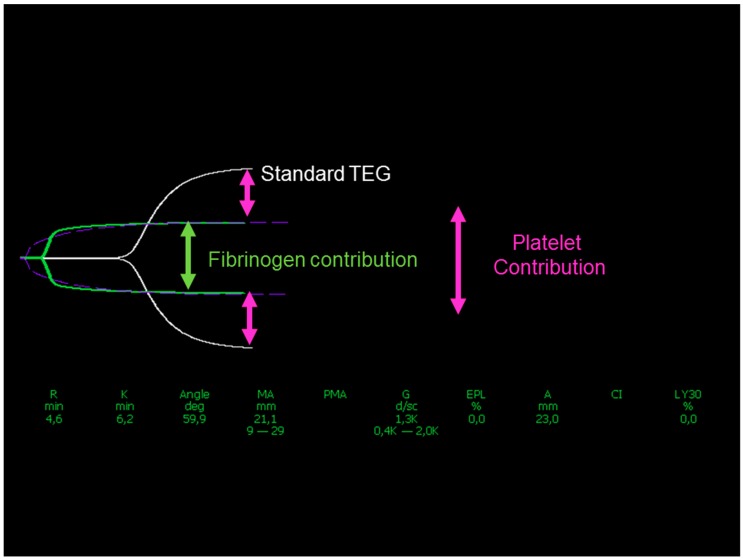
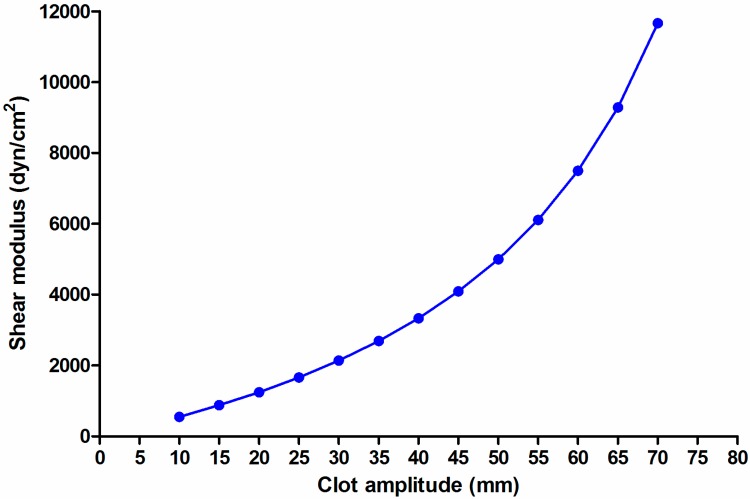
Viscoelastic tests provide a dynamic assessment of coagulation, by exploring the time to clot formation and the clot strength. Using specific activators or inhibitors, additional factors can be explored, like the fibrinogen contribution to clot strength. Since the early days, various attempts have been done to measure platelet function with viscoelastic test. In general, the difference between the maximum clot strength and the fibrinogen contribution is considered an index of platelet contribution. However, this parameter does not clearly split platelet count from function; additionally, the extensive thrombin generation of standard activated viscoelastic tests activates platelet through the protease activated receptors, bypassing the other pathways. For this reason, standard viscoelastic tests cannot be used to assess platelet reactivity under the effects of aspirin or P2Y inhibitors. To overcome this limitation, a specific test was developed (thromboelastography platelet mapping). This test has been compared with the gold standard of light transmission aggregometry and with other point-of-care tests, with conflicting results. In general, the use of viscoelastic tests to assess the effects of antiplatelet agents is still limited. Conversely, platelet contribution to clot strength in the setting of coagulopathic bleeding is considered an important parameter to trigger platelet transfusion or desmopressin.
黏弹性检测通过探究凝血块形成时间和凝血块强度,对凝血进行动态评估。使用特定的激活剂或抑制剂,可以探究其他因素,如纤维蛋白原对凝血块强度的贡献。从早期开始,就有人尝试用黏弹性检测来测量血小板功能。一般来说,最大凝血块强度与纤维蛋白原贡献之间的差异被视为血小板贡献的指标。然而,该参数并不能明确区分血小板数量和功能;此外,标准激活黏弹性检测中广泛的凝血酶生成通过蛋白酶激活受体激活血小板,绕过了其他途径。因此,标准黏弹性检测不能用于评估阿司匹林或P2Y抑制剂作用下的血小板反应性。为克服这一局限性,开发了一种特定检测方法(血栓弹力图血小板功能分析)。该检测方法已与光透射聚集法的金标准以及其他即时检测方法进行了比较,结果存在争议。一般来说,使用黏弹性检测来评估抗血小板药物的效果仍然有限。相反,在凝血病性出血情况下,血小板对凝血块强度的贡献被认为是触发血小板输注或去氨加压素治疗的重要参数。