Bobby R. Alford Department of Otolaryngology Head and Neck Surgery, Baylor College of Medicine, Houston, TX, United States.
Department of Radiation Oncology, UPMC Hillman Cancer Center, Pittsburgh, PA, United States.
Sci Rep. 2020 Apr 14;10(1):6380. doi: 10.1038/s41598-020-63448-z.
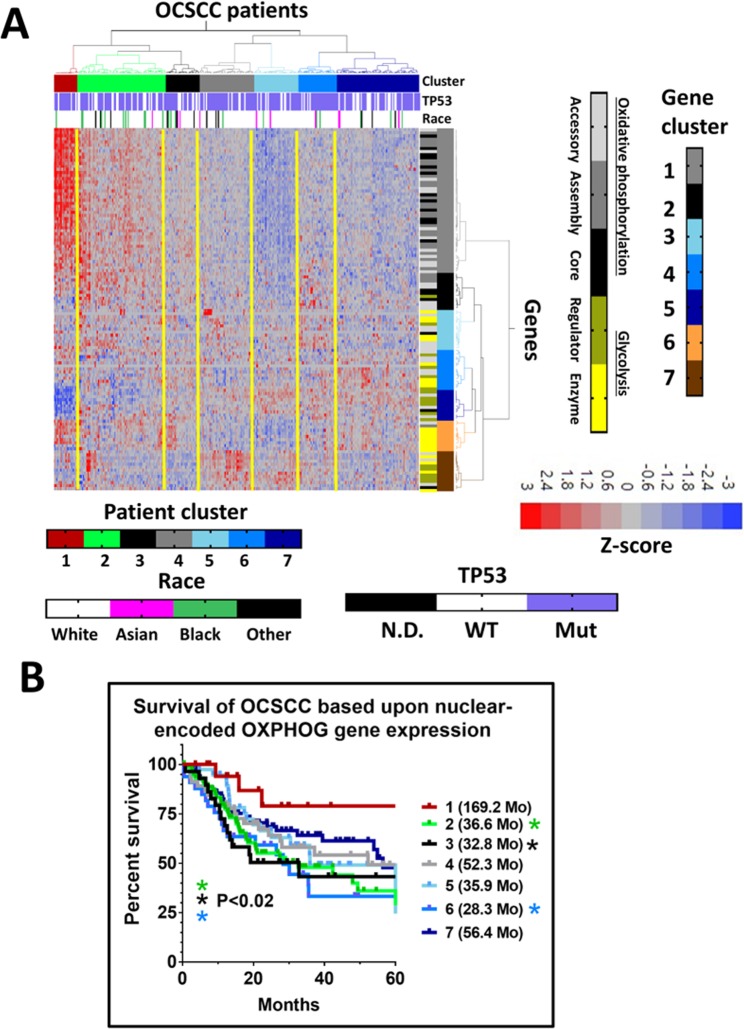
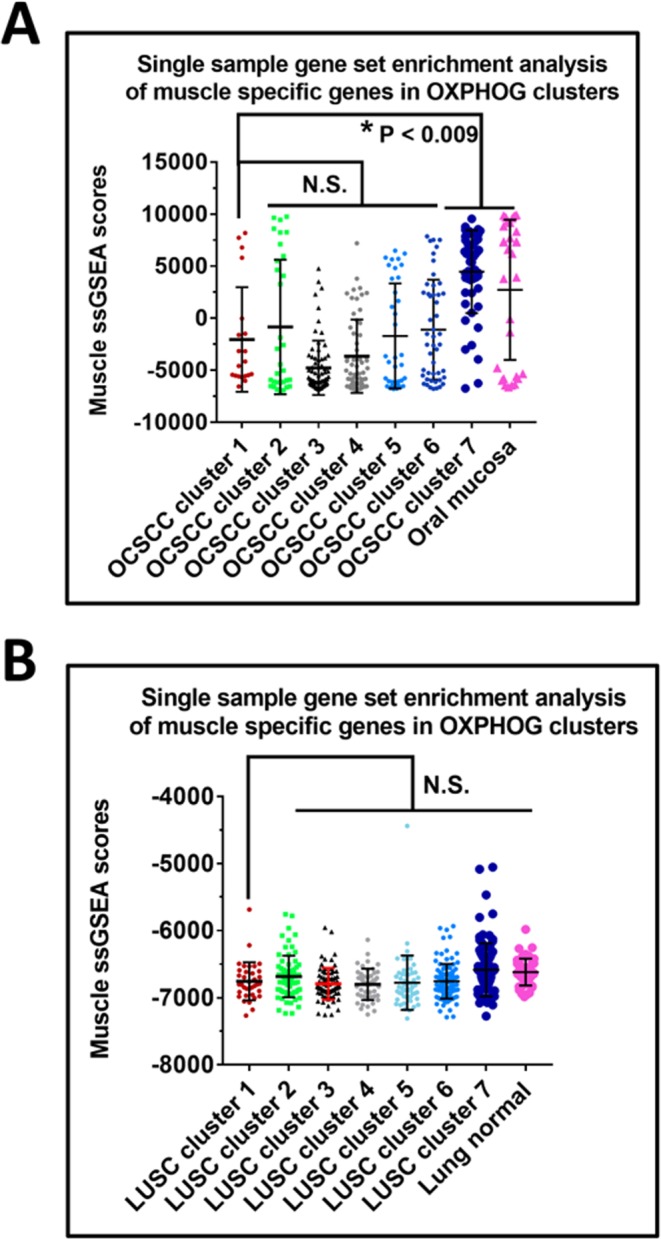
Mitochondrial activity is a critical component of tumor metabolism, with profound implications for tumorigenesis and treatment response. We analyzed clinical, genomic and expression data from patients with oral cavity squamous cell carcinoma (OCSCC) in order to map metabologenomic events which may correlate with clinical outcomes and identified nuclear genes involved in oxidative phosphorylation and glycolysis (OXPHOG) as a critical predictor of patient survival. This correlation was validated in a secondary unrelated set of lung squamous cell carcinoma (LUSC) and was shown to be driven largely by over-expression of nuclear encoded components of the mitochondrial electron transport chain (ETC) coordinated with an increase in tumor mitochondrial DNA copy number and a strong threshold effect on patient survival. OCSCC and LUSC patients with a favorable OXPHOG signature demonstrated a dramatic (>2fold) improvement in survival compared to their counterparts. Differential OXPHOG expression correlated with varying tumor immune infiltrates suggesting that the interaction between tumor metabolic activity and tumor associated immunocytes may be a critical driver of improved clinical outcomes in this patient subset. These data provide strong support for studies aimed at mechanistically characterizing the interaction between tumor mitochondrial activity and the tumor immune microenvironment.
线粒体活性是肿瘤代谢的一个关键组成部分,对肿瘤发生和治疗反应有深远的影响。我们分析了口腔鳞状细胞癌(OCSCC)患者的临床、基因组和表达数据,以绘制可能与临床结果相关的代谢组学事件,并确定了与氧化磷酸化和糖酵解(OXPHOG)相关的核基因,作为患者生存的关键预测因子。这种相关性在第二个不相关的肺鳞状细胞癌(LUSC)中得到了验证,并表明主要是由线粒体电子传递链(ETC)的核编码成分的过度表达驱动的,同时伴随着肿瘤线粒体 DNA 拷贝数的增加和对患者生存的强烈阈值效应。具有有利 OXPHOG 特征的 OCSCC 和 LUSC 患者的生存情况明显(>2 倍)改善。差异的 OXPHOG 表达与不同的肿瘤免疫浸润相关,这表明肿瘤代谢活性与肿瘤相关免疫细胞之间的相互作用可能是改善这部分患者临床结果的关键驱动因素。这些数据为旨在从机制上描述肿瘤线粒体活性与肿瘤免疫微环境之间相互作用的研究提供了有力支持。